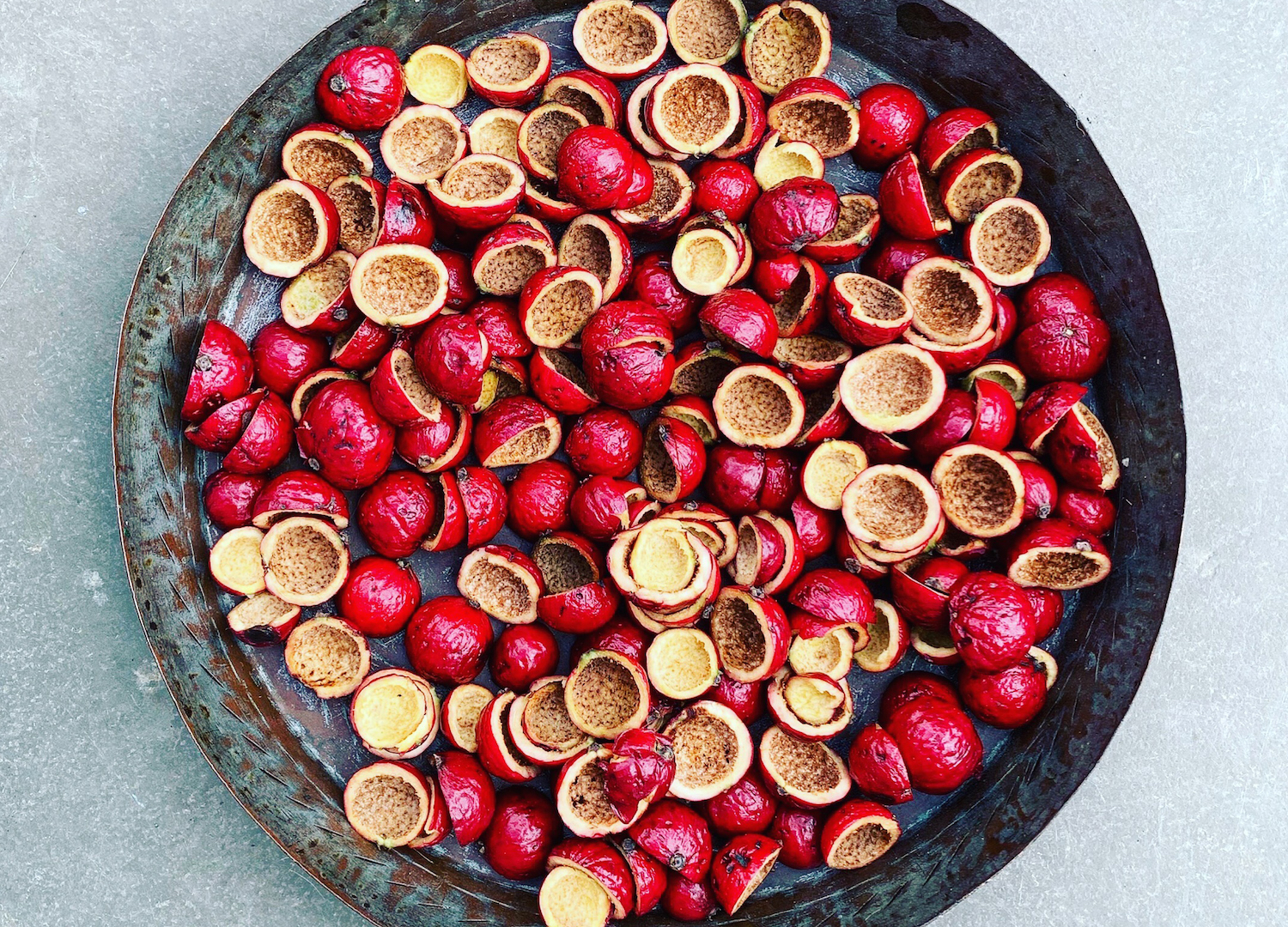
The local food movement has grown in spades over the past decade. Now more than ever we as consumers are educated and prepared to vote with our fork.
But what does it really mean to eat locally? Perceptions of what makes up “local food” differ from place to place and person to person. Most would agree that eating locally means minimising the distance between production and consumption (farm to plate), so why don’t we eat more of the foods that grow in our very big backyard? The ones that have been here for millennia. The ones that nourished our Indigenous peoples. The ones that are truly local.
If Australian native foods are new to your repertoire, there’s no better time to start using them than your Christmas feast. These are my top tips for adding some more of our amazing native foods to your table this Christmas and hopefully your pantry for life.
………………….
words and images REBECCA SULLIVAN
First Things First
The absolute easiest place to begin adding native Australian foods to your plate is in your pepper grinder. Grab yourself some native pepper berries and use them the same way you’d use black pepper. Our stunning Tasmanian Native Pepper (Tasmannia Lanceolata) packs an almighty punch with a tiny bit of blackberry on the palate. It also lingers for a long time and is jam packed with antioxidants.
Drinks
Whether you’re off the wagon or on it, drinks are an easy way to incorporate Australian natives. Garnishes galore live in our backyard. Even the addition of a simple lemon myrtle leaf, or three, makes such a difference. Try freeze dried finger, desert or blood limes, Davidson plums, or an array of berries, from riberries to native currants.
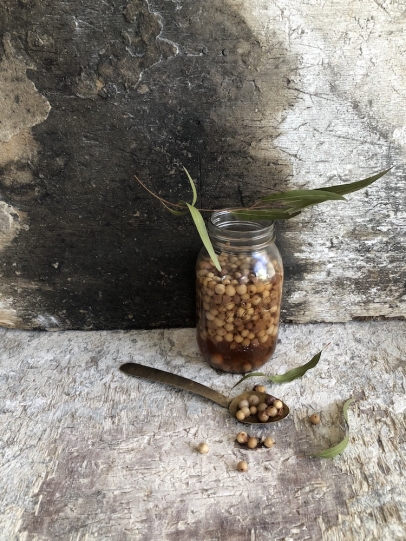
Another idea is to make a non-alcoholic drink like a shrub (a vinegar health drink). Check out the recipes below! You can easily take the base of these and experiment with any fruit you like. Let it ferment then when it’s ready to drink, simply dilute a shot with soda water and extra sweetener should you need it.
Wild Shrub Recipes
Lilly Pilly and Rose Shrub
Ingredients
250g lilly pilly
270ml apple cider vinegar
4 tablespoons maple syrup or raw honey
1 tablespoon rose petals (dried)
Method
Place the ingredients into a sterilised jar, making sure you have enough vinegar to cover the fruit. Dissolve the syrup by stirring. Place the lid on, shake and store in a dry, cool place out of direct sunlight for at least a month. Shake every other day.
Native Cherry and Hibiscus Shrub
Ingredients
250g native cherries
270ml apple cider vinegar
4 hibiscus flowers
4 tablespoons of maple syrup or raw honey
1 teaspoon ground cinnamon myrtle
4-5 cloves
cinnamon stick, crushed
Method
Place the ingredients into a sterilised jar, making sure you have enough vinegar to cover the fruit. Dissolve the syrup by stirring. Place the lid on, shake and store in a dry, cool place out of direct sunlight for at least a month. Shake every other day.
The Meat
There are plenty of ways to use native Australian ingredients when preparing your meat on Christmas Day. Here are a few of our favourites:
- Whether you’ve noticed it or not, you’ll have probably driven past paddocks lined with saltbush in your lifetime. Well, the old man saltbush is perfect for roast lamb – the same way you might stuff with garlic and anchovies, try garlic and saltbush instead.
- Try sticking some lemon myrtle leaves and native lemongrass with lashings of butter under the skin of your chook.
- Cook your ham in a pot with orange juice, cinnamon myrtle, anise myrtle and some native pepper berries.
- Garnish your fresh oysters with a simple squeeze of fresh finger lime and some sprigs of sea blite or samphire.
- All of your fish and seafood dishes should make friends with the obvious native limes BUT they’ll be best mates with Geraldton wax. The leaves have a super fresh piney citrus kick and the flowers make a wonderful edible garnish for all of your deserts too.
Herbs And Greens
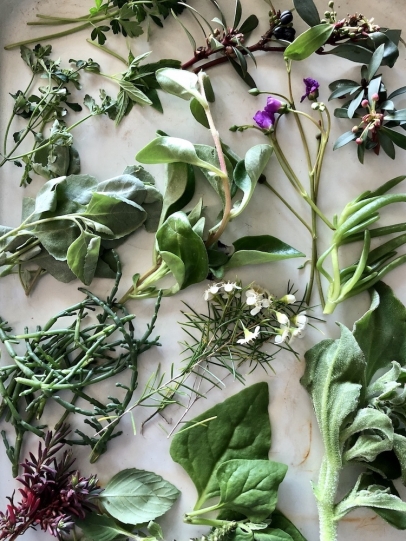
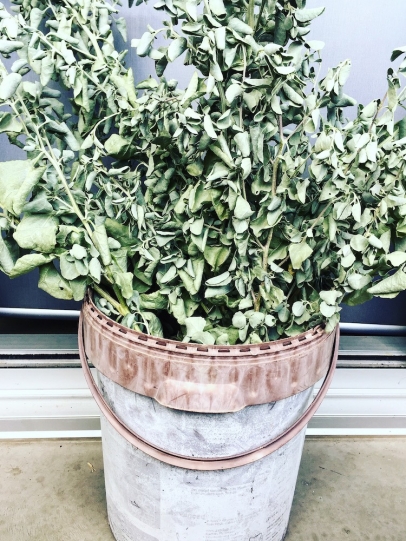
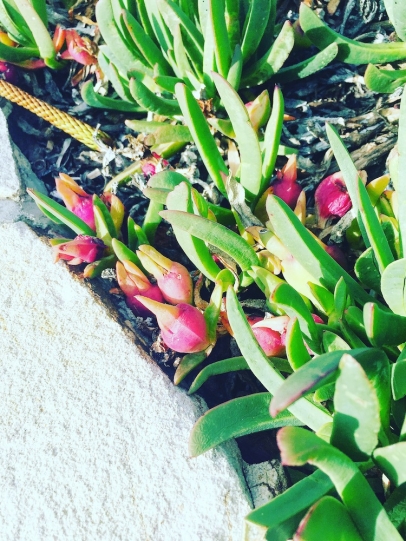
When it comes to herbs and greens there are plenty of easy peasy native substitutes. Where you want mint, try round, cut leaf, river or slender mint. As for thyme, try any of the many native varieties. Parsley has its Australian alternatives including sea celery or sea parsley. Even basil has a native version. For those of you near the beach, you have it all ready in abundance to forage. From the silvery coastal rosemary (much sweeter) to samphire and karkalla (beach banana or pig face), they’re all wonderful green additions to your salads and veggie dishes.
Desserts
Get creative in the kitchen and try one of the many native plums such as Davidson, Kakadu and Illawarra, berries like the riberry (or lilly pilly) and our native raspberry, or our native peach the quandong. They’re all in season now and available frozen from many great suppliers all across Australia.
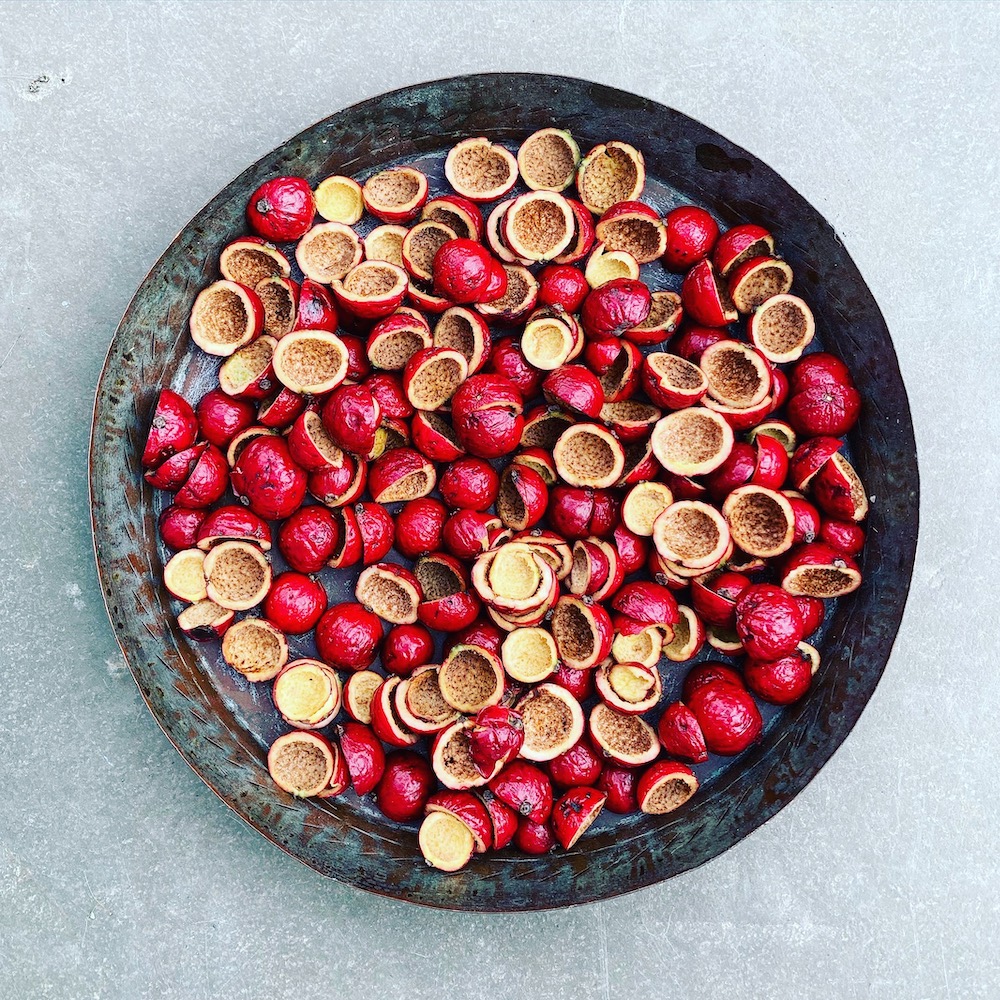
Nuts and spices are also great in everything from your Christmas pud, mince pies, pavlova to tins of shortbread for gifts.
Try these ones as a starter:
- Strawberry gum
- Peppermint gum
- Kunzea flower
- Lemon tea tree
- Cinnamon myrtle
- Anise myrtle
- Wattleseed
- Lemon myrtle
- Pepper berry leaf
- Geraldton wax
- Lemon aspen
- Sandalwood nuts
- Bunya nuts
- And obviously… the macadamia!











“My piece of advice for makers and designers? Run your own race… make sure your key decisions stay anchored in your brand’s core beliefs.”
- Bec Bligh
Quick show of hands: who’s opened a water bottle expecting a refreshing sip… and instead been greeted by the unmistakable whiff of uh-oh?
Because for something that follows us everywhere (desk, car, hikes, yoga…), the humble drink bottle is strangely prone to becoming a science experiment. Hard-to-clean corners and gaskets. Mystery smells. Bec Bligh and her husband Tim know it well. A six-month sailing trip along the Queensland coast left them with a lifetime of memories and one stubborn annoyance: mouldy water bottles they couldn’t properly clean.
So they did something about it.
Enter @EverVessel. Thoughtfully designed borosilicate glass and stainless steel bottles that keep things beautifully simple: durable materials, wide openings, easy-to-clean parts and none of the techy gimmicks that tend to age badly. Turns out simplicity, done well, is pretty powerful stuff. (Their many design awards agree!)
And lately they’ve added a little extra delight: the Artist Series, where creatives like Paola Castro, Ben Miners and Martin Thompson transform these everyday companions into tiny travelling artworks. There are more colabs in the works, too: hydration, but make it joyful! 🎨💧
We chatted with Bec about the sailing trip that started it all, the philosophy behind Ever Vessel, and why the most sustainable product is often just the one you keep using.
Tap the link in our bio to read the full conversation. 🚰
#EverVessel #ReusableWaterBottle


Pull up a chair… there’s room at this table!
For the first time, Feast for Freedom is bringing people together for a spectacular long-table dinner as part of the Melbourne Food & Wine Festival.
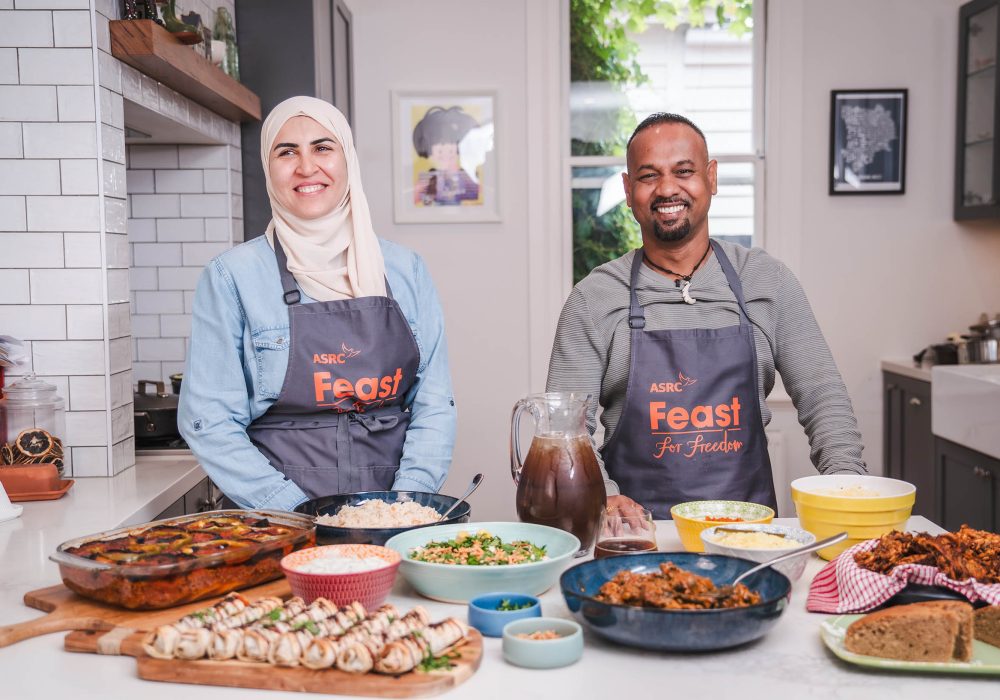
A Longer Table is exactly what it sounds like: one beautiful shared table inside the Asylum Seeker Resource Centre (@Asrc1), piled with generous dishes inspired by this year’s hero cooks, Noha and Nige.
From 6 to 9pm on Wednesday, 25 March, this is what you can expect:
🍽 A three-course shared feast
🍷 Matched drinks
🎶 Live entertainment
✨ A room full of good humans
Your ticket doesn’t just buy you a delicious dinner. It supports the ASRC’s vital work and helps create a fairer future for people seeking asylum.
Seats are limited, and long tables have a way of filling up quickly – head to @MelbFoodAndWine’s website to book now: feastforfreedom.org.au/mfwf
#FeastForFreedom #MelbourneFoodAndWineFestival #LongTableDinner #FoodForChange

Sew versatile! 🪡
Another great make from Lisa from @SunnySewsEveryday:
My #PeppermintWaratahWrapDress is finished and I’m so proud of it. It has been designed not to flap open and flash your pants in the wind, so I feel confident it will be a great wheelchair or standing dress in English weather.
#PeppermintPatterns #WrapDress #WrapDressPattern

Frame your face with the Peppermint Bucket Hat!
Stay safe and stylish in the sun with your very own self-sewn and self-drafted wide-brimmed bucket hat. This beginner-friendly sew is perfect for a sunny day. Get out your pencils – this pattern is created using equations and maths!
This DIY project was featured in Issue 53 and now you can access it for the lovely low price of only $5.
Sun-safe chic is always in style. ☀️
Find it via the link in our bio!
Photos: @KelleySheenan
#PeppermintPatterns #PeppermintBucketHat #BucketHat #BucketHatPattern #DIY

✨ INSTANT CLASSIC ✨
The Peppermint Myrtle Shift Dress is a beginner-friendly make with a few special details based on the ever-stylish shift shape – the perfect dress you need in your wardrobe right now!
Myrtle cuts above the knee with options to customise the length. Don’t think she’s reserved for hot weather either: try a heavier-weight fabric to turn your Myrtle into a pinafore-style garment for layering.
For our fabrics we chose two from our lovely sewing partner @Karmme_Apparel – the bold Rottnest Stripes in a lightweight, soft-drape cotton, and the quality linen in the handpainted Mexico Collection.
Get making the Myrtle – the only question is, can you stop at just one?
Link in bio 🪡
Fabric: @Karmme_Apparel
Sewist: @Laura_The_Maker
Photos: @KelleySheenan
Models: @SerahSews and @Pins_And_Tonic
Location: @ShareTheDignityAustralia
#PeppermintMyrtleShiftDress #PeppermintPatterns

It’s time to Feast!
Some recipes travel a long way before they land on your table to delight your taste buds. This year’s Feast for Freedom invites us to gather our friends, cook something delectable and raise funds for the incredible work of the Asylum Seeker Resource Centre (@Asrc1) while we’re at it.
The 2026 Feast features recipes shared by two remarkable cooks: Noha, who brought the flavours of Palestine with her when she arrived in Australia, and Nige, a Sri-Lankan Tamil cook whose journey with food began in the most unexpected of places.
You can host your own Feast up until 30 April – simply register online and get planning! Host a dinner, organise a workplace lunch, or gather your community… However you do it, the idea is simple: cook, connect and celebrate the cultures and stories that shape Australia.
Want to find out more? Head to the link in bio to meet Noha and Nige, learn more about their stories, and discover a delicious recipe to try.
#FeastForFreedom #PeppermintMagazine #FoodForGood #ASRC
