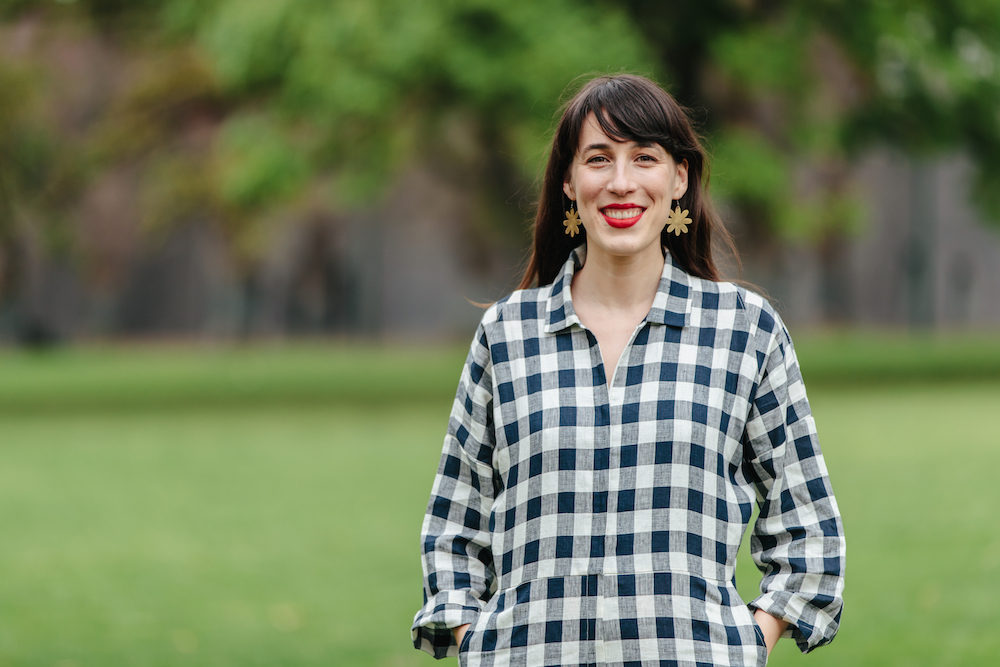
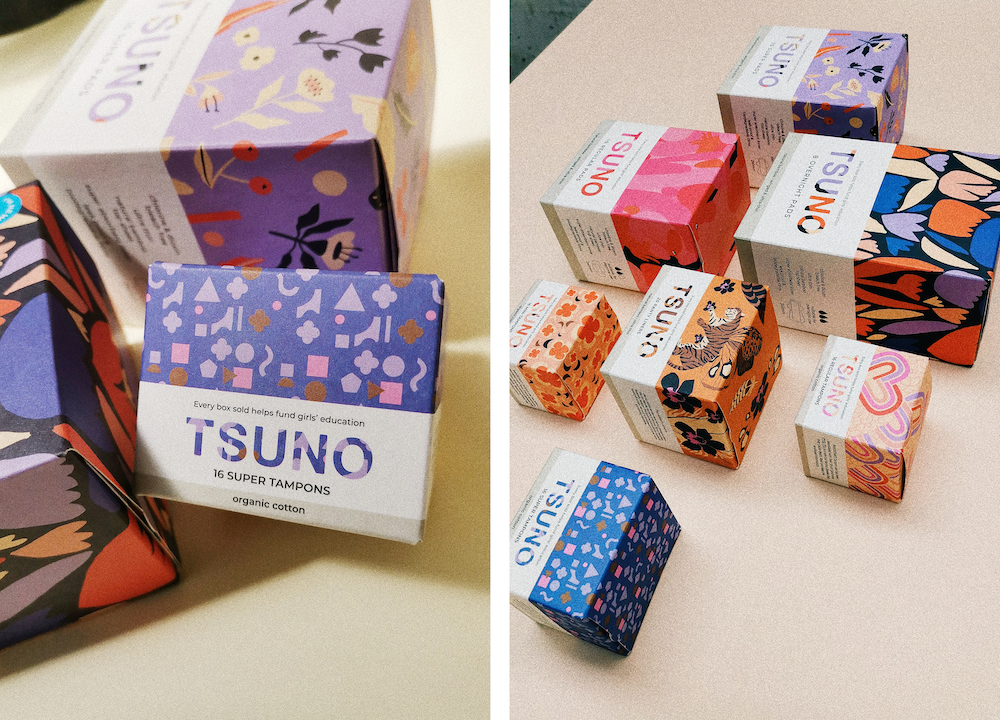
Your periods might not make you feel good, but Tsuno aims to make you (and others) feel better – as 50% of the profits of this social enterprise go to One Girl, a charity that directs funds towards educating women and girls living in poverty. Known for their bright, bold packaging featuring local artists such as Erin Lightfoot, Kip & Co and Mirador, Tsuno recently invited our very own multi-hat wearing editor-in-chief, Kelley, to design the packaging for their ‘regular‘ Certified Organic cotton tampons. “I wanted to create a design based on rainbows and clouds to represent hope – the duality of ‘good’ coming from ‘bad’, positivity rising from negativity and, of course, equality, connection and togetherness,” Kelley says about her rainbow design. “It was created just before 2020 went down a dark path… So if there is any time we need hope and equality and connection, it’s certainly now!” We caught up with Roz Campbell, founder of Tsuno, to chat about she fared in 2020, the One Girl charity and the sustainable goals of her brand.
………….
Why did you decide to go into period products?
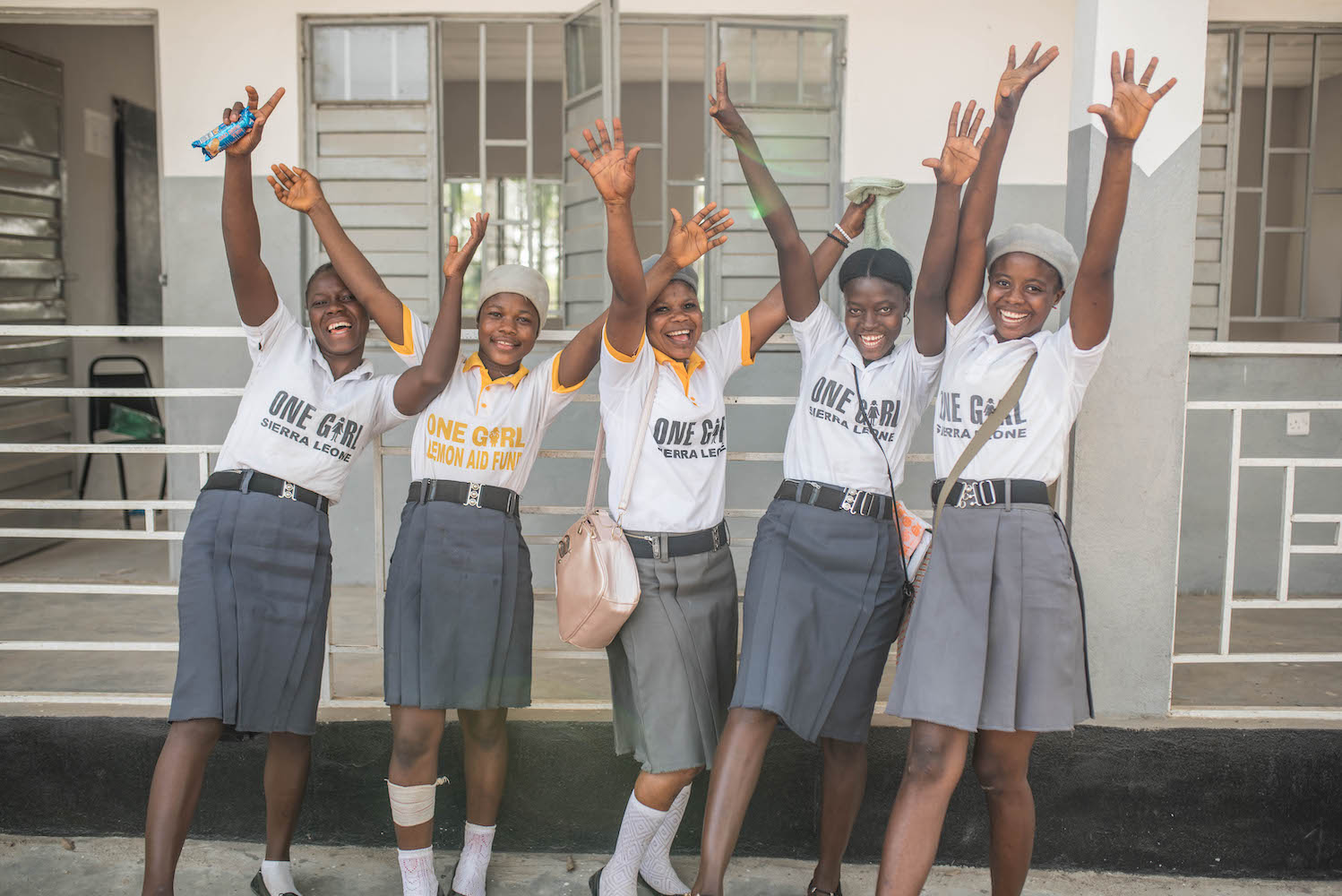
In 2011, I was studying industrial design at uni, and while I was there, I got pretty interested in fast-moving consumer products and sustainability (or lack thereof). Around the same time this interest started, I visited a friend in Finland, got my period and she introduced me to the menstrual cup (back in 2011 I had NEVER heard of it in Australia). I got very interested in this reusable device, but personally found it had some usability issues I thought I might be able to address from a design perspective. THEN, I learnt about girls in Sierra Leone who were missing out on school because they didn’t have access to sanitary products that worked effectively. This opened my eyes to period poverty globally. Coupled with the lack of sustainable materials used in disposable products, and also learning about social enterprise, I decided to start my business, and I am slowly working on my product innovations on reusable products in the background.
You’ve set up Tsuno as a social impact business and give back 50% of your profits to not-for-profit organisations supporting women. How do you decide which charities to support?
The local not-for-profit One Girl was a huge catalyst for starting Tsuno. The founder had come to talk to my uni class about the program they run in Sierra Leone and Uganda called LaunchPad and I felt like it has aligned with my mission so I’ve supported them financially ever since. I’ve had a great relationship with the staff and feel like we have both grown alongside each other. I do believe that education for girls holds the key for so many things in terms of poverty alleviation and climate change. I also have chosen to support local charities such as The Asylum Seeker Resource Centre, Share the Dignity and Pinchapoo with products because period poverty is sadly something that occurs in Australia too, and I am able to facilitate donations of our products from the public and match those donations along with helping spread the word.
Currently, your charity partner is One Girl, who run a menstrual hygiene program called Launch Pad. Can you tell us a little about this program – what it does and what it achieves?
LaunchPad is a community and school program, which combines menstrual hygiene education and entrepreneurship to provide women and girls across Sierra Leone with access to affordable sanitary products and menstrual hygiene knowledge. It aims:
- To improve women and girls’ access to safe and sustainable Menstrual Hygiene Management (MHM) products and WASH infrastructure for improved menstrual hygiene.
- To transform target communities’ attitudes around MHM to be informed and positive for women and girls.
- To increase access to WASH/MHM education for improved practice for women and girls in target communities.
- To reduce additional (economic and geographical) barriers for women and girls to access safe MHM in target communities.To empower local women to run the program themselves, giving them a source of income and the ability to lead the change within their communities.
What has been the biggest challenge you have encountered in your Tsuno journey?
I suppose starting from nothing on a shoestring budget without investment has meant that growth has been fairly slow (but also sustainable) and the business doesn’t leave a lot of room to wiggle when things go wrong or are delayed. I wish there were manufacturing options locally available to me, but because there aren’t, the manufacturing lead times and overseas shipping can really cause me some stress!
Tell us about some of the artists you’ve worked with and why you decided to produce your packaging in this way?
I’ve worked with so many now! Including your lovely founder and editor-in-chief Kelley. They have been a mix of people I have known personally, to ones I have found online and really enjoyed their style, to others that have reached out to me and expressed interest. I wanted to make our packaging fun and beautiful – helping to reduce the stigma around menstruation. I think it’s working! Customers have told me they display their pad or tampon boxes on the shelf now rather than hiding them in a drawer. I also really like novelty, and I think it’s fun to have the boxes change semi regularly!
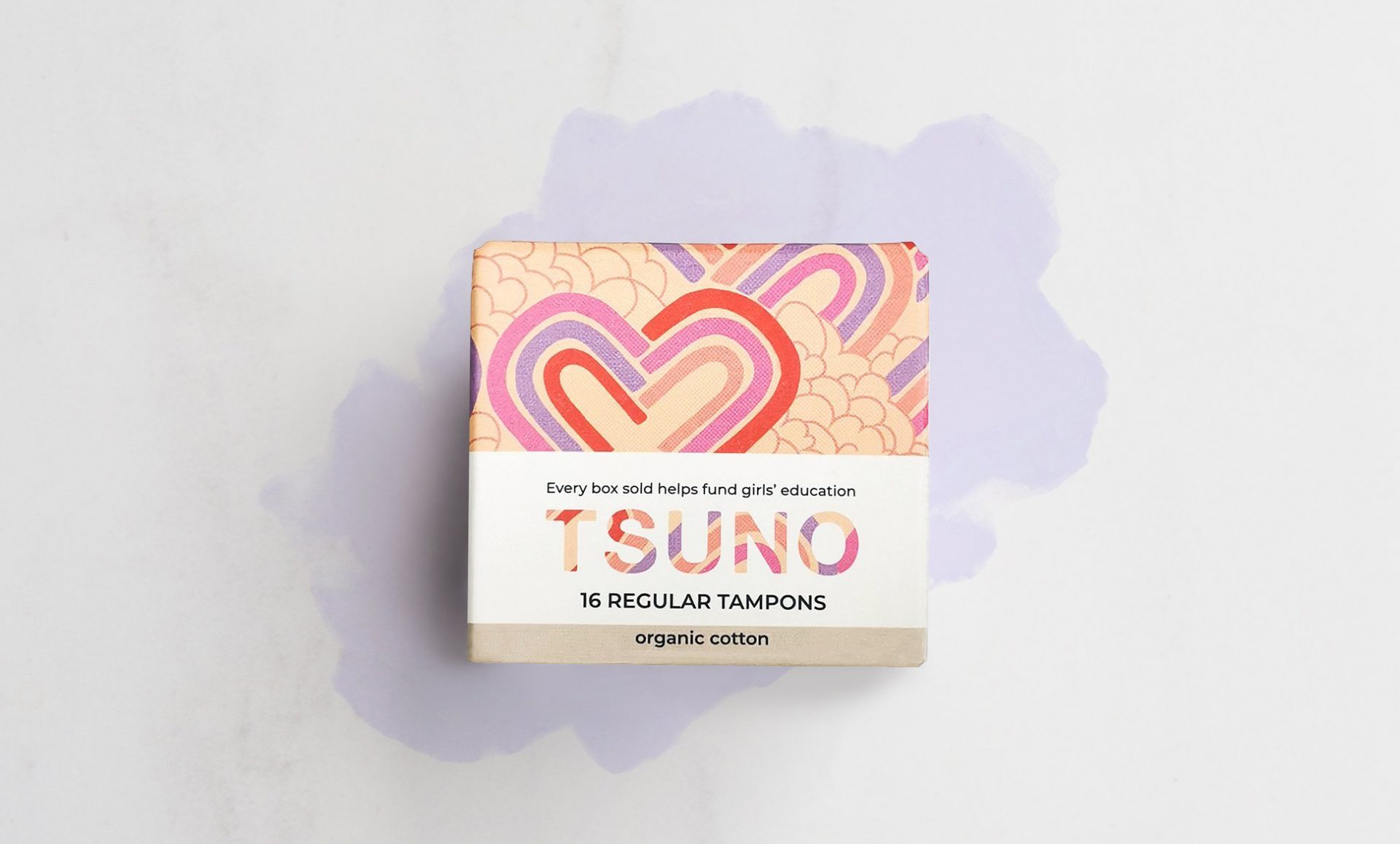
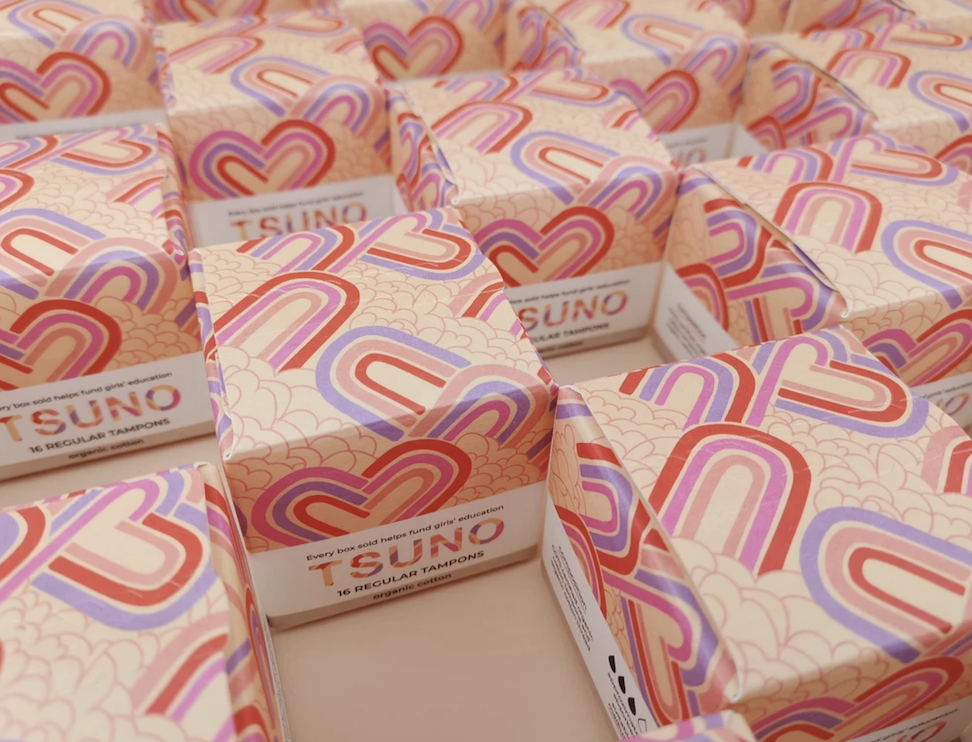
ABOVE: DESIGN BY KELLEY SHEENAN
………….
Has COVID-19 had an impact on your business?
It has unfortunately. Thankfully the demand for products has been consistent, but raw material costs escalated by about 25%, production lead times blew out (normally my tampon factory has a 2 week lead time, this got pushed to almost three months) and shipping was very slow and more expensive. I think it’s been a blessing that my business isn’t too big, because I can imagine the headache if I had thousands of shops waiting for stock. I was so fortunate actually before my most recent shipment of stock was delivered, I thought I had run out of Regular Pads the day before, but found 1 carton that had accidentally been put with the Overnight Pads which meant I could send a retail order on time. That sounds like a really boring story, but I felt like I had won at life that day.
Tsuno pads and liners are made from natural bamboo and corn fibre and your tampons from organic cotton. Was it difficult to find a manufacturer that fitted the sustainable goals of your brand?
It has been an ever evolving process with my manufacturers. Firstly, I needed to find ones that were in the tampon and pad manufacturing industry as the machinery is so specialised. Then it has been an ongoing process (with the pads especially as they are a more complex product) to try alternative materials, to see what I can access with such small buying power, what will work on the machines, and in the end what will work for our customers. I can’t say this process is finished yet, I think there will always be improvements that can be made as new materials become available, but I am grateful I have two manufacturers who recognise the value in being open to innovate.

What do you love most about your work?
I love the freedom, the chance to learn continuously and the people who I connect with all over the world. I’m so lucky to have partnered with so many business owners who see the value in what I am trying to achieve, and are on board to help me achieve it!
“My piece of advice for makers and designers? Run your own race… make sure your key decisions stay anchored in your brand’s core beliefs.”
- Bec Bligh
Quick show of hands: who’s opened a water bottle expecting a refreshing sip… and instead been greeted by the unmistakable whiff of uh-oh?
Because for something that follows us everywhere (desk, car, hikes, yoga…), the humble drink bottle is strangely prone to becoming a science experiment. Hard-to-clean corners and gaskets. Mystery smells. Bec Bligh and her husband Tim know it well. A six-month sailing trip along the Queensland coast left them with a lifetime of memories and one stubborn annoyance: mouldy water bottles they couldn’t properly clean.
So they did something about it.
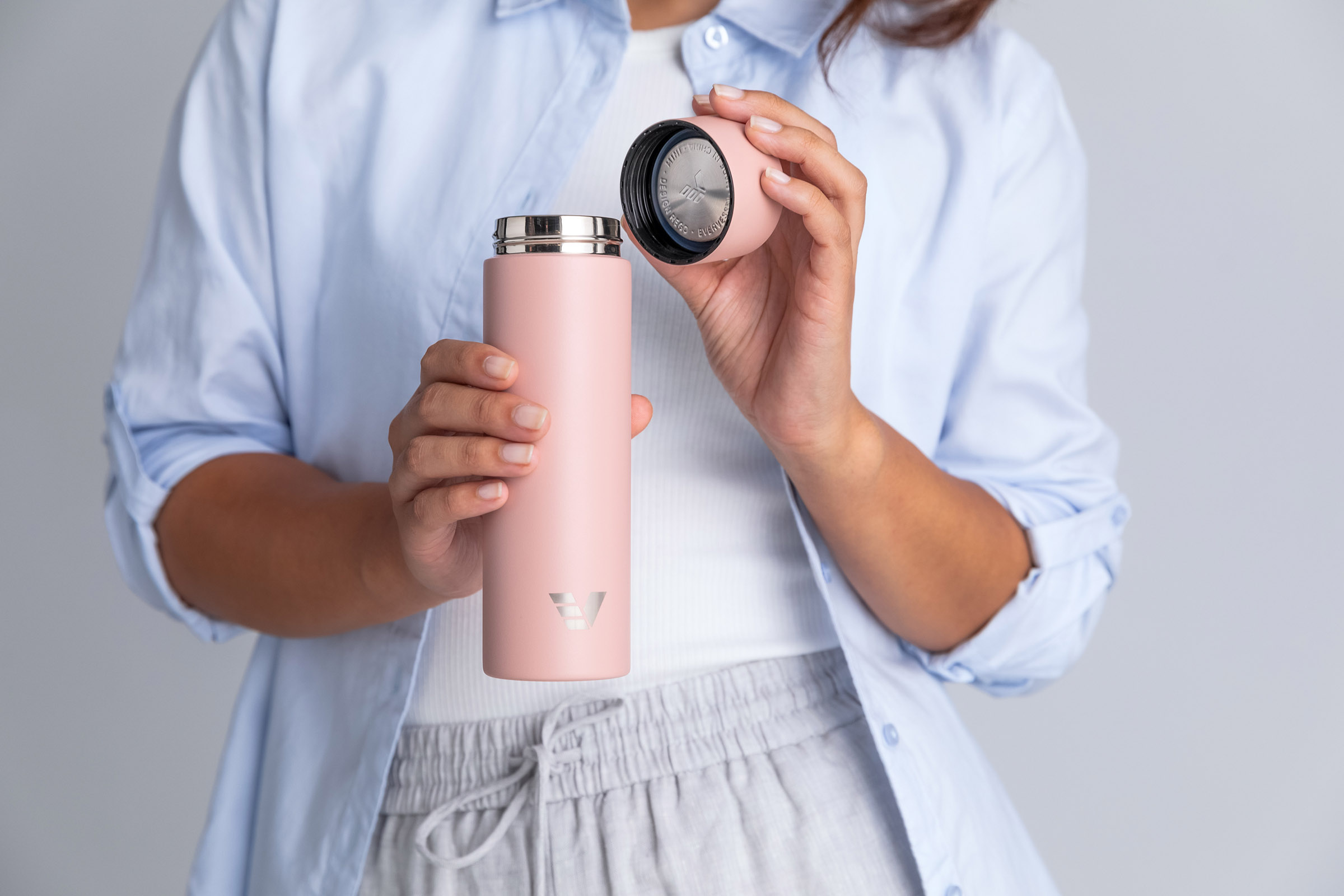
Enter @EverVessel. Thoughtfully designed borosilicate glass and stainless steel bottles that keep things beautifully simple: durable materials, wide openings, easy-to-clean parts and none of the techy gimmicks that tend to age badly. Turns out simplicity, done well, is pretty powerful stuff. (Their many design awards agree!)
And lately they’ve added a little extra delight: the Artist Series, where creatives like Paola Castro, Ben Miners and Martin Thompson transform these everyday companions into tiny travelling artworks. There are more colabs in the works, too: hydration, but make it joyful! 🎨💧
We chatted with Bec about the sailing trip that started it all, the philosophy behind Ever Vessel, and why the most sustainable product is often just the one you keep using.
Tap the link in our bio to read the full conversation. 🚰
#EverVessel #ReusableWaterBottle


Pull up a chair… there’s room at this table!
For the first time, Feast for Freedom is bringing people together for a spectacular long-table dinner as part of the Melbourne Food & Wine Festival.
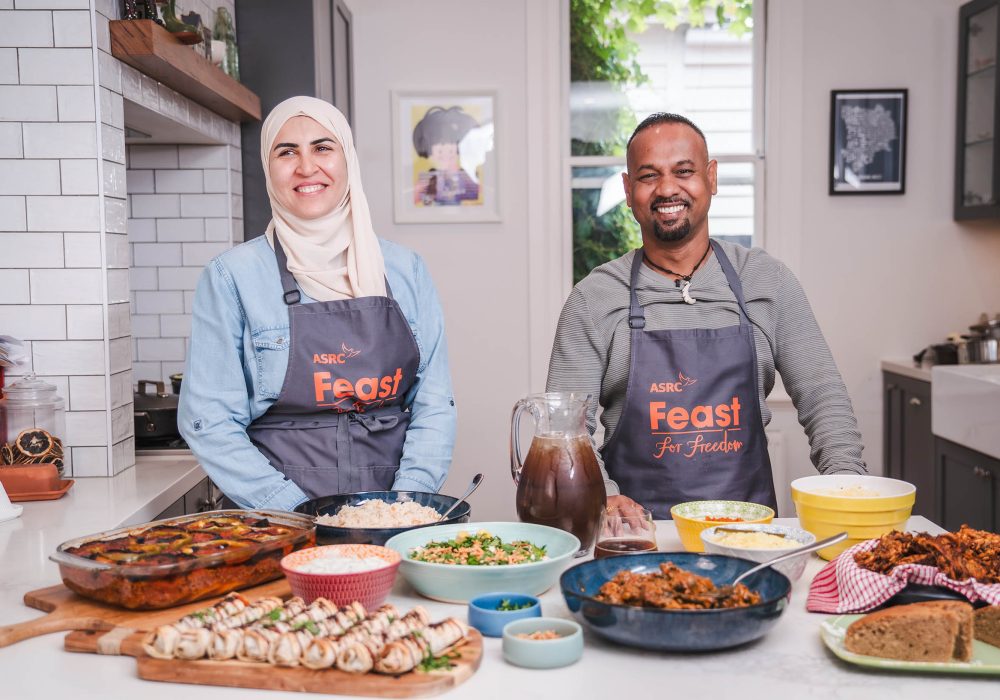
A Longer Table is exactly what it sounds like: one beautiful shared table inside the Asylum Seeker Resource Centre (@Asrc1), piled with generous dishes inspired by this year’s hero cooks, Noha and Nige.
From 6 to 9pm on Wednesday, 25 March, this is what you can expect:
🍽 A three-course shared feast
🍷 Matched drinks
🎶 Live entertainment
✨ A room full of good humans
Your ticket doesn’t just buy you a delicious dinner. It supports the ASRC’s vital work and helps create a fairer future for people seeking asylum.
Seats are limited, and long tables have a way of filling up quickly – head to @MelbFoodAndWine’s website to book now: feastforfreedom.org.au/mfwf
#FeastForFreedom #MelbourneFoodAndWineFestival #LongTableDinner #FoodForChange

Sew versatile! 🪡
Another great make from Lisa from @SunnySewsEveryday:
My #PeppermintWaratahWrapDress is finished and I’m so proud of it. It has been designed not to flap open and flash your pants in the wind, so I feel confident it will be a great wheelchair or standing dress in English weather.
#PeppermintPatterns #WrapDress #WrapDressPattern

Frame your face with the Peppermint Bucket Hat!
Stay safe and stylish in the sun with your very own self-sewn and self-drafted wide-brimmed bucket hat. This beginner-friendly sew is perfect for a sunny day. Get out your pencils – this pattern is created using equations and maths!
This DIY project was featured in Issue 53 and now you can access it for the lovely low price of only $5.
Sun-safe chic is always in style. ☀️
Find it via the link in our bio!
Photos: @KelleySheenan
#PeppermintPatterns #PeppermintBucketHat #BucketHat #BucketHatPattern #DIY

✨ INSTANT CLASSIC ✨
The Peppermint Myrtle Shift Dress is a beginner-friendly make with a few special details based on the ever-stylish shift shape – the perfect dress you need in your wardrobe right now!
Myrtle cuts above the knee with options to customise the length. Don’t think she’s reserved for hot weather either: try a heavier-weight fabric to turn your Myrtle into a pinafore-style garment for layering.
For our fabrics we chose two from our lovely sewing partner @Karmme_Apparel – the bold Rottnest Stripes in a lightweight, soft-drape cotton, and the quality linen in the handpainted Mexico Collection.
Get making the Myrtle – the only question is, can you stop at just one?
Link in bio 🪡
Fabric: @Karmme_Apparel
Sewist: @Laura_The_Maker
Photos: @KelleySheenan
Models: @SerahSews and @Pins_And_Tonic
Location: @ShareTheDignityAustralia
#PeppermintMyrtleShiftDress #PeppermintPatterns

It’s time to Feast!
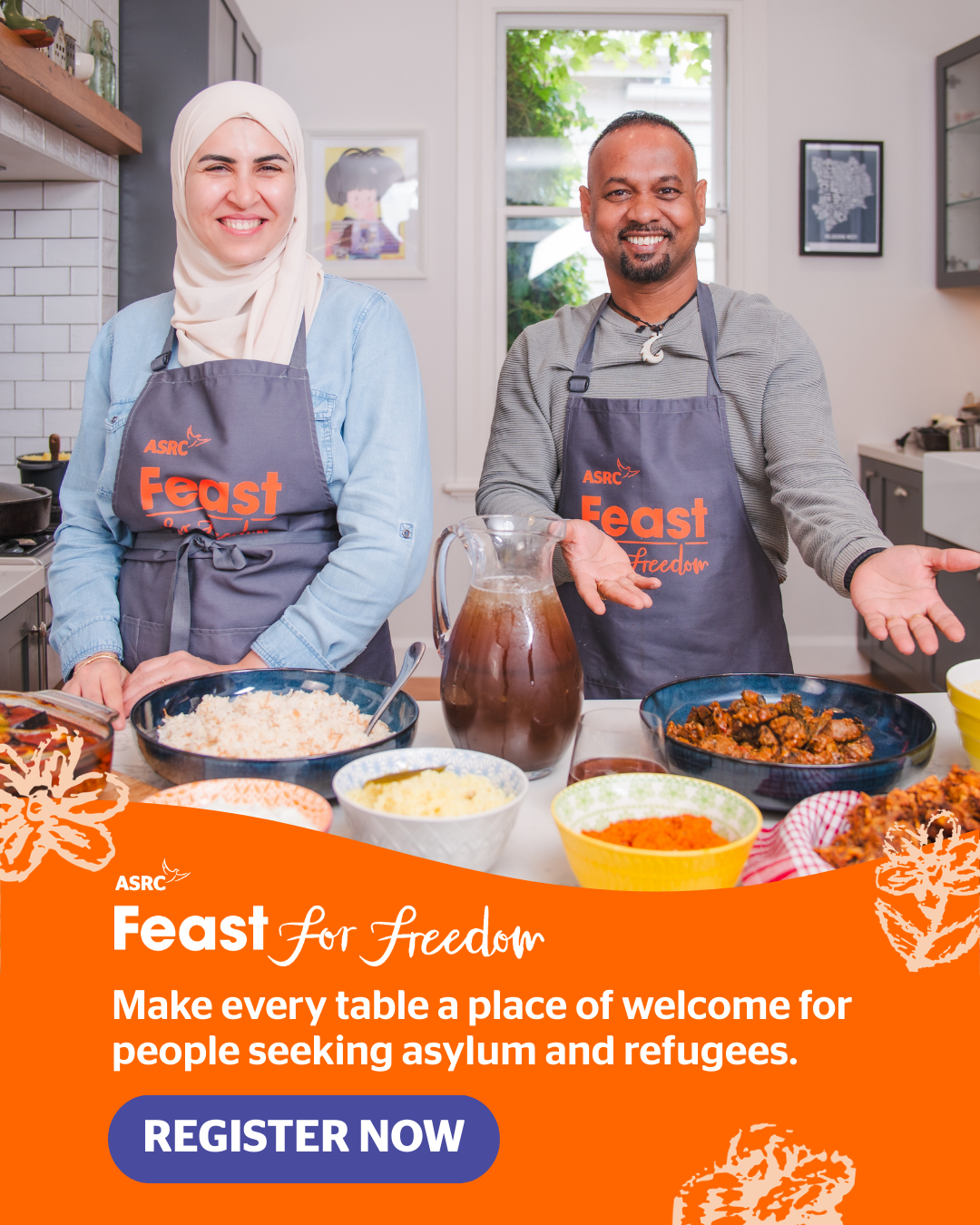
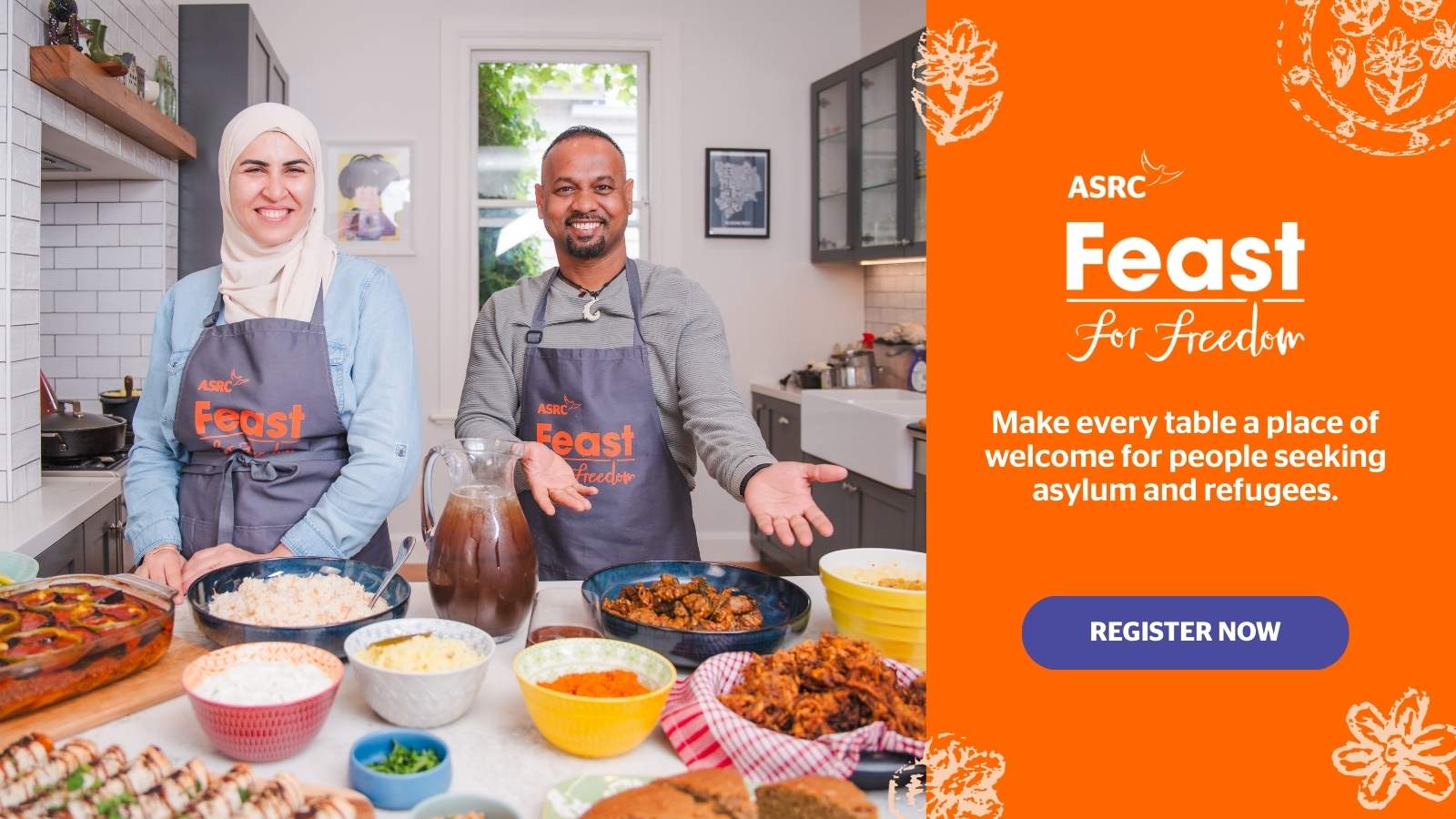
Some recipes travel a long way before they land on your table to delight your taste buds. This year’s Feast for Freedom invites us to gather our friends, cook something delectable and raise funds for the incredible work of the Asylum Seeker Resource Centre (@Asrc1) while we’re at it.
The 2026 Feast features recipes shared by two remarkable cooks: Noha, who brought the flavours of Palestine with her when she arrived in Australia, and Nige, a Sri-Lankan Tamil cook whose journey with food began in the most unexpected of places.
You can host your own Feast up until 30 April – simply register online and get planning! Host a dinner, organise a workplace lunch, or gather your community… However you do it, the idea is simple: cook, connect and celebrate the cultures and stories that shape Australia.
Want to find out more? Head to the link in bio to meet Noha and Nige, learn more about their stories, and discover a delicious recipe to try.
#FeastForFreedom #PeppermintMagazine #FoodForGood #ASRC
