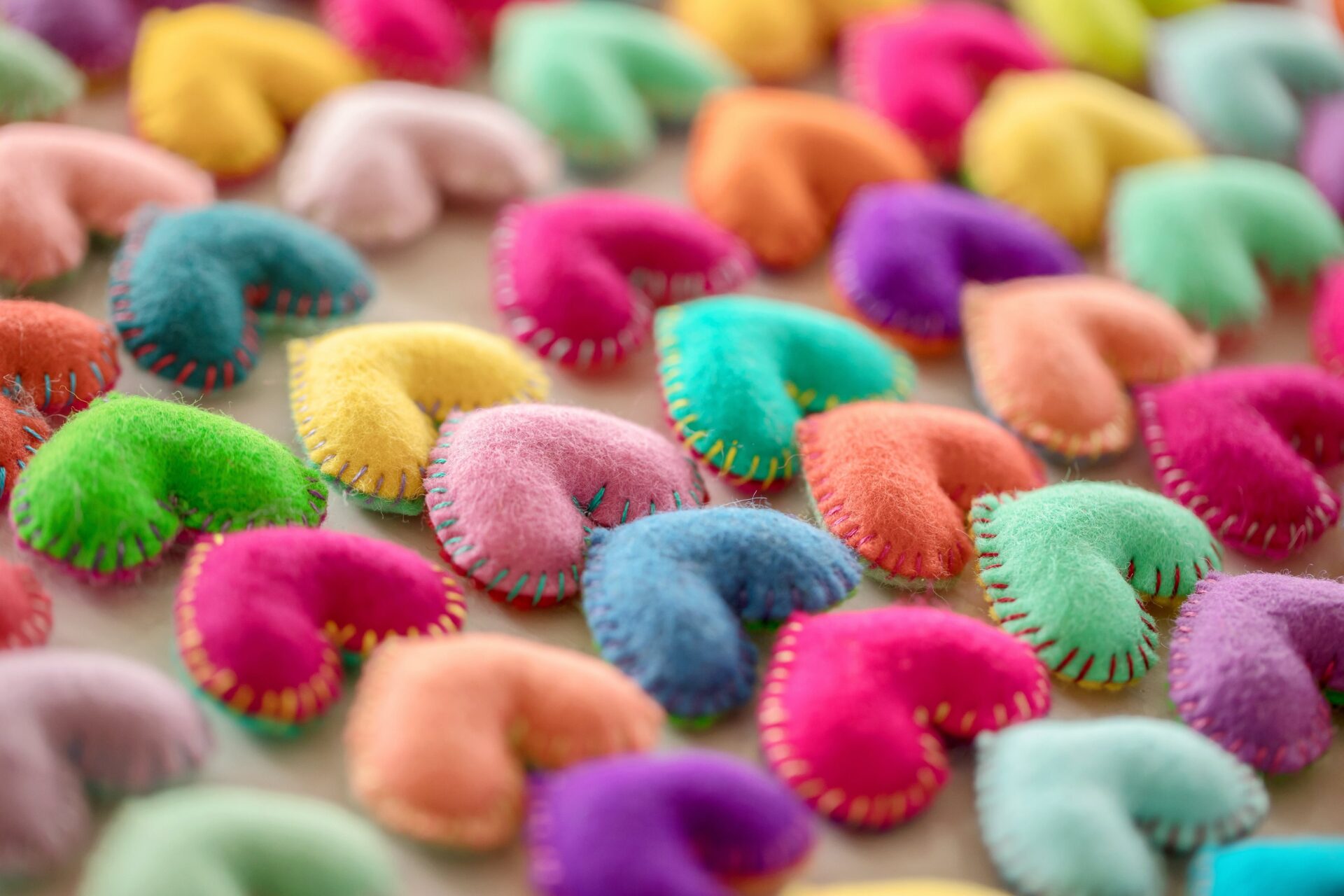
In 2016, one Hobart woman decided to sew and distribute small felt hearts to anyone who felt in need of love or wanted to offer some. She had no idea this kindness project would become a global phenomenon.
words CAROLINE RICHES photos SARAH de JONGE / 1000 HEARTS
According to Japanese tradition, folding 1000 paper cranes gives someone a chance to make one special wish come true. It was globally popularised through the story of Sadako Sasaki, a Japanese girl who, exposed to radiation from the atomic bombing of Hiroshima, developed leukaemia and began folding paper cranes so that her wish of becoming well would be granted.
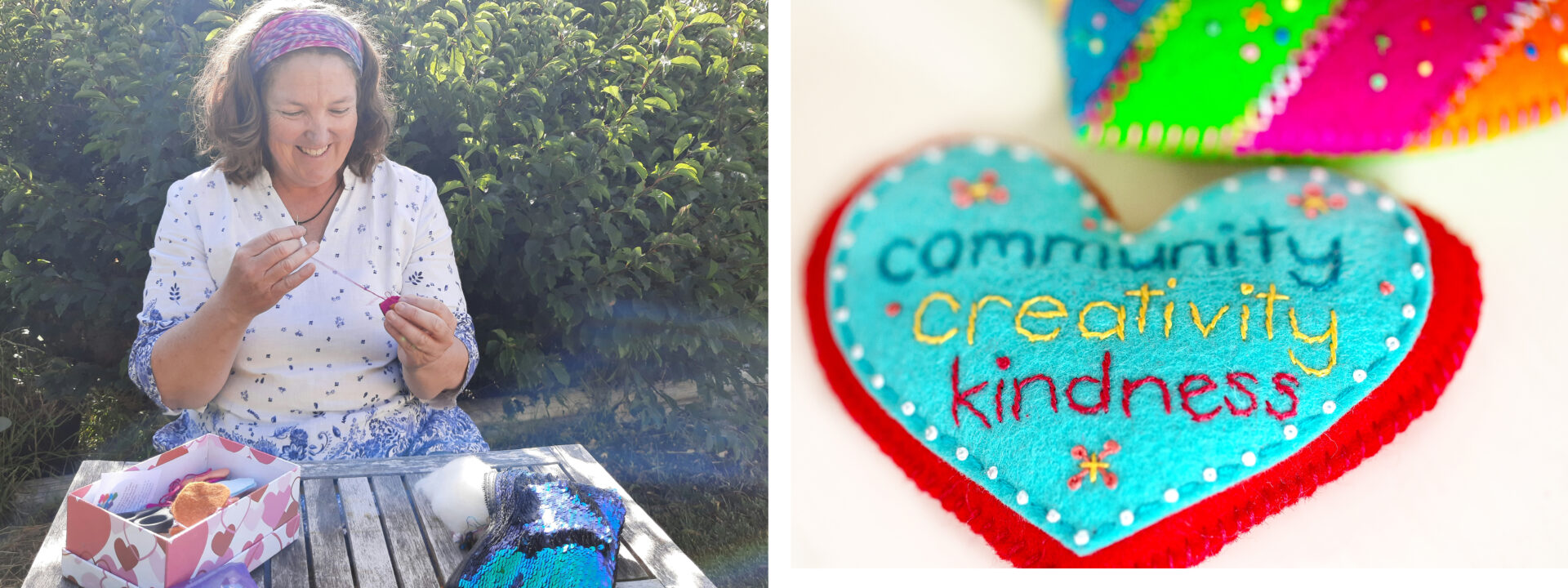
Inspired by the legend, in 2016, Hobartian Sarah De Jonge decided she wanted to spread love and kindness – not by folding paper cranes but by sewing 1000 felt hearts. “I wanted to do something that was just about kindness that I wasn’t doing for any kind of strategic plan or being paid for,” she says. “I wanted it to be truly from the heart.”
Having worked in the not-for-profit space her whole career across organisations including Lifeline, CanTeen and Cancer Council Tas, the 46-year-old, who coincidentally was born on Valentine’s Day, knew the power of kindness and community connection. She had previously cut, sewed and stuffed 50 felt colourful pocket hearts and posted a photo of them on her Facebook page, offering to send them out for free to anyone who wanted one.
“Some people wanted one for a sick friend or an ageing parent but most wanted them for their kids. And then people started messaging me and saying, ‘Wow, that heart was a really powerful thing’ or ‘It made a real difference for my child or during separation anxiety.’”
For one boy Hugo, Sarah recalls that his mother described the heart as “life-changing”. “He would take his heart in his pocket and give it a squeeze when he needed to. It allowed him to do things that he would have been too anxious to do before, such as go on school camp and do a high ropes course. It was about knowing that he had people behind him who cared, which gave him strength.
“It made me realise how powerful these little hearts could be,” Sarah adds. “And how sewing 1000 of them would enable me to reach more people.”

Sarah (pictured above) was determined to make the project eco-friendly. She used 100% wool felt and pure wool or other sustainably sourced stuffing. The hearts measure just over three centimetres across and are stuffed firmly “to cope with lots of squeezing and pocket dwelling”.
While it takes Sarah just three minutes and 16 seconds to create one, including cutting the felt, she didn’t know how long it would take to sew 1000 of them. She set up the 1000 Hearts Facebook page so people could follow her project and offered to give out hearts to people they knew who may need one. She was staggered by how many people wanted to get involved.
“Quite quickly I had people following me who I didn’t know, who were friends of friends, or people they had shared it with. I realised I was now speaking to a wider audience. By the time I had the thousand, 76 people had offered to give some out in their communities. So I packaged them out into the world.”
The feedback was incredible, with so many people who had distributed and received the hearts reaching out to Sarah with gratitude. She had completed her project, but quickly realised it wasn’t the end.
READ MORE – BAKING A DIFFERENCE: MEET THE MAN USING COOKIES TO EMPOWER VULNERABLE PEOPLE
“People wanted to make them and were asking about templates and instructions. That was when I took a step back and thought, ‘Ok, how am I going to make this work? Because it’s going to be extremely costly if I just keep making and giving out hearts forever.’ I started thinking that I could create a kindness community and get others involved in that little vision I had. That was the start of what’s now happening on a global scale.”
While Sarah remains the figurehead of the community, it has also evolved independently of her. Anyone can visit the 1000 Hearts website and download free resources, instructions sheets and templates and get “hearting” either alone or in a group. The Facebook community, or “Heartland”, is now 10,000 people strong while a separate Facebook group, Hearty Ripplers, is a happy and humble place where requests for hearts for those in need are quickly met by “heartists” keen to create, send and spread some kindness.
Over the last seven years, tiny handmade hearts have been given to cancer patients and parents of stillborn babies. They’ve been distributed to those suffering mental health difficulties, nursing home residents, domestic violence survivors, foster children, natural disaster victims and volunteers – to anyone giving or needing love.
One of the firefighters kept hers in her pocket the whole time she was fighting the fires,” Sarah recalls. “She said when you’re out there in hell, you’re tethered by the knowledge that people are thinking of you and care about you.
Thanks to the Hearty Ripplers’ extended network, a hospital physiotherapist was sent hearts to distribute to young people injured during the 2017 bombing at the Ariana Grande concert in Manchester, while a woman taking medical gear to Ukraine from Australia carried a huge bag of them in her truck. They were also given out to those affected by the Grenfell Tower Block inferno in London in 2017, to firefighters, volunteers and those left homeless by Australia’s 2019 bushfires, and to the victims of Australia’s floods in 2022.
“One of the firefighters kept hers in her pocket the whole time she was fighting the fires,” Sarah recalls. “She said when you’re out there in hell, you’re tethered by the knowledge that people are thinking of you and care about you.”
Sarah herself embroidered hearts with rainbows for each of the 49 people killed in the mass shooting at a gay nightclub in Orlando, Florida, in 2016. Thanks to a Hearty Rippler whose daughter was a news anchor in the US, they now sit in a glass jar as a permanent part of the memorial.
READ MORE – “I NO LONGER FELT ALONE”: GREAT IMPACTS FROM SMALL ACTS OF KINDNESS
But the hearts don’t only appear in moments of sadness. They are also slipped quietly into bags, sent in business packages, popped into party bags or offered as wedding favours. Some people give them to loved ones and keep another for themselves so they feel connected; many hearts live under the earth in graves.
Sometimes they simply create a reason for people to stitch together. For some, this is about mindfulness and connection. For others, making a heart can help mend another that’s broken.
For Michelle Casserley (pictured above) in Port Lincoln, hearting gave her a focus throughout the uncertain times of the COVID-19 pandemic, when she was also battling mental health issues. “Stitching got me up in the morning and it still helps me now. If I start getting caught up in thinking, I’ll make some hearts and it just stops.”
Michelle decided to make 1000 hearts like Sarah, but she’s now made more than 3800. She’s donated many to community organisations. “I love the feeling of being part of the community of people stitching hearts and giving them out. And I love hearing the stories in the group.”
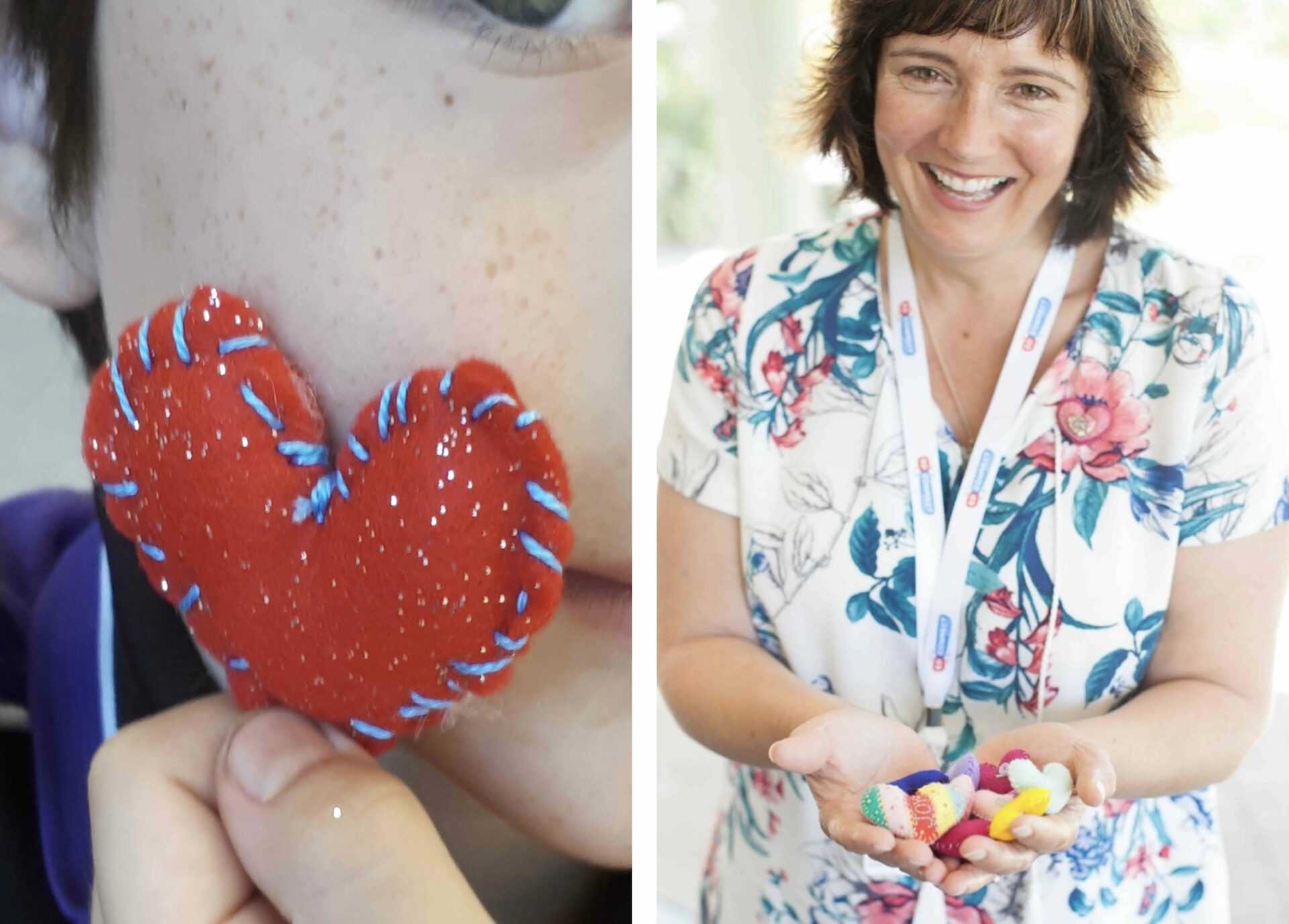 Kerry Davies (pictured above, right) in Perth teaches children how to sew the hearts in schools as part of a kindness initiative. She provides the cut felt hearts, lets the kids pick the colours then threads the needle and lets them sew. “It doesn’t matter how they stitch it and I love seeing how it engages them,” she says. “When they’re busy doing something creative together, they become softer and kinder. Sometimes they chat and sometimes they’re just peaceful. Then they can keep their heart or give it to someone they love.”
Kerry says she always keeps a stash of them in her bag to give out to strangers. “I give them out a lot, I can’t help myself. You know when you see someone who looks like they’re just going through the motions? That’s when I give them one.”
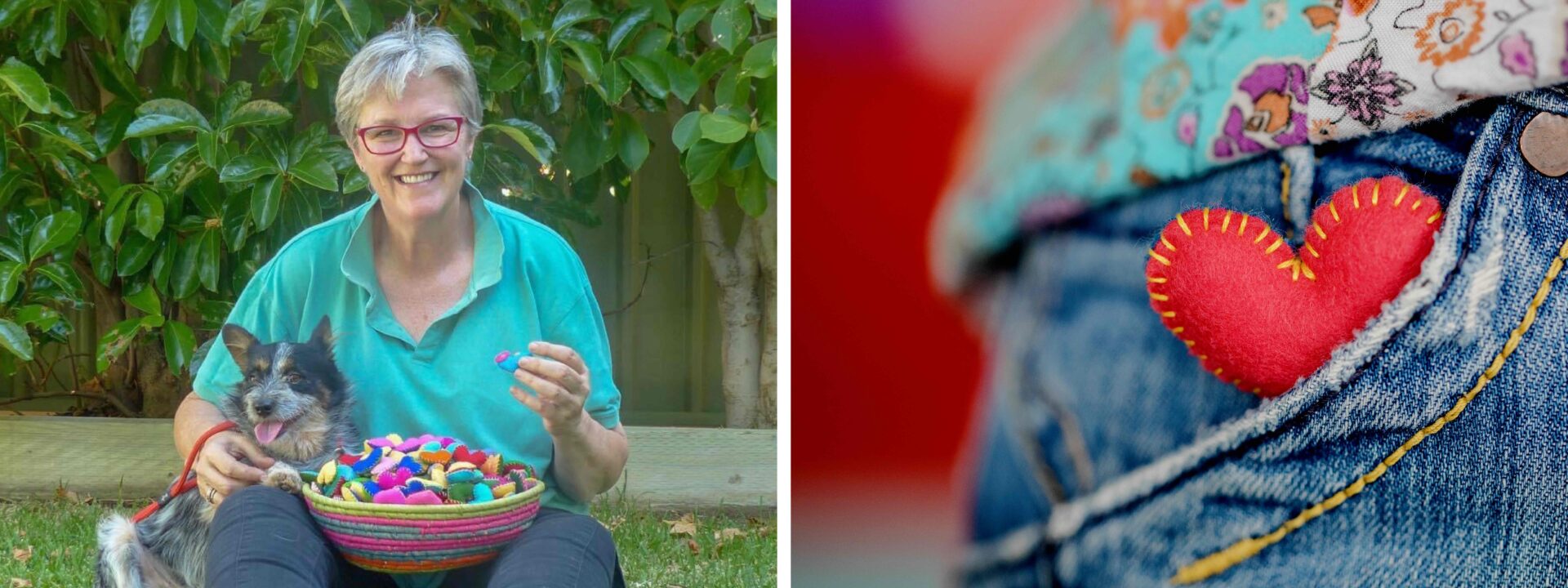
Carol Fulton-Kennedy (pictured below) in Moree had never sewed before but discovered a new passion through hearting after she received a heart herself. “Sewing has quickly become a complete addiction and I now hardly go through a day when I don’t make some hearts,” she says. “It’s just the most remarkable little token of love. Everybody benefits – the people who are stitching and the people who are receiving. And as more people come into the group, the little ripples can ripple away even further.”
 Sarah continues to make and donate hearts and materials thanks to the money earned through an Etsy shop for 1000 Hearts that sells kits with pre-cut felt and pre-made embellished and embroidered hearts. She estimates she’s sewed around 20,000 hearts in total and says it’s the stories that have made her continue.
“The stories have astounded me, the power of the hearts and where they have been. Some of them have made the difference between carrying on another day and giving up. I have heard from a multitude of people over the years that making hearts or receiving a heart has been the thing that has kept them going.”
“I feel really quite amazed by what happened from that idea that I had,” she adds. “It’s much bigger than me; it’s a testament to the goodness of people. There’s so much willingness out there to reach out to one another and offer care and kindness. And kindness is needed everywhere.”
WANT TO READ MORE INSPIRING STORIES ON GIVING BACK? RIGHT THIS WAY!
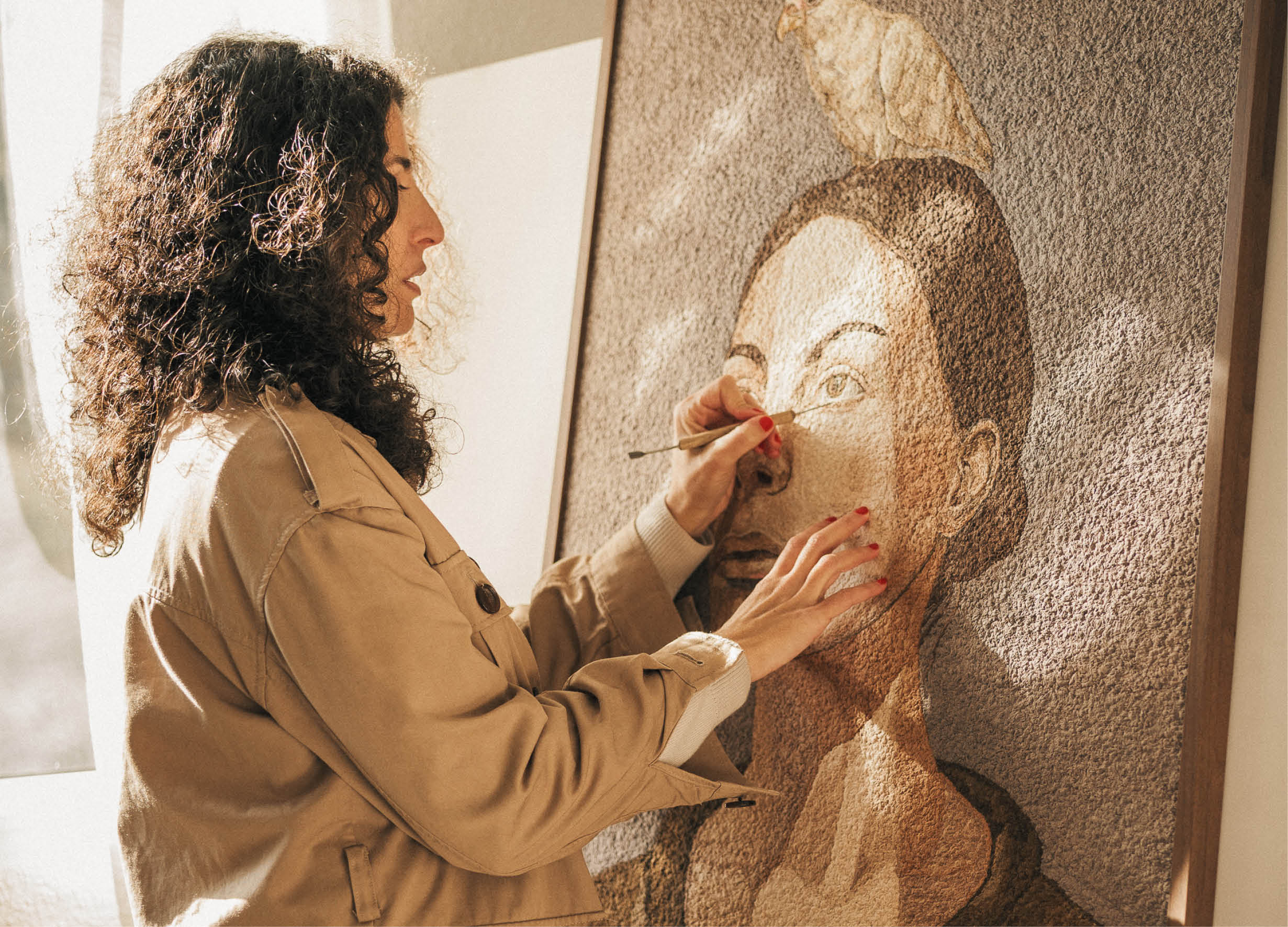
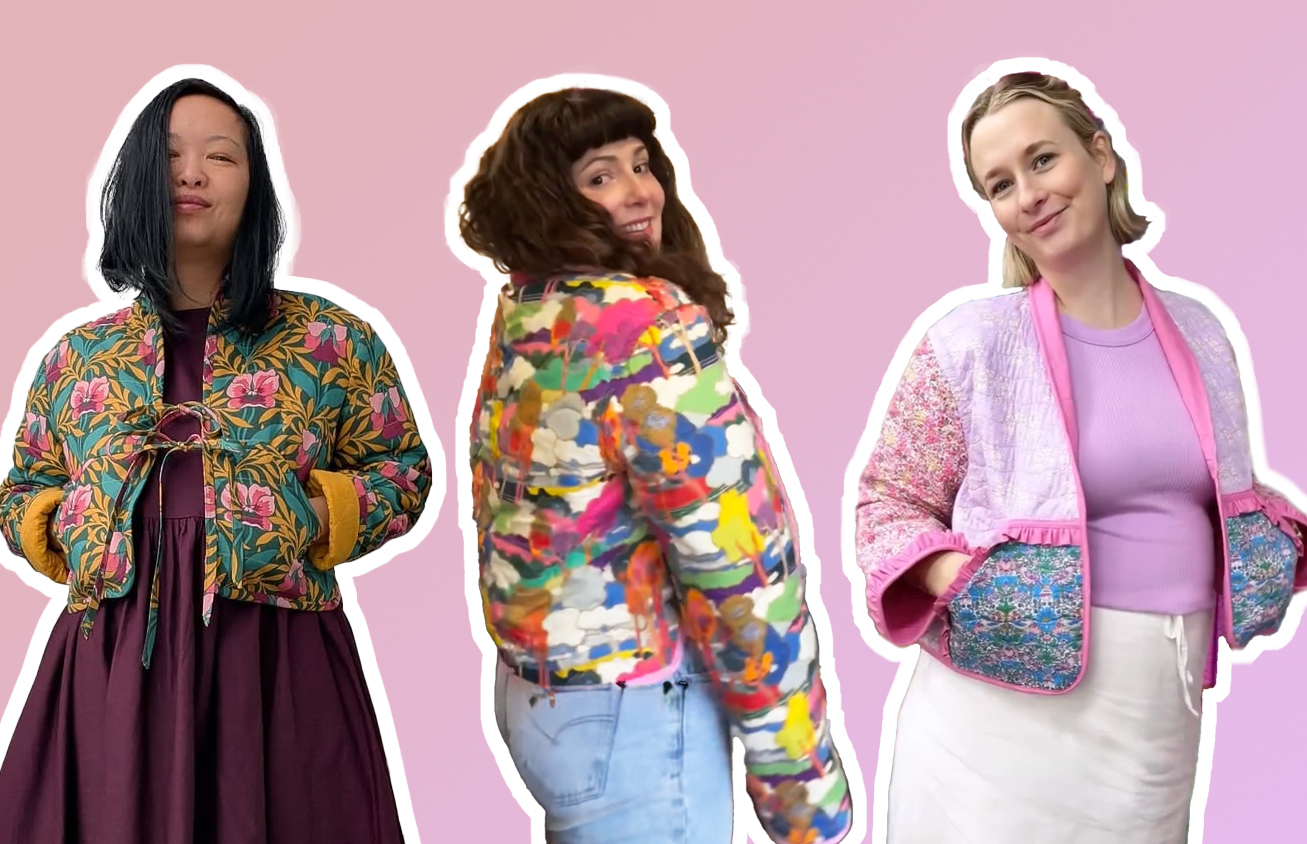
“My piece of advice for makers and designers? Run your own race… make sure your key decisions stay anchored in your brand’s core beliefs.”
- Bec Bligh
Quick show of hands: who’s opened a water bottle expecting a refreshing sip… and instead been greeted by the unmistakable whiff of uh-oh?
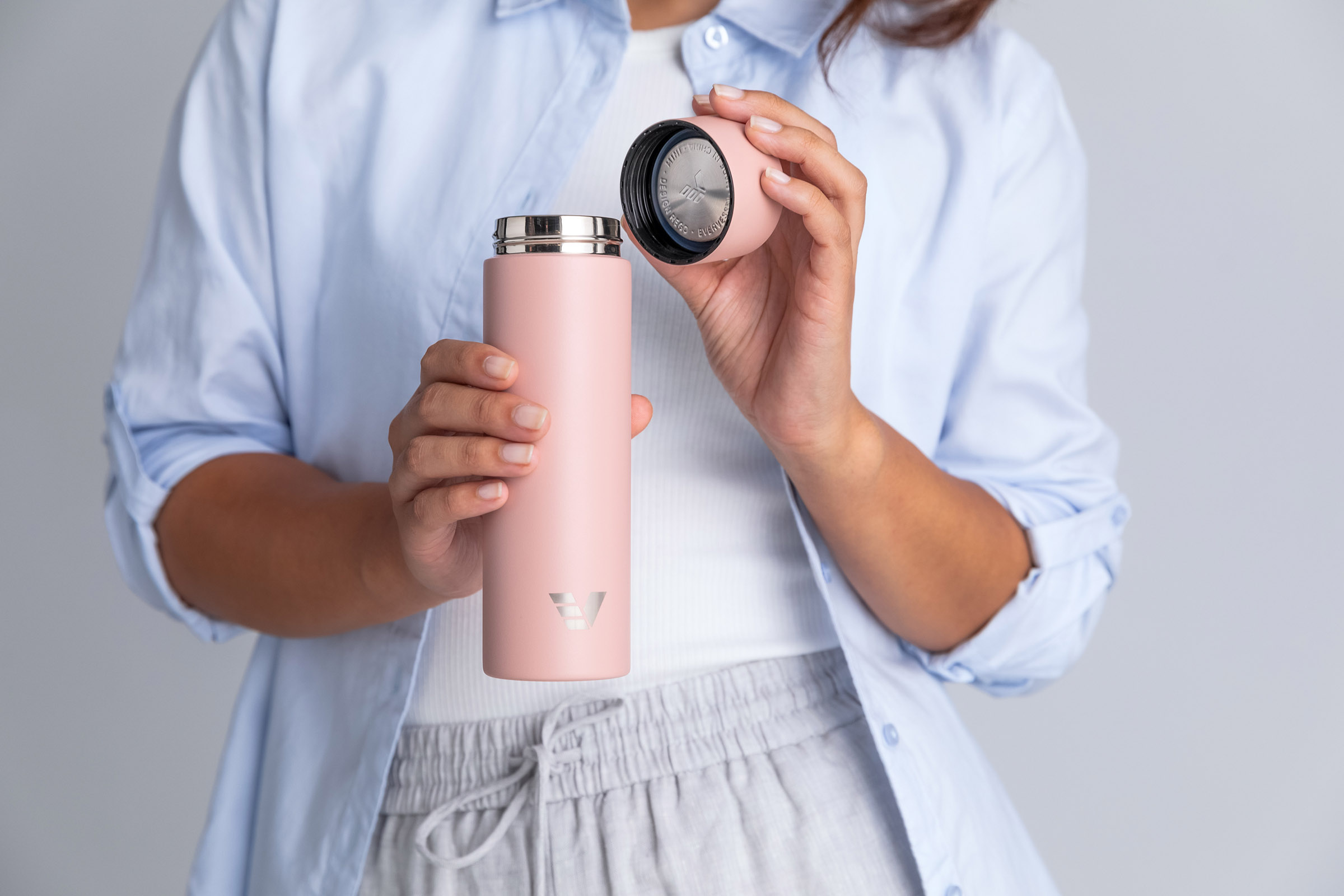
Because for something that follows us everywhere (desk, car, hikes, yoga…), the humble drink bottle is strangely prone to becoming a science experiment. Hard-to-clean corners and gaskets. Mystery smells. Bec Bligh and her husband Tim know it well. A six-month sailing trip along the Queensland coast left them with a lifetime of memories and one stubborn annoyance: mouldy water bottles they couldn’t properly clean.
So they did something about it.
Enter @EverVessel. Thoughtfully designed borosilicate glass and stainless steel bottles that keep things beautifully simple: durable materials, wide openings, easy-to-clean parts and none of the techy gimmicks that tend to age badly. Turns out simplicity, done well, is pretty powerful stuff. (Their many design awards agree!)
And lately they’ve added a little extra delight: the Artist Series, where creatives like Paola Castro, Ben Miners and Martin Thompson transform these everyday companions into tiny travelling artworks. There are more colabs in the works, too: hydration, but make it joyful! 🎨💧
We chatted with Bec about the sailing trip that started it all, the philosophy behind Ever Vessel, and why the most sustainable product is often just the one you keep using.
Tap the link in our bio to read the full conversation. 🚰
#EverVessel #ReusableWaterBottle


Pull up a chair… there’s room at this table!
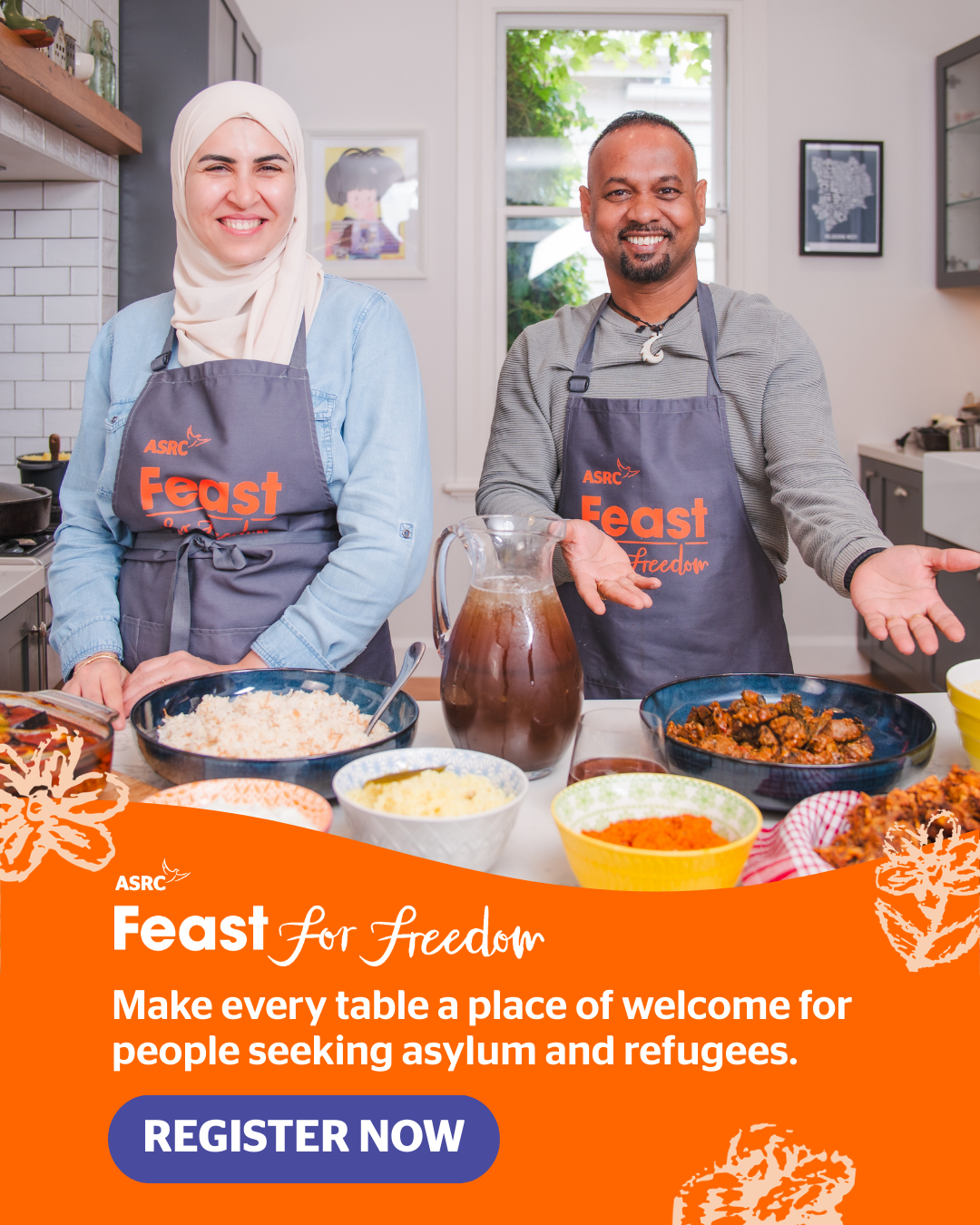
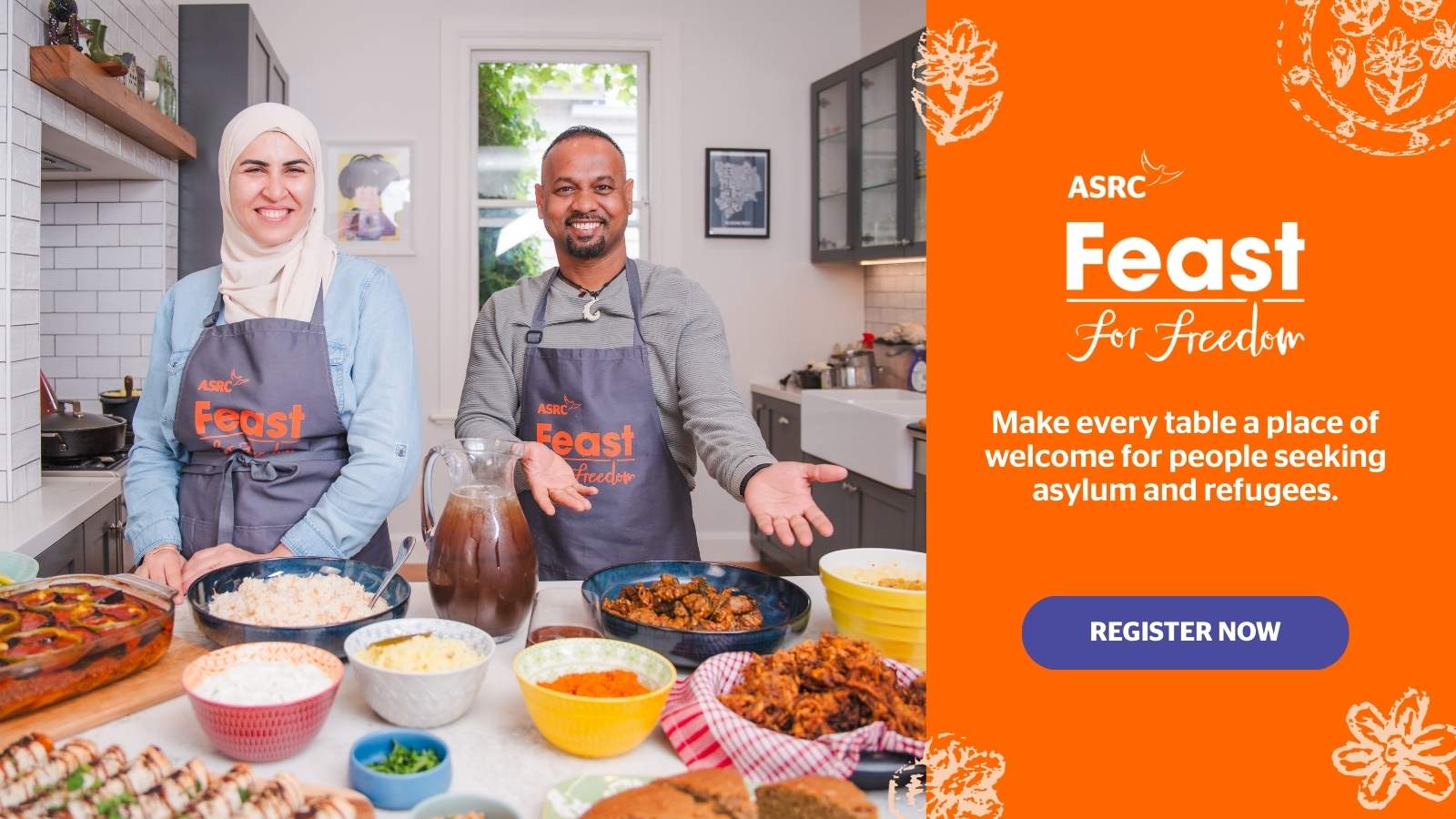
For the first time, Feast for Freedom is bringing people together for a spectacular long-table dinner as part of the Melbourne Food & Wine Festival.
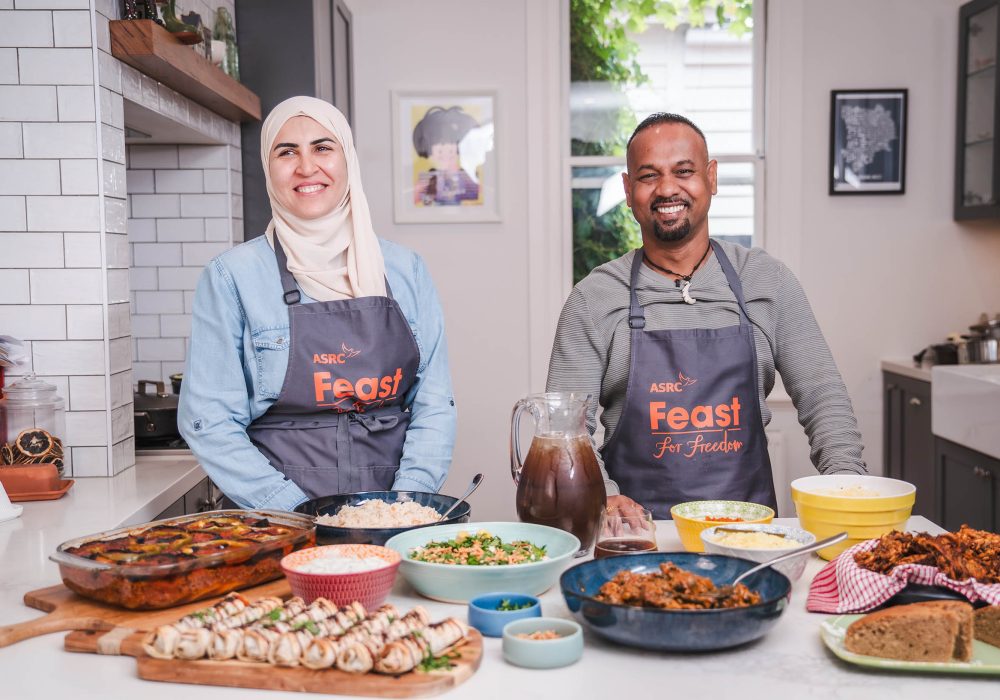
A Longer Table is exactly what it sounds like: one beautiful shared table inside the Asylum Seeker Resource Centre (@Asrc1), piled with generous dishes inspired by this year’s hero cooks, Noha and Nige.
From 6 to 9pm on Wednesday, 25 March, this is what you can expect:
🍽 A three-course shared feast
🍷 Matched drinks
🎶 Live entertainment
✨ A room full of good humans
Your ticket doesn’t just buy you a delicious dinner. It supports the ASRC’s vital work and helps create a fairer future for people seeking asylum.
Seats are limited, and long tables have a way of filling up quickly – head to @MelbFoodAndWine’s website to book now: feastforfreedom.org.au/mfwf
#FeastForFreedom #MelbourneFoodAndWineFestival #LongTableDinner #FoodForChange

Sew versatile! 🪡
Another great make from Lisa from @SunnySewsEveryday:
My #PeppermintWaratahWrapDress is finished and I’m so proud of it. It has been designed not to flap open and flash your pants in the wind, so I feel confident it will be a great wheelchair or standing dress in English weather.
#PeppermintPatterns #WrapDress #WrapDressPattern

Frame your face with the Peppermint Bucket Hat!
Stay safe and stylish in the sun with your very own self-sewn and self-drafted wide-brimmed bucket hat. This beginner-friendly sew is perfect for a sunny day. Get out your pencils – this pattern is created using equations and maths!
This DIY project was featured in Issue 53 and now you can access it for the lovely low price of only $5.
Sun-safe chic is always in style. ☀️
Find it via the link in our bio!
Photos: @KelleySheenan
#PeppermintPatterns #PeppermintBucketHat #BucketHat #BucketHatPattern #DIY

✨ INSTANT CLASSIC ✨
The Peppermint Myrtle Shift Dress is a beginner-friendly make with a few special details based on the ever-stylish shift shape – the perfect dress you need in your wardrobe right now!
Myrtle cuts above the knee with options to customise the length. Don’t think she’s reserved for hot weather either: try a heavier-weight fabric to turn your Myrtle into a pinafore-style garment for layering.
For our fabrics we chose two from our lovely sewing partner @Karmme_Apparel – the bold Rottnest Stripes in a lightweight, soft-drape cotton, and the quality linen in the handpainted Mexico Collection.
Get making the Myrtle – the only question is, can you stop at just one?
Link in bio 🪡
Fabric: @Karmme_Apparel
Sewist: @Laura_The_Maker
Photos: @KelleySheenan
Models: @SerahSews and @Pins_And_Tonic
Location: @ShareTheDignityAustralia
#PeppermintMyrtleShiftDress #PeppermintPatterns

It’s time to Feast!
Some recipes travel a long way before they land on your table to delight your taste buds. This year’s Feast for Freedom invites us to gather our friends, cook something delectable and raise funds for the incredible work of the Asylum Seeker Resource Centre (@Asrc1) while we’re at it.
The 2026 Feast features recipes shared by two remarkable cooks: Noha, who brought the flavours of Palestine with her when she arrived in Australia, and Nige, a Sri-Lankan Tamil cook whose journey with food began in the most unexpected of places.
You can host your own Feast up until 30 April – simply register online and get planning! Host a dinner, organise a workplace lunch, or gather your community… However you do it, the idea is simple: cook, connect and celebrate the cultures and stories that shape Australia.
Want to find out more? Head to the link in bio to meet Noha and Nige, learn more about their stories, and discover a delicious recipe to try.
#FeastForFreedom #PeppermintMagazine #FoodForGood #ASRC
