words HANNAH MCELHINNEY
As World Pride celebrations begin to wind down in Sydney, it’s important to consider the history of Pride and remember the history of LGBTQIA+ rights in Australia. In this extract from Rainbow History Class, Hannah McElhinney reflects on the radical origins of rainbow celebrations.
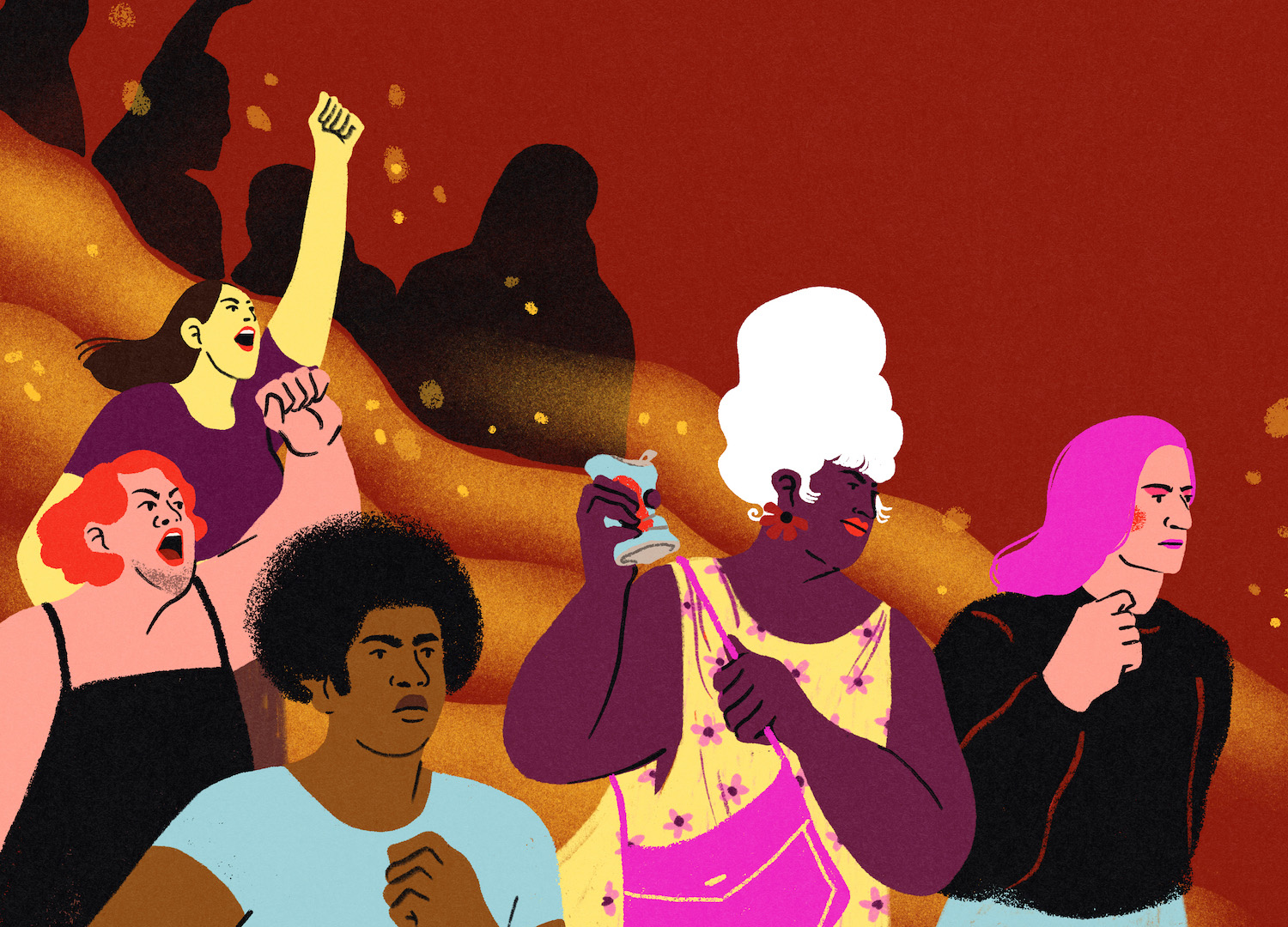
Today, Pride celebrations occur all over the world and are usually marked by flamboyant dress, dance music, posturing and (eco-friendly) glitter that never leaves your clothes – or your bed sheets. We go to be visible and to celebrate our community, with parties so big they fill stadiums and close down city streets.
It’s heady and intoxicating, but if you were to look closely at the crowd, you might spy an older person in their seventies or even eighties reflecting on the fact that these few hundred thousand strangers have all converged in one place to mark the anniversary of a night they were arrested…
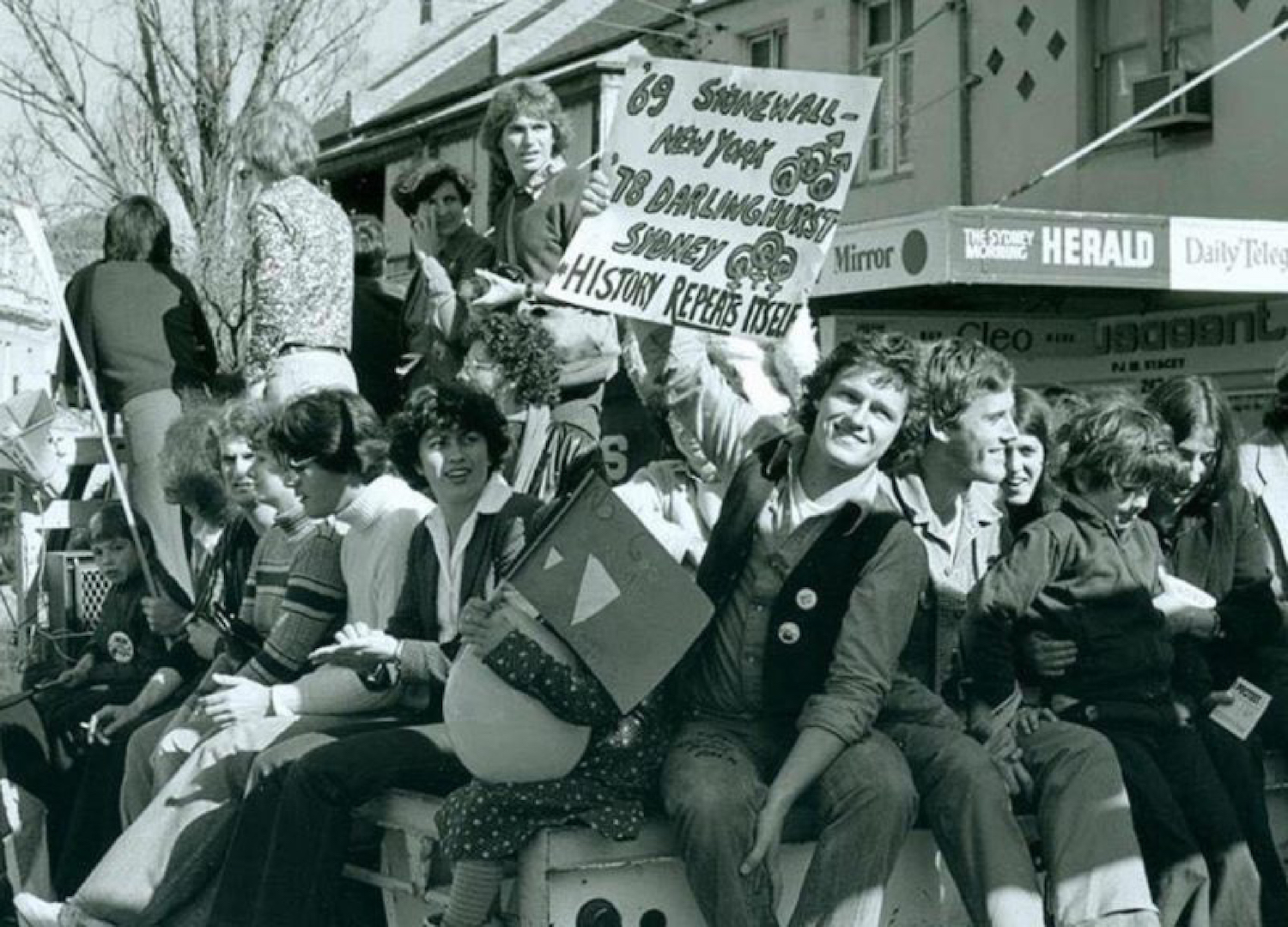
above AUSTRALIAN GAY AND LESBIAN ACTIVISTS AT THE MORNING MARCH HELD ON 24 JUNE 1978 IN COMMEMORATION OF THE STONEWALL UPRISING. LOOK CLOSELY AT THE FLAG IN THE FOREGROUND AND YOU’LL RECOGNISE A PINK INVERTED TRIANGLE. IT MIGHT SEEM PERVERSE THAT THIS NAZI HATE SYMBOL WOULD BE WAVED AROUND BY A YOUNG CHILD AMONG SMILING GAY AND LESBIAN ACTIVISTS, BUT THE PINK TRIANGLE WAS RECLAIMED BY THE COMMUNITY AS A SYMBOL OF RESILIENCE AND IN AUSTRALIA WAS THE PRIMARY SYMBOL OF LGBTQ+ PRIDE UNTIL THE MID-1990S, WHEN THE RAINBOW TOOK OVER.
In Australia, the psychiatry industry said homosexuality should be treated as a mental illness. Homosexual people would still be arrested, but they could often have their sentences reduced or commuted if they submitted to treatment. Such ‘treatments’ would involve aversion therapy – a horrific process where a person would be given drugs to induce nausea and vomiting before being shown photos of their lovers in an attempt to rewire their brain, replacing love with disgust. Sometimes, they resorted to brain surgery.
It’s heady and intoxicating, but if you were to look closely at the crowd, you might spy an older person in their seventies or even eighties reflecting on the fact that these few hundred thousand strangers have all converged in one place to mark the anniversary of a night they were arrested…
Traditional lobotomies had fallen out of favour by then, but psychosurgery was common in the 1970s, particularly if you were a lesbian. Lesbians were often forced to undergo an amygdalotomy, which involved the removal of part or all of the amygdala (a pretty important part of the brain) in order to cure a patient’s attraction. In the early 1970s, one Sydney hospital was responsible for performing two amygdalotomies a week on lesbians, under the knife of a Dr Harry Bailey. To protest Bailey’s butchery of the community, activists dumped a bucket of bloody sheep’s brains in the foyer of his offices.
READ MORE: The Art of Resistance – How Sewing is Stitched into Pride’s History
Activists in Australia were in close contact with their international counterparts, and took inspiration from actions overseas. But solidarity and unity was a given; with just a fraction of the US population, numbers were everything. Members of the gay liberation movement would also be present at women’s demonstrations, anti-war demonstrations and anti-capitalist demonstrations. They were all in it together.
If the movie Mean Girls had been about 1970s activists, one character would have proclaimed, “On Saturdays, we wear combat boots.” Weekly protests were routine for the angry and idealistic, but they were anything but mundane. Demonstrations frequently escalated to police violence and arrests, but also featured dancing and celebration. Gay and lesbian people were determined to match hatred and violence with pride and fun.
In 1978, US-based activists reached out to the international community requesting solidarity action as part of their Christopher Street Liberation Day plans. In Australia, an organisation called Campaign Against Moral Persecution (CAMP) agreed to hold a solidarity protest in Sydney, followed by a celebratory parade.
If the movie Mean Girls had been about 1970s activists, one character would have proclaimed, “On Saturdays, we wear combat boots.”
A permit was issued for the event, the protest went smoothly and the community was looking forward to the evening’s celebration.
But it soon became clear that despite granting a permit for the event, the police were not in the mood to party. They began to urge the parade on, pushing the revellers to move swiftly through the streets of Sydney. Many believe what came next was because the police couldn’t stand the sight of gay and lesbian people celebrating themselves. Peaceful picketing may have been one thing, but pride was a bridge too far.
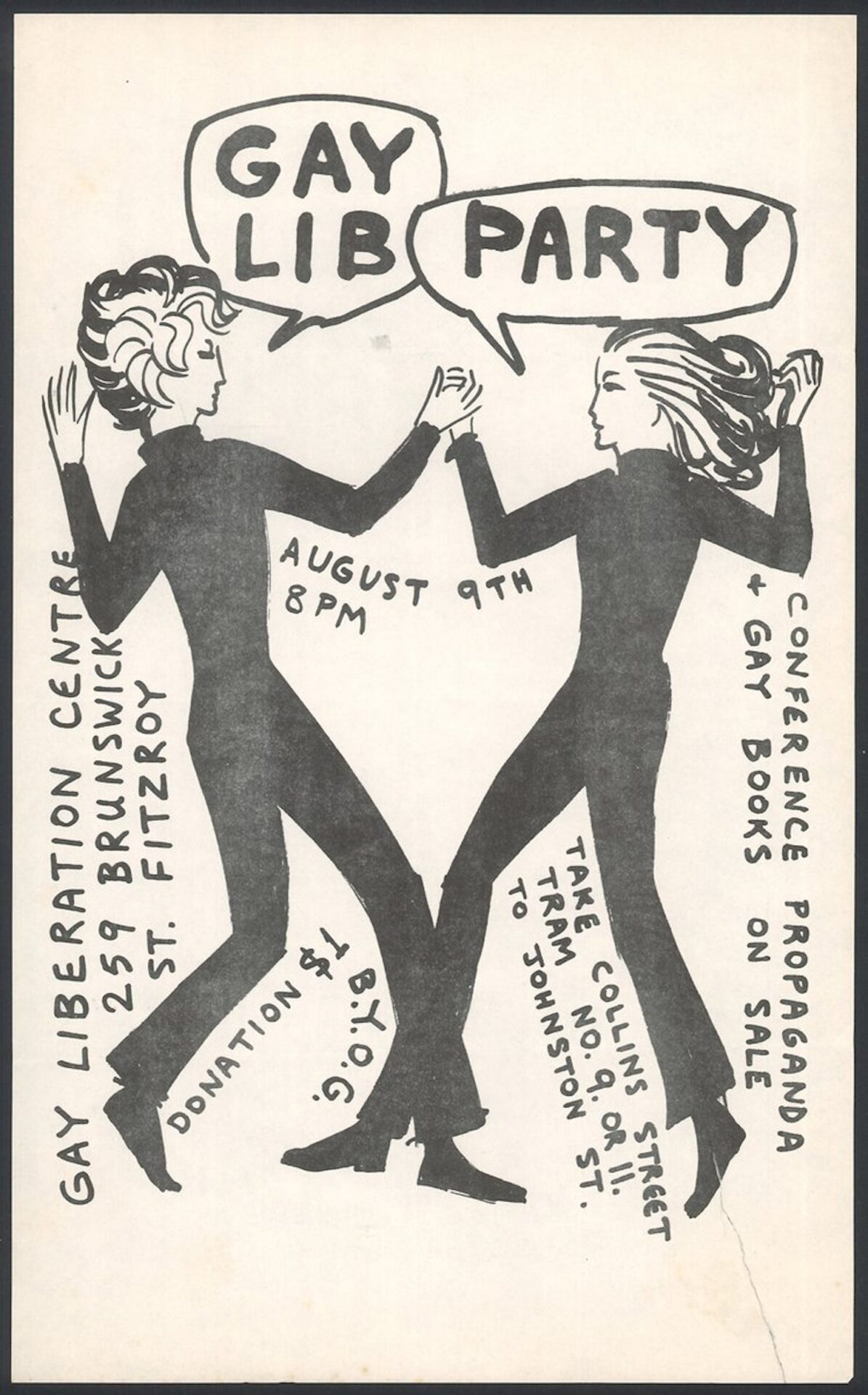
above IN AUSTRALIA, DANCES AND PARTIES BROUGHT ACTIVISTS TOGETHER, BUT POLICE HARASSMENT WAS A FREQUENT OCCURRENCE – AS IT WAS DURING THE EVENT ADVERTISED ON THIS POSTER.
The police confiscated the truck and stereo at the head of the parade, shifting the buoyant mood to one of anger and uncertainty. As the group made their way towards Kings Cross, the police began beating and arresting people. In the ensuing days the media released the names and occupations of all those arrested. Many lost their jobs, their families, their rental tenancies. Some died by suicide.
READ MORE: How to Be a Good Ally All Year Round… Not Just During Pride Month
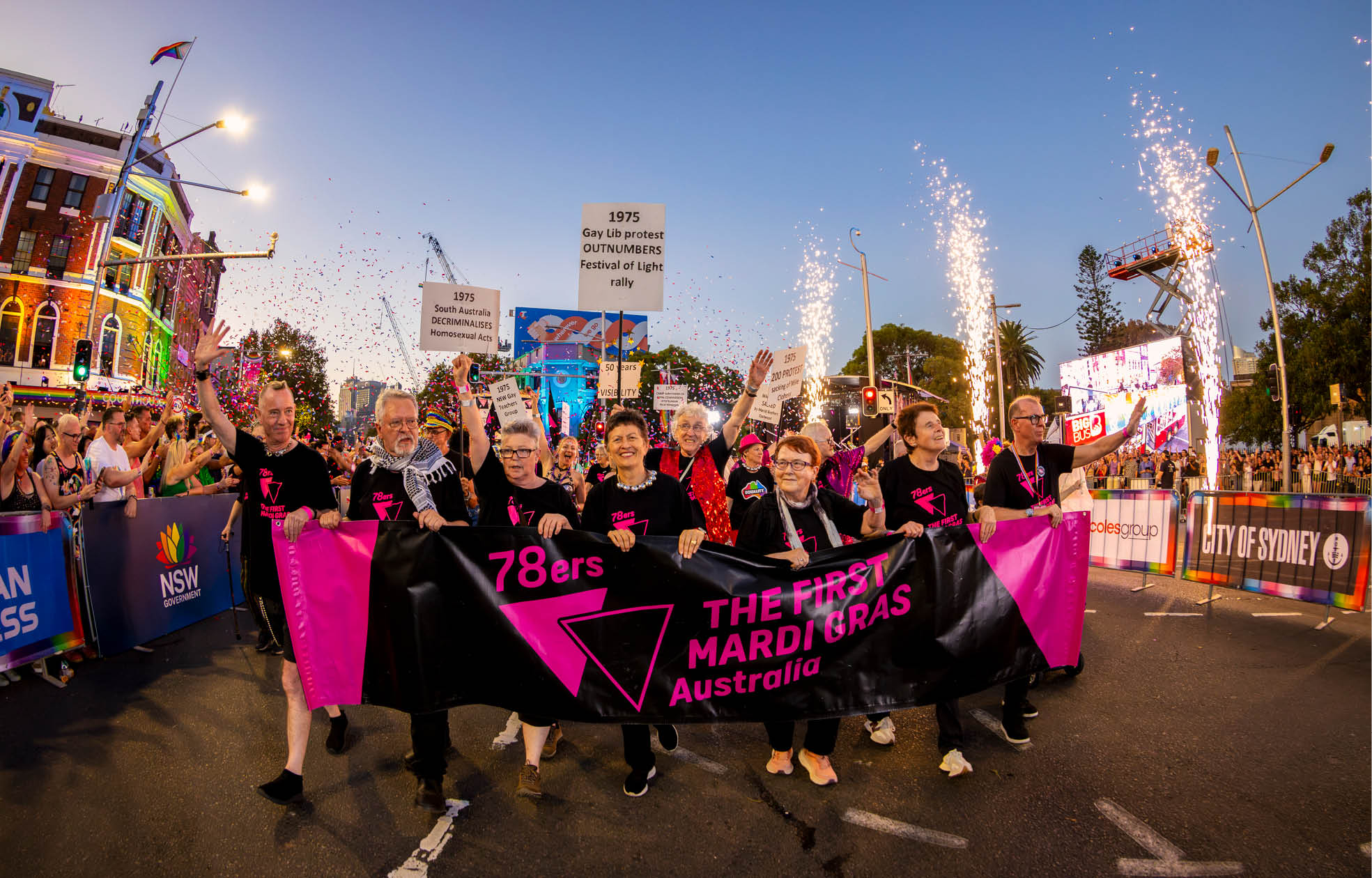
The cruelty that occurred that night left a vicious scar on the lives of lesbian, bisexual, gay and transgender people in Australia, but it did change something. Just like the Stonewall Uprising stirred the people of New York, the event triggered a stream of protests (and a fair few more arrests) that gathered momentum across Sydney, and eventually resulted in most of the charges being dropped. The following year, the community braced themselves for a repeat of 1978, but their carefully collected bail fund remained untouched. The parade was peaceful and these brave activists celebrated what came to be known as the second Sydney Mardi Gras.
Come Pride season, it’s important to remember who fought for our right to party, but also remember that for queer and trans people, partying will always be political.
The political element of the Sydney Mardi Gras was soon overtaken by the party focus, reflected in the decision to hold future events in summer. After all, a chilly Australian winter didn’t provide much of a backdrop for celebration. The shift drew criticism from some people who believed the event had forsaken its protest roots.
Pride marches around the world have had to contend with this concern – that the radical origins of Pride have been obscured behind the facade of a party. Come Pride season, it’s important to remember who fought for our right to party, but also remember that for queer and trans people, partying will always be political.
This is an edited extract from Rainbow History Class by Hannah McElhinney, published by Hardie Grant Books, RRP $32.99. Available in stores nationally from 8 March.
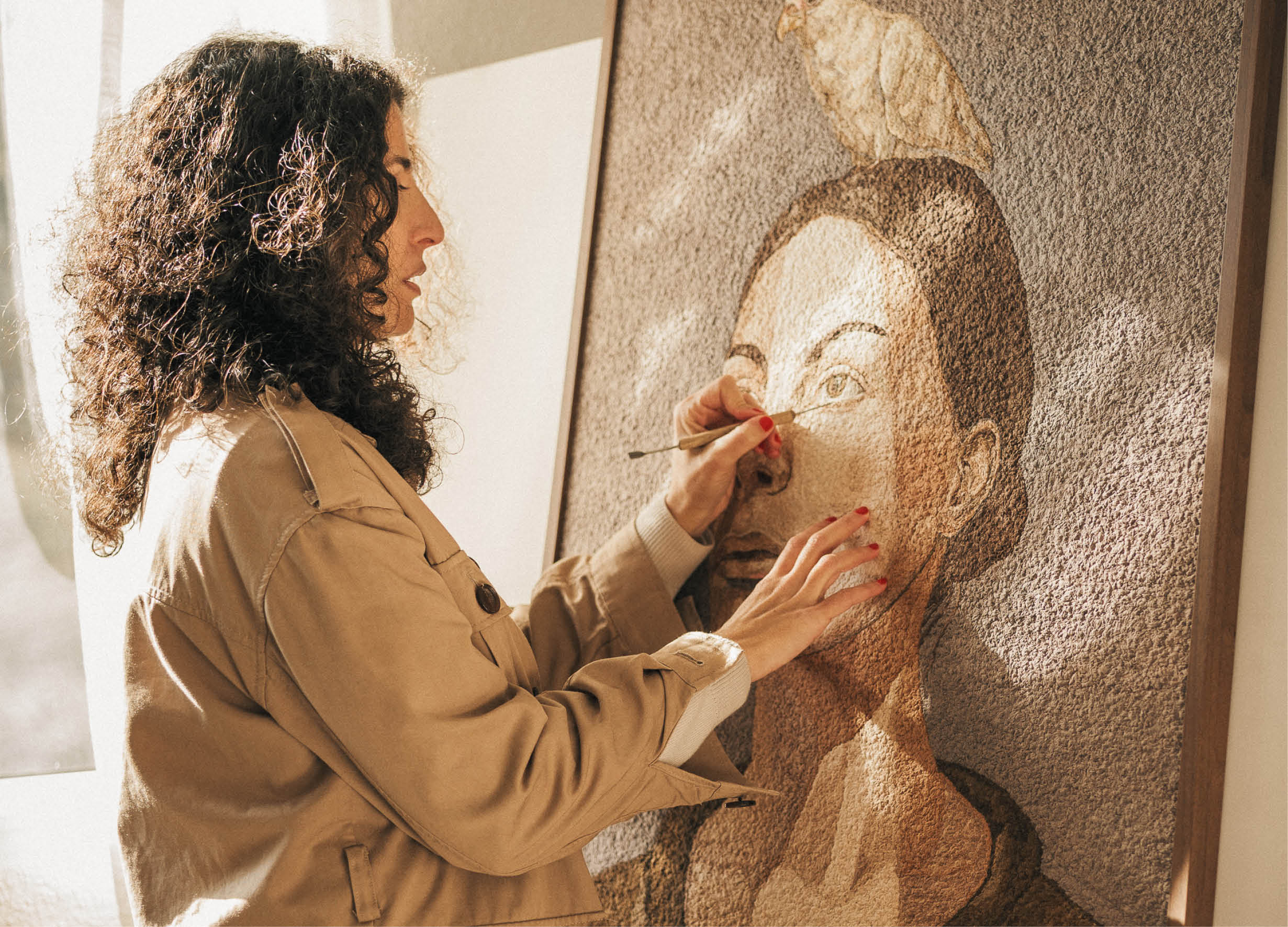

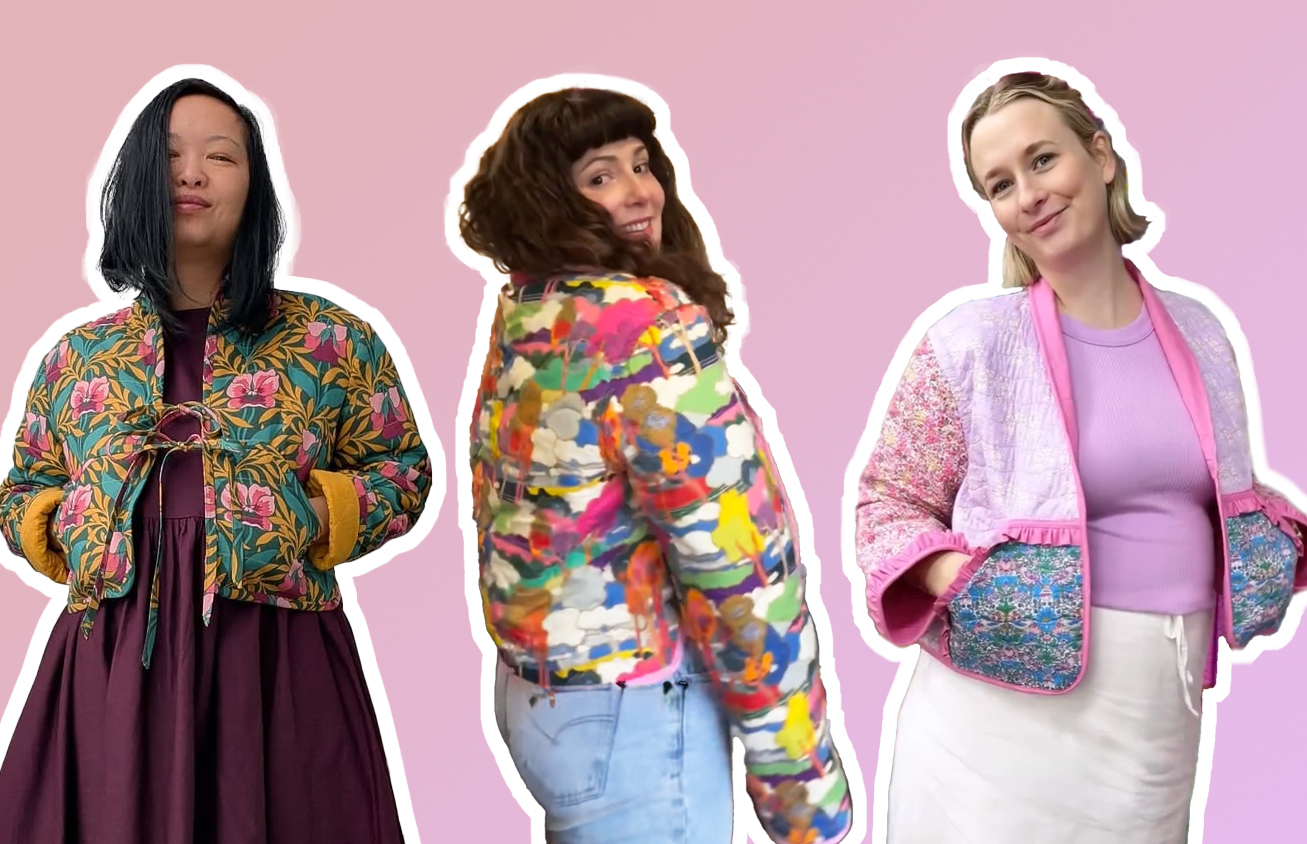
“My piece of advice for makers and designers? Run your own race… make sure your key decisions stay anchored in your brand’s core beliefs.”
- Bec Bligh
Quick show of hands: who’s opened a water bottle expecting a refreshing sip… and instead been greeted by the unmistakable whiff of uh-oh?
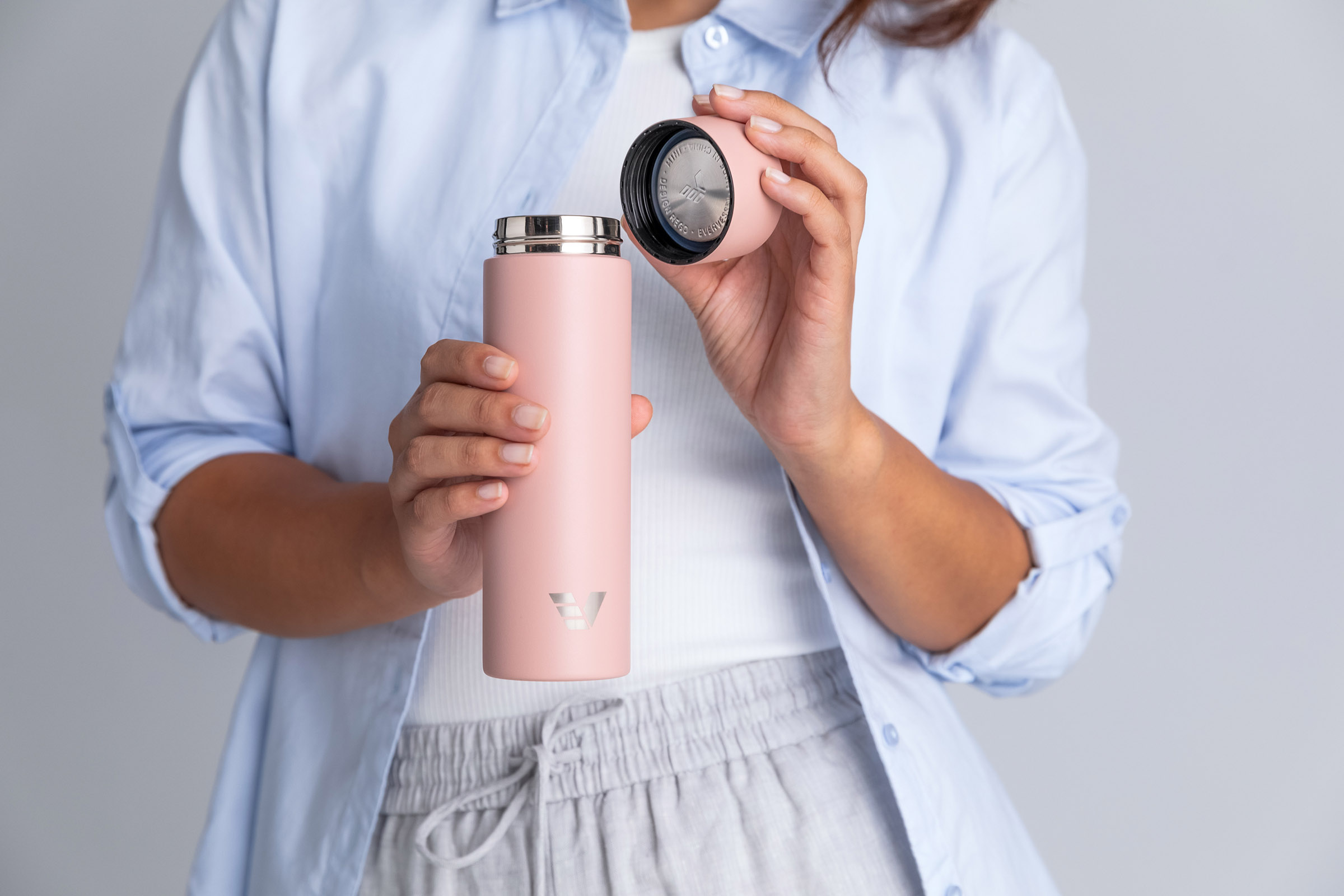
Because for something that follows us everywhere (desk, car, hikes, yoga…), the humble drink bottle is strangely prone to becoming a science experiment. Hard-to-clean corners and gaskets. Mystery smells. Bec Bligh and her husband Tim know it well. A six-month sailing trip along the Queensland coast left them with a lifetime of memories and one stubborn annoyance: mouldy water bottles they couldn’t properly clean.
So they did something about it.
Enter @EverVessel. Thoughtfully designed borosilicate glass and stainless steel bottles that keep things beautifully simple: durable materials, wide openings, easy-to-clean parts and none of the techy gimmicks that tend to age badly. Turns out simplicity, done well, is pretty powerful stuff. (Their many design awards agree!)
And lately they’ve added a little extra delight: the Artist Series, where creatives like Paola Castro, Ben Miners and Martin Thompson transform these everyday companions into tiny travelling artworks. There are more colabs in the works, too: hydration, but make it joyful! 🎨💧
We chatted with Bec about the sailing trip that started it all, the philosophy behind Ever Vessel, and why the most sustainable product is often just the one you keep using.
Tap the link in our bio to read the full conversation. 🚰
#EverVessel #ReusableWaterBottle


Pull up a chair… there’s room at this table!
For the first time, Feast for Freedom is bringing people together for a spectacular long-table dinner as part of the Melbourne Food & Wine Festival.
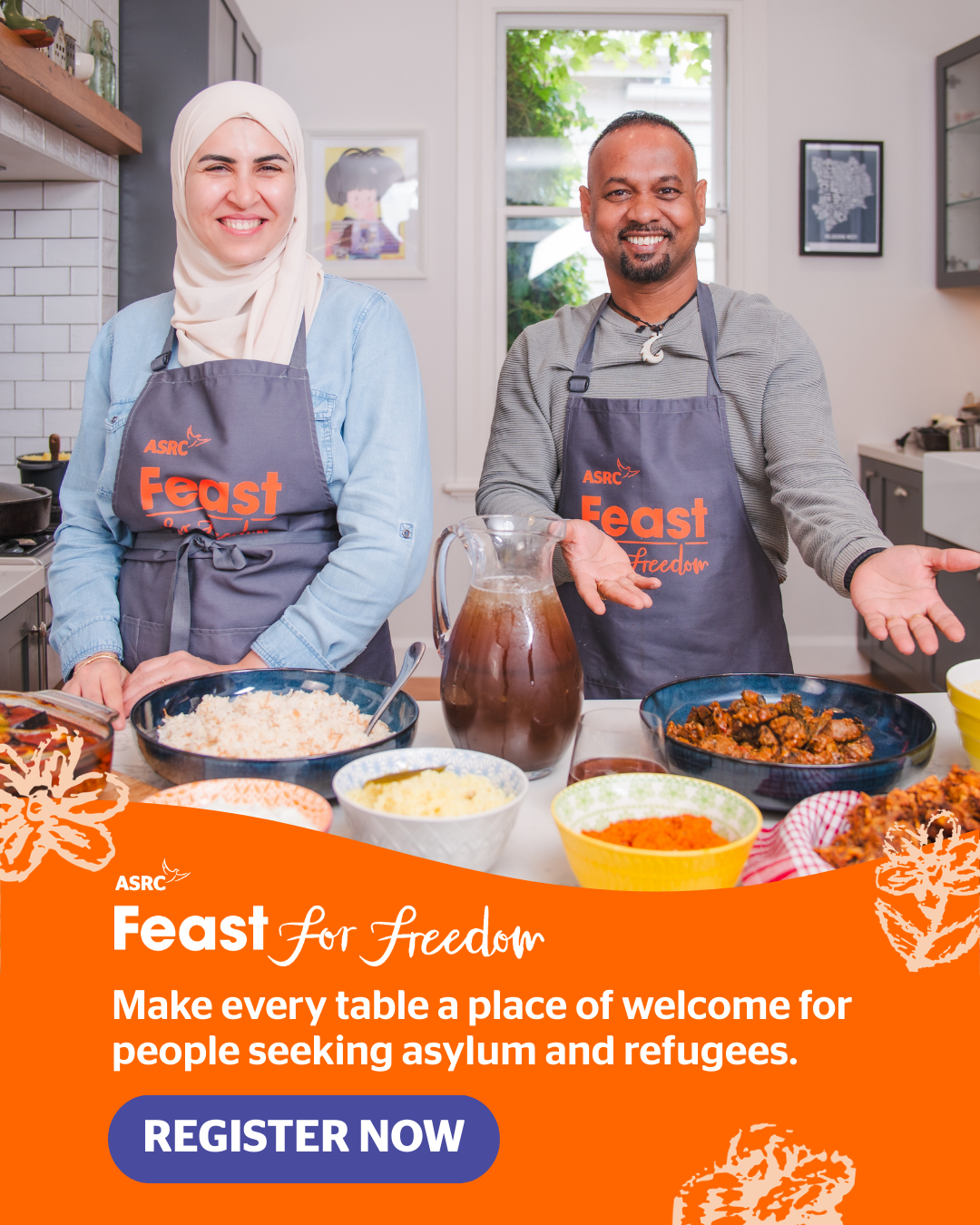
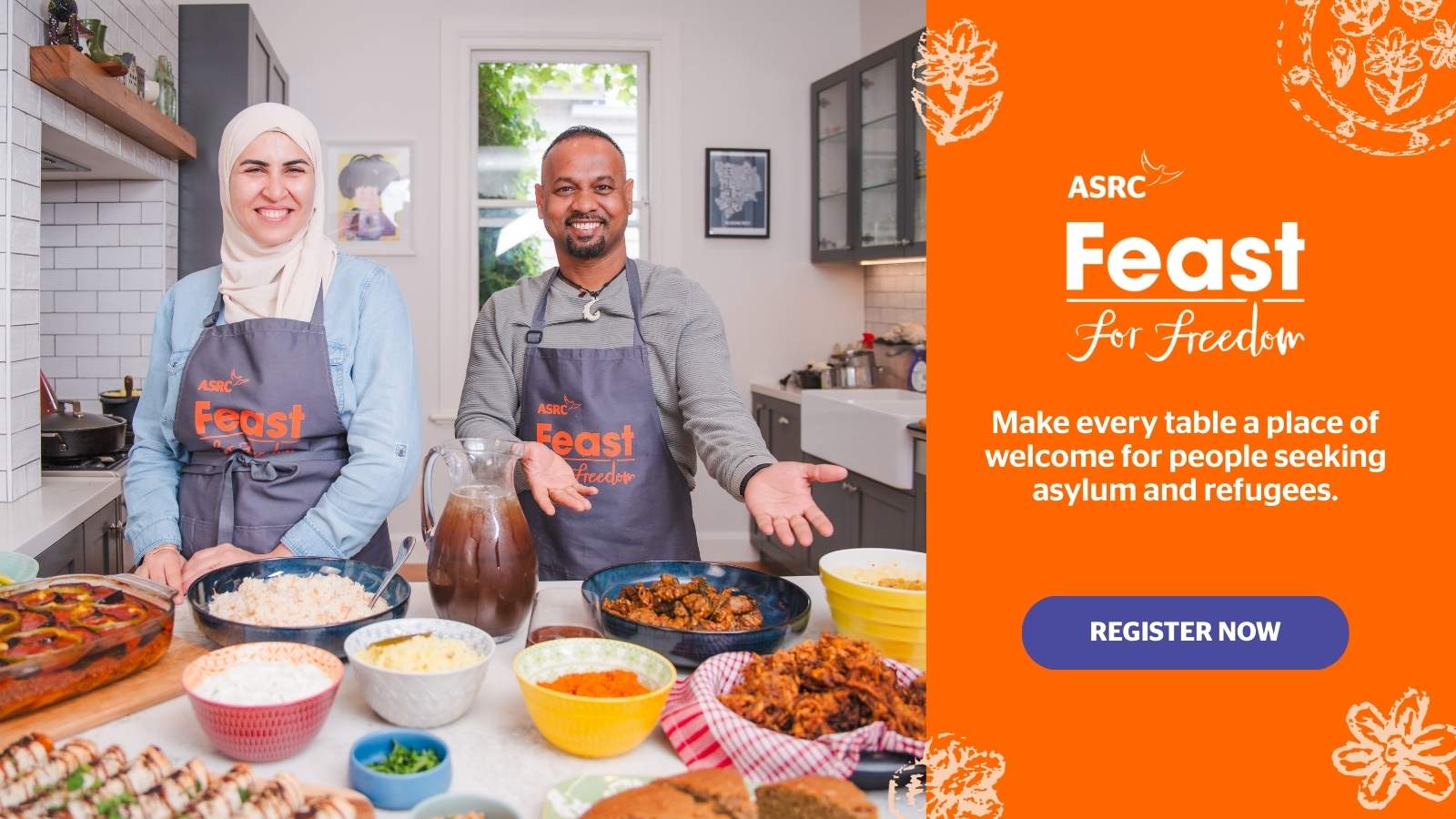
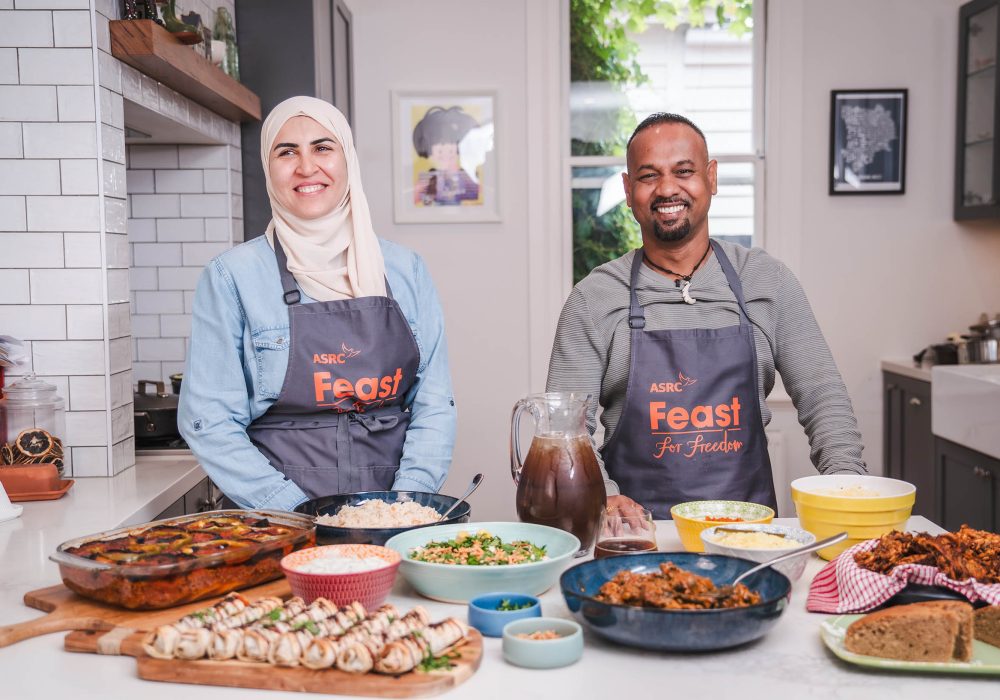
A Longer Table is exactly what it sounds like: one beautiful shared table inside the Asylum Seeker Resource Centre (@Asrc1), piled with generous dishes inspired by this year’s hero cooks, Noha and Nige.
From 6 to 9pm on Wednesday, 25 March, this is what you can expect:
🍽 A three-course shared feast
🍷 Matched drinks
🎶 Live entertainment
✨ A room full of good humans
Your ticket doesn’t just buy you a delicious dinner. It supports the ASRC’s vital work and helps create a fairer future for people seeking asylum.
Seats are limited, and long tables have a way of filling up quickly – head to @MelbFoodAndWine’s website to book now: feastforfreedom.org.au/mfwf
#FeastForFreedom #MelbourneFoodAndWineFestival #LongTableDinner #FoodForChange

Sew versatile! 🪡
Another great make from Lisa from @SunnySewsEveryday:
My #PeppermintWaratahWrapDress is finished and I’m so proud of it. It has been designed not to flap open and flash your pants in the wind, so I feel confident it will be a great wheelchair or standing dress in English weather.
#PeppermintPatterns #WrapDress #WrapDressPattern

Frame your face with the Peppermint Bucket Hat!
Stay safe and stylish in the sun with your very own self-sewn and self-drafted wide-brimmed bucket hat. This beginner-friendly sew is perfect for a sunny day. Get out your pencils – this pattern is created using equations and maths!
This DIY project was featured in Issue 53 and now you can access it for the lovely low price of only $5.
Sun-safe chic is always in style. ☀️
Find it via the link in our bio!
Photos: @KelleySheenan
#PeppermintPatterns #PeppermintBucketHat #BucketHat #BucketHatPattern #DIY

✨ INSTANT CLASSIC ✨
The Peppermint Myrtle Shift Dress is a beginner-friendly make with a few special details based on the ever-stylish shift shape – the perfect dress you need in your wardrobe right now!
Myrtle cuts above the knee with options to customise the length. Don’t think she’s reserved for hot weather either: try a heavier-weight fabric to turn your Myrtle into a pinafore-style garment for layering.
For our fabrics we chose two from our lovely sewing partner @Karmme_Apparel – the bold Rottnest Stripes in a lightweight, soft-drape cotton, and the quality linen in the handpainted Mexico Collection.
Get making the Myrtle – the only question is, can you stop at just one?
Link in bio 🪡
Fabric: @Karmme_Apparel
Sewist: @Laura_The_Maker
Photos: @KelleySheenan
Models: @SerahSews and @Pins_And_Tonic
Location: @ShareTheDignityAustralia
#PeppermintMyrtleShiftDress #PeppermintPatterns

It’s time to Feast!
Some recipes travel a long way before they land on your table to delight your taste buds. This year’s Feast for Freedom invites us to gather our friends, cook something delectable and raise funds for the incredible work of the Asylum Seeker Resource Centre (@Asrc1) while we’re at it.
The 2026 Feast features recipes shared by two remarkable cooks: Noha, who brought the flavours of Palestine with her when she arrived in Australia, and Nige, a Sri-Lankan Tamil cook whose journey with food began in the most unexpected of places.
You can host your own Feast up until 30 April – simply register online and get planning! Host a dinner, organise a workplace lunch, or gather your community… However you do it, the idea is simple: cook, connect and celebrate the cultures and stories that shape Australia.
Want to find out more? Head to the link in bio to meet Noha and Nige, learn more about their stories, and discover a delicious recipe to try.
#FeastForFreedom #PeppermintMagazine #FoodForGood #ASRC
