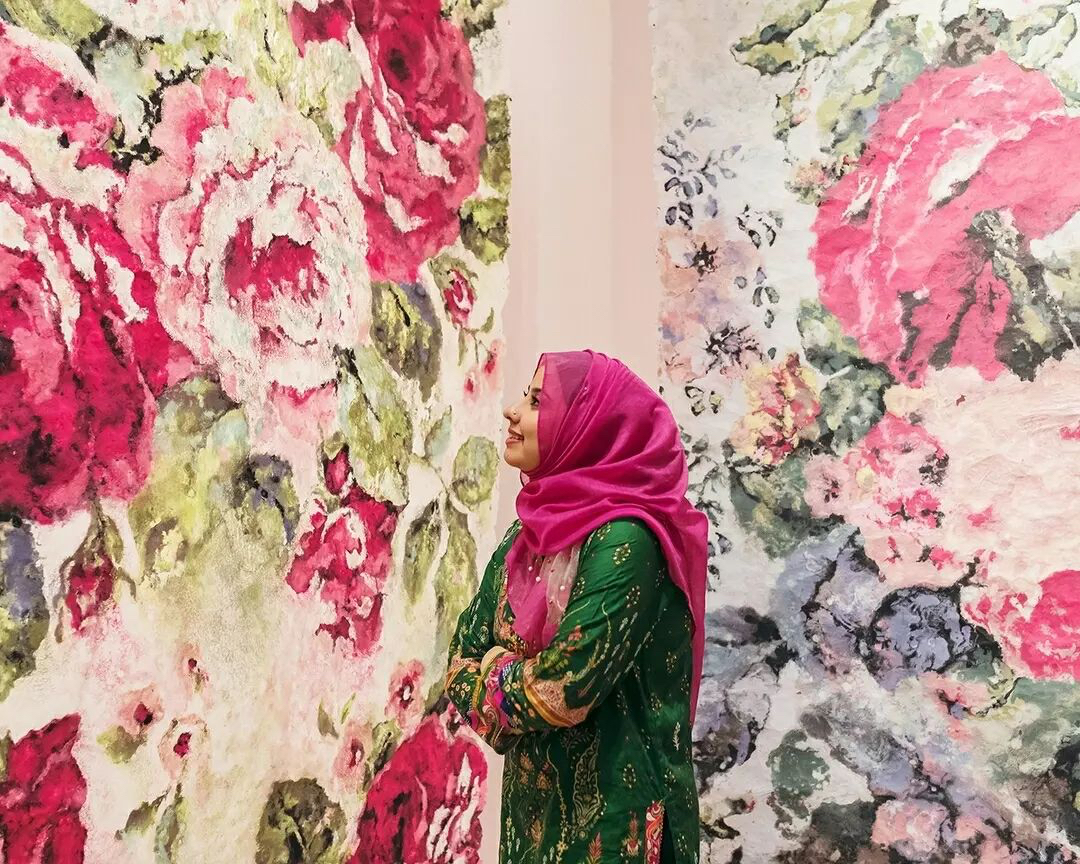
It appears the good folk at the Museum of Brisbane have gone wild for flowers. Case in point: the recent residency of Chantal Fraser that resulted in a blooming, creature-filled botanical installation. And Hiromi Tango, the latest Artist-in-Residence, who’s been working with crafty museum-goers to turn Adelaide Street Pavilion into a lush, bud-filled sanctuary.
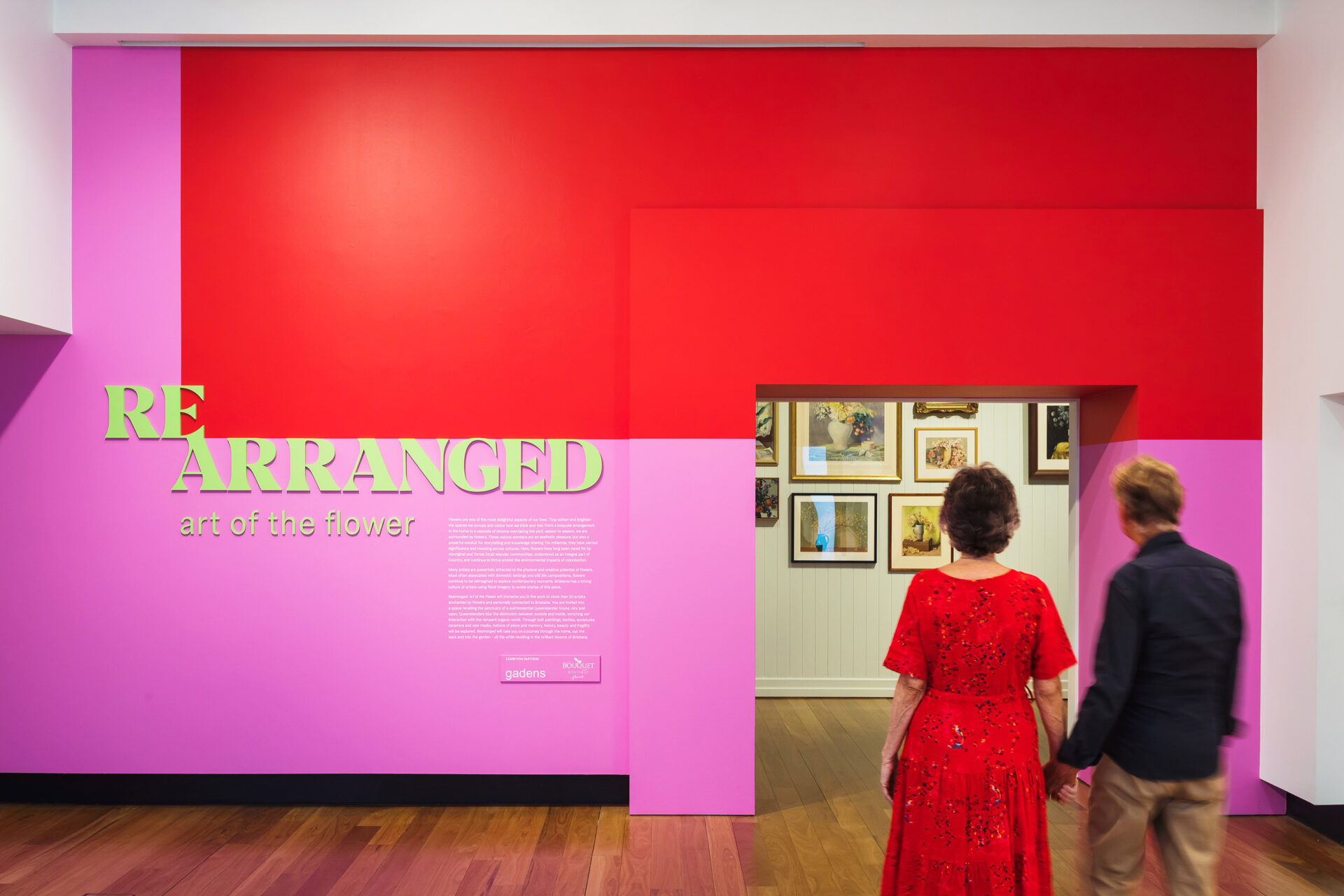
Then there’s the museum’s major exhibition, Rearranged: Art of the Flower, which takes a fresh look at the flora of Meanjin/Brisbane. Held in an airy space reminiscent of an old Queenslander, Rearranged has the work of luminaries Margaret Olley, Vida Lahey and William Bustard sitting alongside contemporary talents, such as Monica Rohan and Ashlee Becks.
Notions of comfort and cosiness, the everyday and the unobtainable run throughout, from the quiet still lifes of John Honeywill to the metres-long floral lounge-inspired works of Karen Stone. Michael Zavros and Judith Sinnamon explore the seductive beauty of invasive weeds, while multidisciplinary artist Elisa Jane Carmichael explores the ancestral memories imbued in the wildflowers of Quandamooka Country.
Here, we catch up with two of the featured talents – Norton Fredericks and Edith Rewa – to get their take on art’s most enduring motif and the Rearranged pieces they covet most.
above WORK BY KAREN STONE, PHOTOS BY KATIE BENNETT
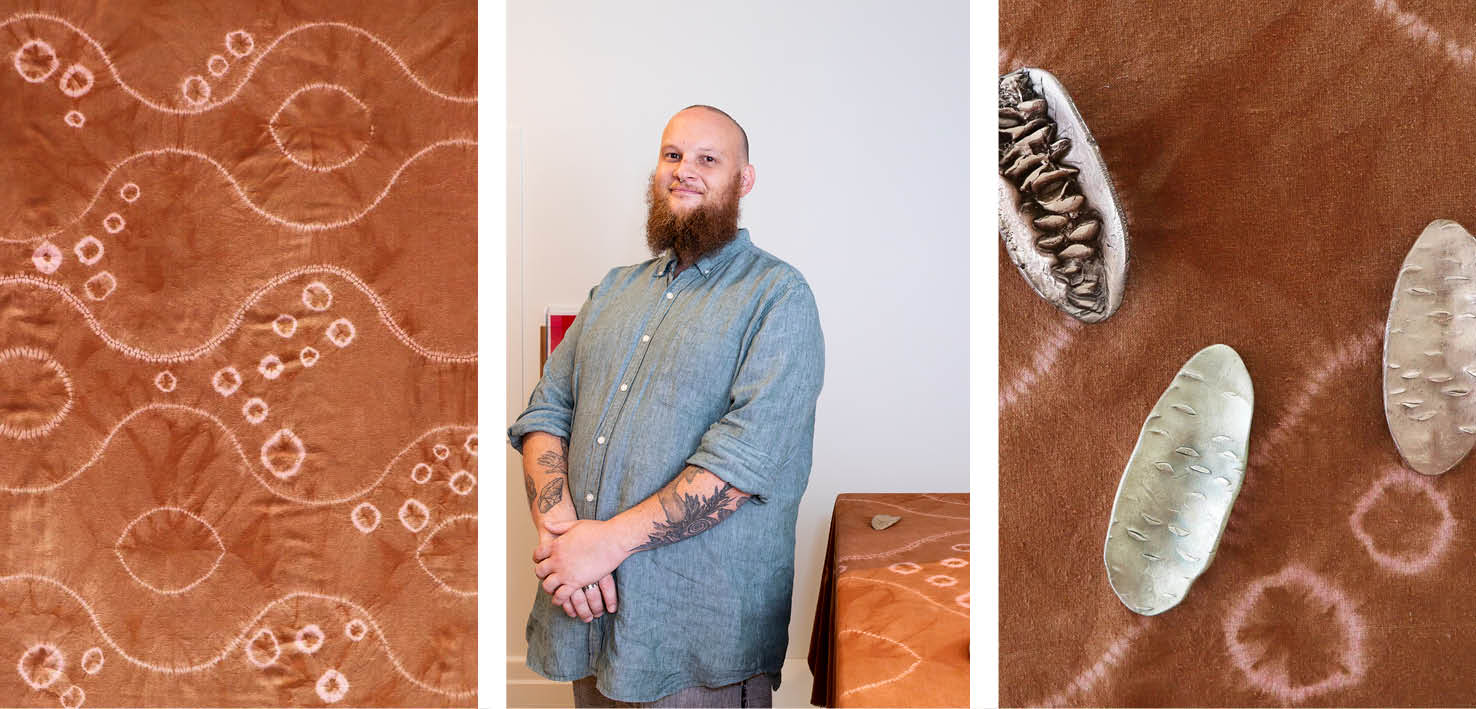
NORTON FREDERICKS / RETRITUS
Tell us about yourself!
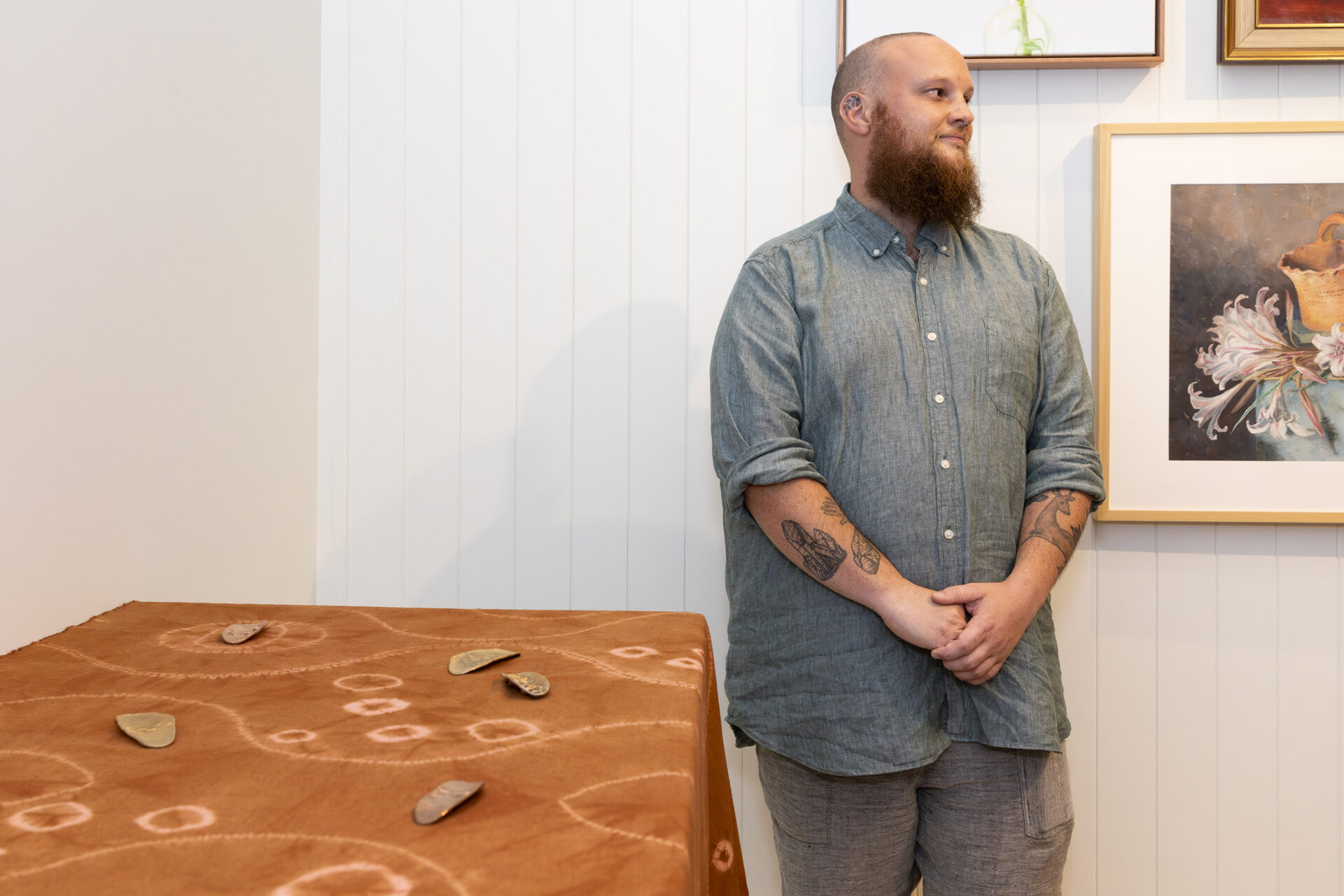
I am a queer visual artist with mixed European and Murri ancestry, who lives and works on Kombumerri Country/Gold Coast. I predominantly work with fibre, textiles, botanical dyes and bronze. My work is at the intersection of science and art, exploring the dialogue between environmental sustainability, queer ecologies and First Nations’ knowledges.
Now tell us about the garden of your wildest dreams. What grows there?
It would be full of endemic native plants and grasses. My house backs onto a river, so I’d love to restore the aquatic plants there as well.
Can you walk us through the work you created for Rearranged?
Banksia is created with silk, bronze and botanical dyes, using stitched shibori techniques and cast-bronze banksia seed pods. It considers the afterlife and the life cycle of flowers, focusing on the banksia seed pod as a beautiful, useful tool and as a knowledge-holder, as plants store memory for future generations in their seeds.
Flowers are a great example of perfect design and plant intelligence.
As an artist, what is it that fascinates you about flowers?
What fascinates me most is how each plant has evolved over time to interact with the animals in their area. Flowers are a great example of perfect design and plant intelligence.
If you could take home one work from the exhibition (other than your own), which one would you choose?
I would love to hang Christopher Bassi’s work in my home; I love the nostalgia in his paintings. A Passing Storm reminds me of the pavement at the front of my nan’s house – when I saw it in the exhibition, I could smell the frangipani flowers wilting on the warm concrete.
Read More – Discover Brisbane’s “Inclusive, Genderless, Timeless” Creative Space
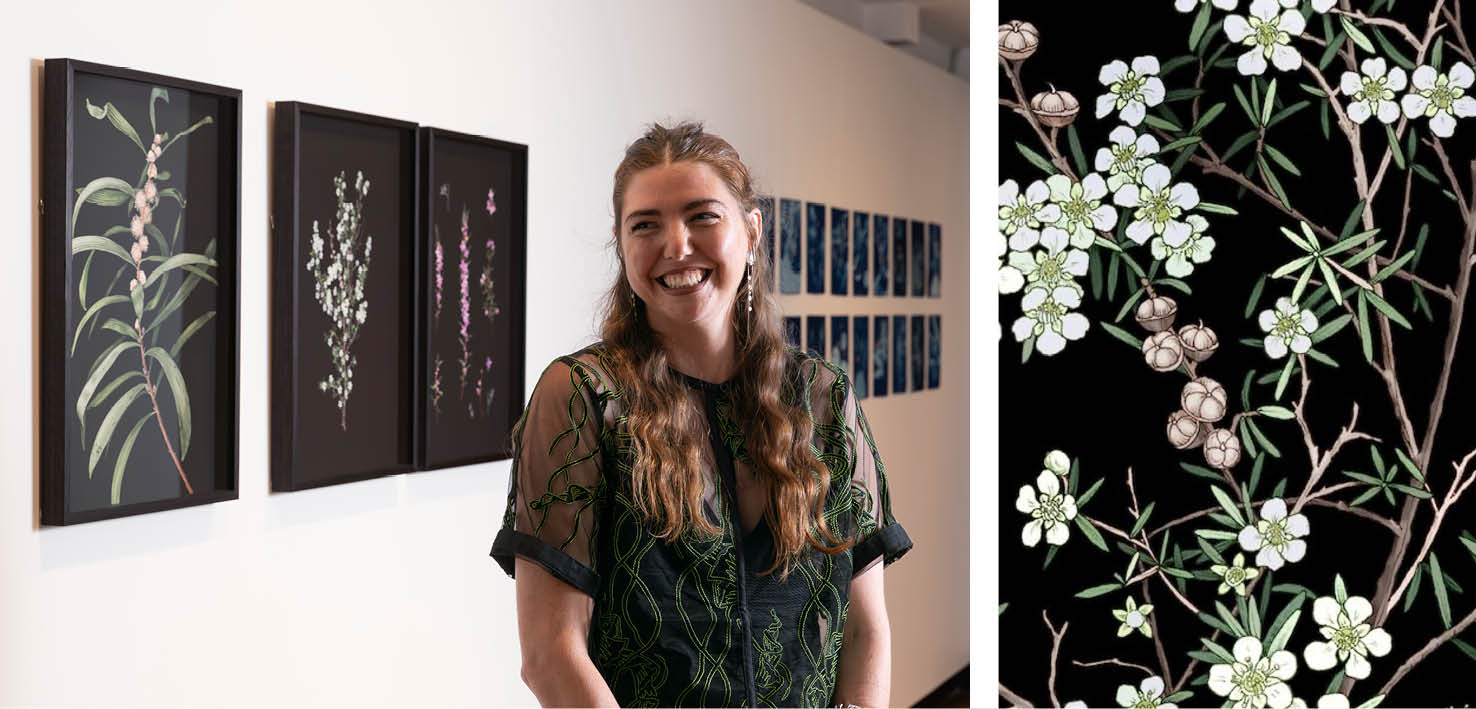
EDITH REWA
Tell us about yourself!
I like plants and patterns, and making patterns from plants! I’m a textile designer and illustrator, currently based in Meanjin. I split my time between client commissions – in publishing, conservation, stationery, fashion and design – and with exhibition work and my own scarf/artwork label, Edith Rewa.
Now tell us about the garden of your wildest dreams. What grows there?
Great question! I think it would be some sort of tessellated wonderland of coastal heath from south-east Queensland, New South Wales and Tasmania, with a subalpine section in there, too. A patchwork of native Australian garden bushland! Lots of epacris and tiny orchids, boronia, leptospermum [tea trees], flannels and auburn/copper grasses, with natural sandy spaces to lounge in and enjoy in between. Maybe it would be flanked with scribbly gums, olearias [daisy-bushes] and a few waratahs to keep awe levels up.
Chosen after many intimate moments and walks through the local reserve, these were the three plants that most spoke to me.
Can you walk us through the work you created for Rearranged?
The three plant portraits I created are species from Toohey Forest – bushland that’s surrounded by Brisbane suburbs on Turrbal and Yuggera Country. Chosen after many intimate moments and walks through the local reserve, these were the three plants that most spoke to me. I spent time researching, observing and getting to know each species before illustrating them in the bush and at my Annerley studio.
What are the three species you chose?
The Queensland hakea, Hakea benthamii, that reached above me for the sun; the tantoon, Leptospermum polygalifolium, that brushed my cheeks; and the forest boronia, Boronia rosmarinifolia, that made me stop, crouch down and admire its exquisite purple flowers. I placed the portraits in black-boxed worlds to let the plants’ individual personalities shine.
As an artist, what is it that fascinates you about flowers?
Almost everything! The diversity in colours, shapes, textures and scents, and the feelings of awe and wonder they bring up in me. The way they interact with the creatures and landscapes around them, their beauty, their clever adaptations and the way they make me stop and investigate or admire, capturing me completely.
If you could take home one work from the exhibition (other than your own), which one would you choose?
Sarah Rayner’s Flowerbones of Meanjin had me absolutely captivated. What a treat it would be to gaze at and admire them every day.
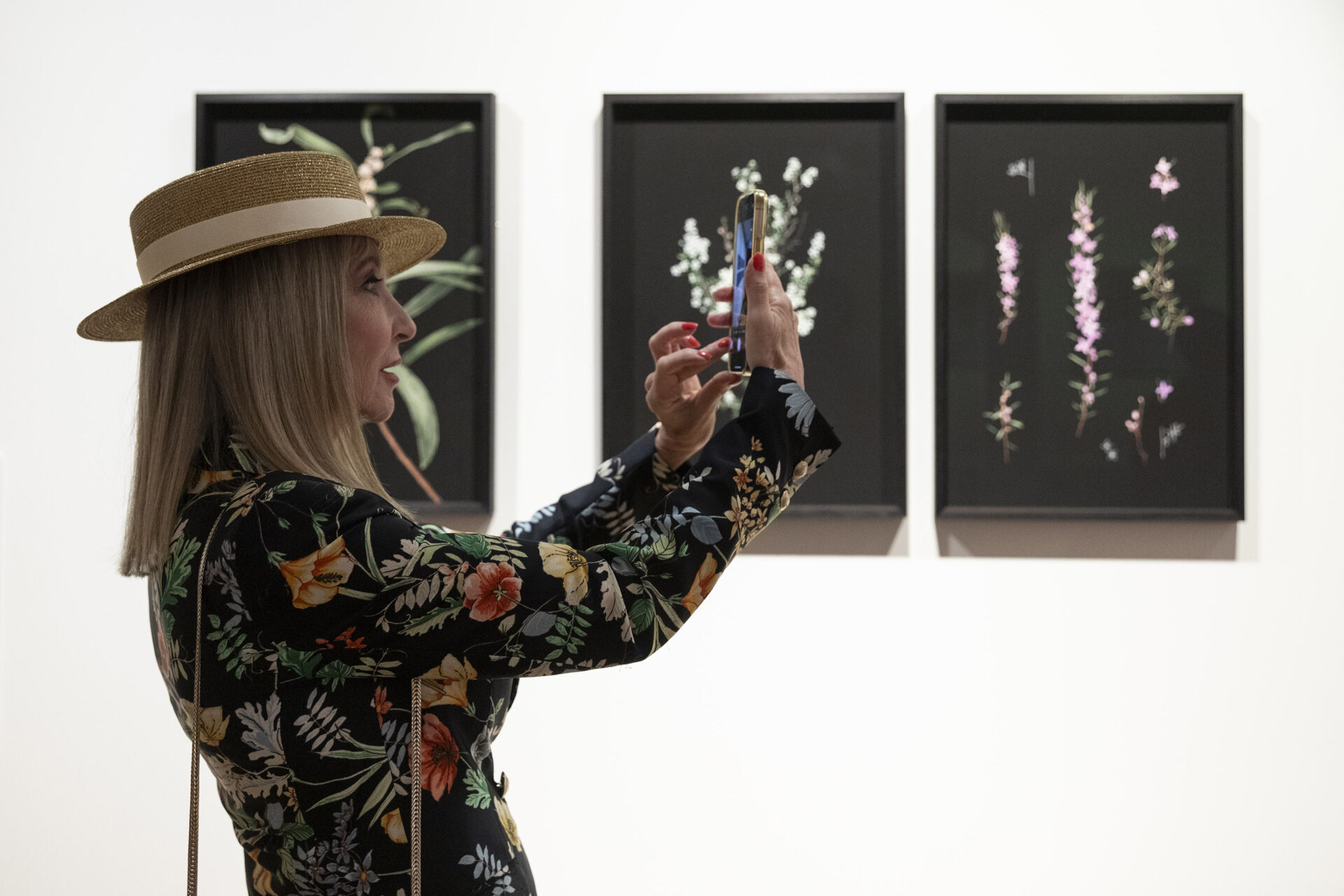
Rearranged: Art of the Flower runs until 29 September 2024 at the Museum of Brisbane (Level 3, City Hall, 64 Adelaide Street, Brisbane City); entry is free.

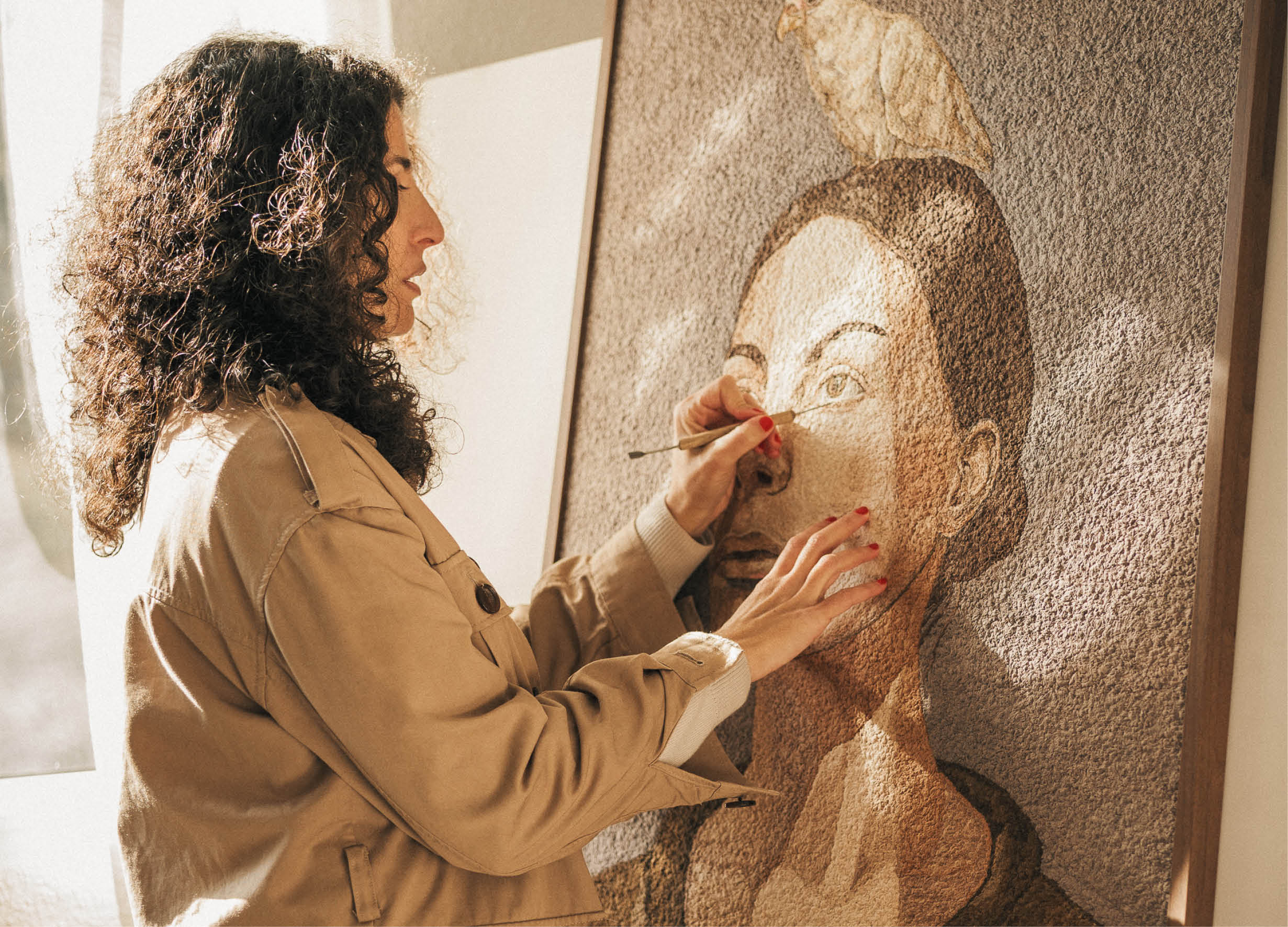



“My piece of advice for makers and designers? Run your own race… make sure your key decisions stay anchored in your brand’s core beliefs.”
- Bec Bligh
Quick show of hands: who’s opened a water bottle expecting a refreshing sip… and instead been greeted by the unmistakable whiff of uh-oh?
Because for something that follows us everywhere (desk, car, hikes, yoga…), the humble drink bottle is strangely prone to becoming a science experiment. Hard-to-clean corners and gaskets. Mystery smells. Bec Bligh and her husband Tim know it well. A six-month sailing trip along the Queensland coast left them with a lifetime of memories and one stubborn annoyance: mouldy water bottles they couldn’t properly clean.
So they did something about it.
Enter @EverVessel. Thoughtfully designed borosilicate glass and stainless steel bottles that keep things beautifully simple: durable materials, wide openings, easy-to-clean parts and none of the techy gimmicks that tend to age badly. Turns out simplicity, done well, is pretty powerful stuff. (Their many design awards agree!)
And lately they’ve added a little extra delight: the Artist Series, where creatives like Paola Castro, Ben Miners and Martin Thompson transform these everyday companions into tiny travelling artworks. There are more colabs in the works, too: hydration, but make it joyful! 🎨💧
We chatted with Bec about the sailing trip that started it all, the philosophy behind Ever Vessel, and why the most sustainable product is often just the one you keep using.
Tap the link in our bio to read the full conversation. 🚰
#EverVessel #ReusableWaterBottle


Pull up a chair… there’s room at this table!
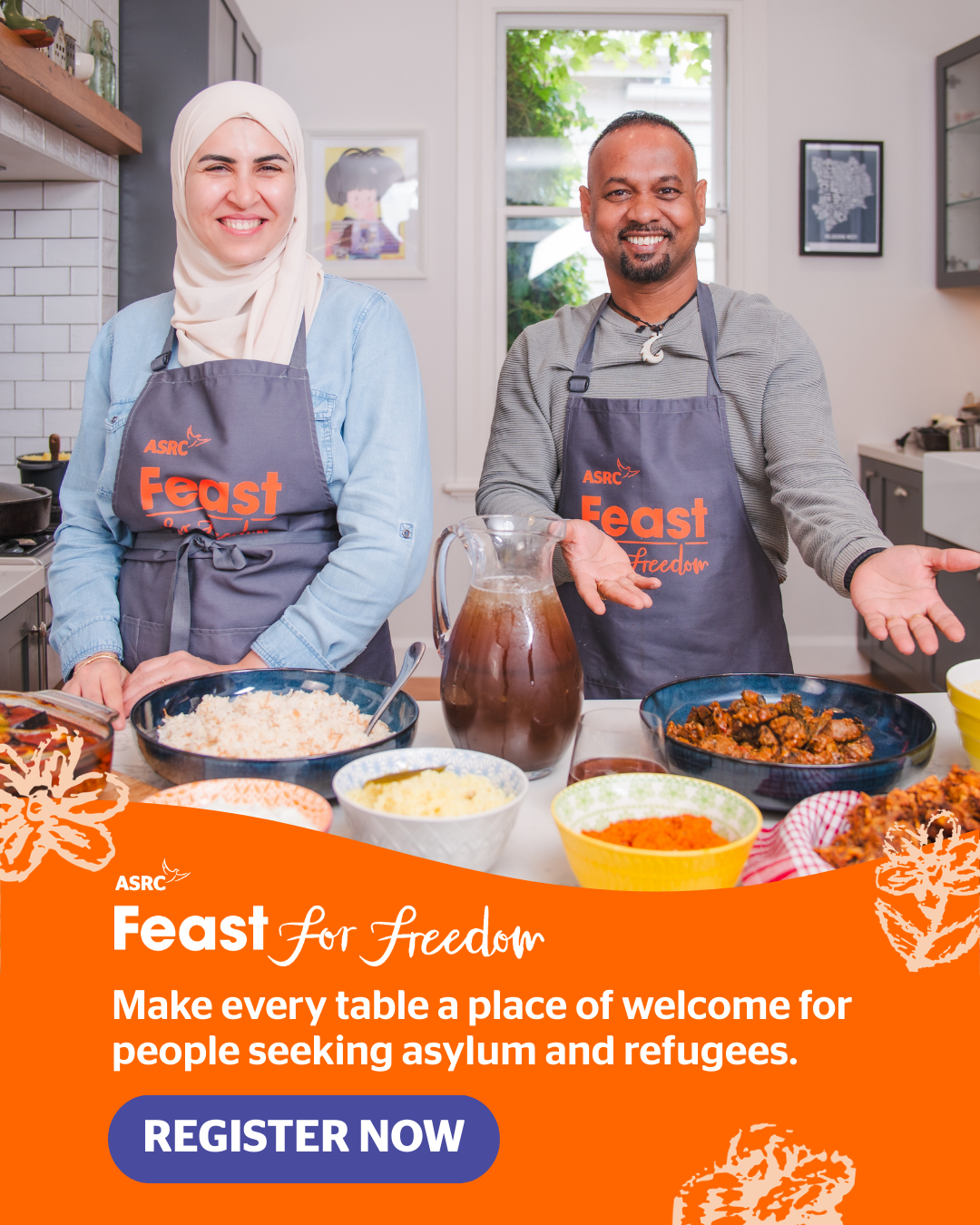
For the first time, Feast for Freedom is bringing people together for a spectacular long-table dinner as part of the Melbourne Food & Wine Festival.
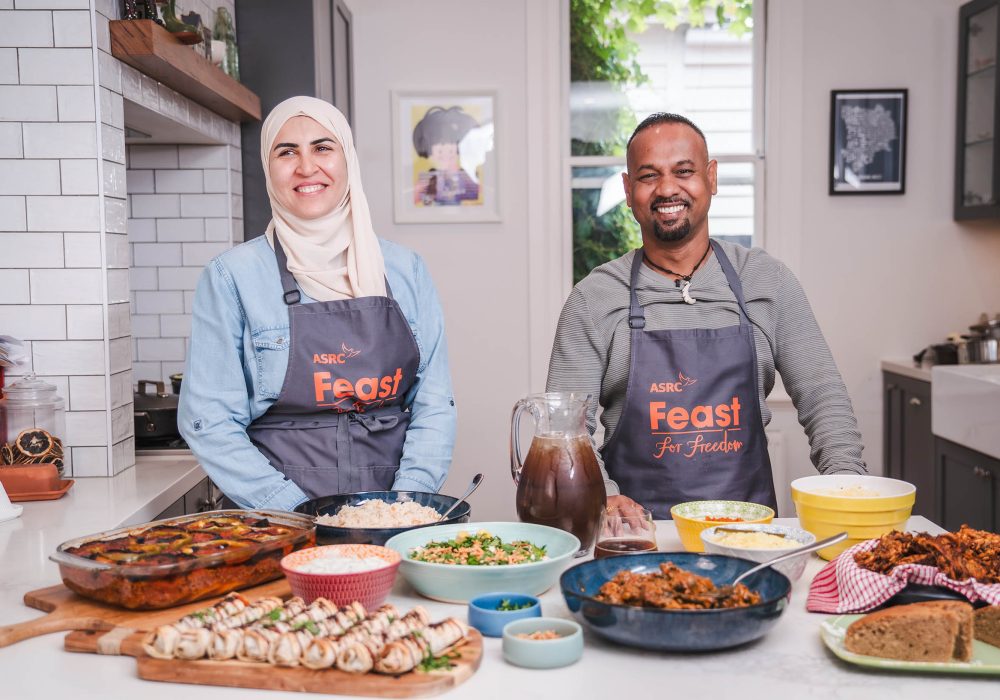
A Longer Table is exactly what it sounds like: one beautiful shared table inside the Asylum Seeker Resource Centre (@Asrc1), piled with generous dishes inspired by this year’s hero cooks, Noha and Nige.
From 6 to 9pm on Wednesday, 25 March, this is what you can expect:
🍽 A three-course shared feast
🍷 Matched drinks
🎶 Live entertainment
✨ A room full of good humans
Your ticket doesn’t just buy you a delicious dinner. It supports the ASRC’s vital work and helps create a fairer future for people seeking asylum.
Seats are limited, and long tables have a way of filling up quickly – head to @MelbFoodAndWine’s website to book now: feastforfreedom.org.au/mfwf
#FeastForFreedom #MelbourneFoodAndWineFestival #LongTableDinner #FoodForChange

Sew versatile! 🪡
Another great make from Lisa from @SunnySewsEveryday:
My #PeppermintWaratahWrapDress is finished and I’m so proud of it. It has been designed not to flap open and flash your pants in the wind, so I feel confident it will be a great wheelchair or standing dress in English weather.
#PeppermintPatterns #WrapDress #WrapDressPattern

Frame your face with the Peppermint Bucket Hat!
Stay safe and stylish in the sun with your very own self-sewn and self-drafted wide-brimmed bucket hat. This beginner-friendly sew is perfect for a sunny day. Get out your pencils – this pattern is created using equations and maths!
This DIY project was featured in Issue 53 and now you can access it for the lovely low price of only $5.
Sun-safe chic is always in style. ☀️
Find it via the link in our bio!
Photos: @KelleySheenan
#PeppermintPatterns #PeppermintBucketHat #BucketHat #BucketHatPattern #DIY

✨ INSTANT CLASSIC ✨
The Peppermint Myrtle Shift Dress is a beginner-friendly make with a few special details based on the ever-stylish shift shape – the perfect dress you need in your wardrobe right now!
Myrtle cuts above the knee with options to customise the length. Don’t think she’s reserved for hot weather either: try a heavier-weight fabric to turn your Myrtle into a pinafore-style garment for layering.
For our fabrics we chose two from our lovely sewing partner @Karmme_Apparel – the bold Rottnest Stripes in a lightweight, soft-drape cotton, and the quality linen in the handpainted Mexico Collection.
Get making the Myrtle – the only question is, can you stop at just one?
Link in bio 🪡
Fabric: @Karmme_Apparel
Sewist: @Laura_The_Maker
Photos: @KelleySheenan
Models: @SerahSews and @Pins_And_Tonic
Location: @ShareTheDignityAustralia
#PeppermintMyrtleShiftDress #PeppermintPatterns

It’s time to Feast!
Some recipes travel a long way before they land on your table to delight your taste buds. This year’s Feast for Freedom invites us to gather our friends, cook something delectable and raise funds for the incredible work of the Asylum Seeker Resource Centre (@Asrc1) while we’re at it.
The 2026 Feast features recipes shared by two remarkable cooks: Noha, who brought the flavours of Palestine with her when she arrived in Australia, and Nige, a Sri-Lankan Tamil cook whose journey with food began in the most unexpected of places.
You can host your own Feast up until 30 April – simply register online and get planning! Host a dinner, organise a workplace lunch, or gather your community… However you do it, the idea is simple: cook, connect and celebrate the cultures and stories that shape Australia.
Want to find out more? Head to the link in bio to meet Noha and Nige, learn more about their stories, and discover a delicious recipe to try.
#FeastForFreedom #PeppermintMagazine #FoodForGood #ASRC
