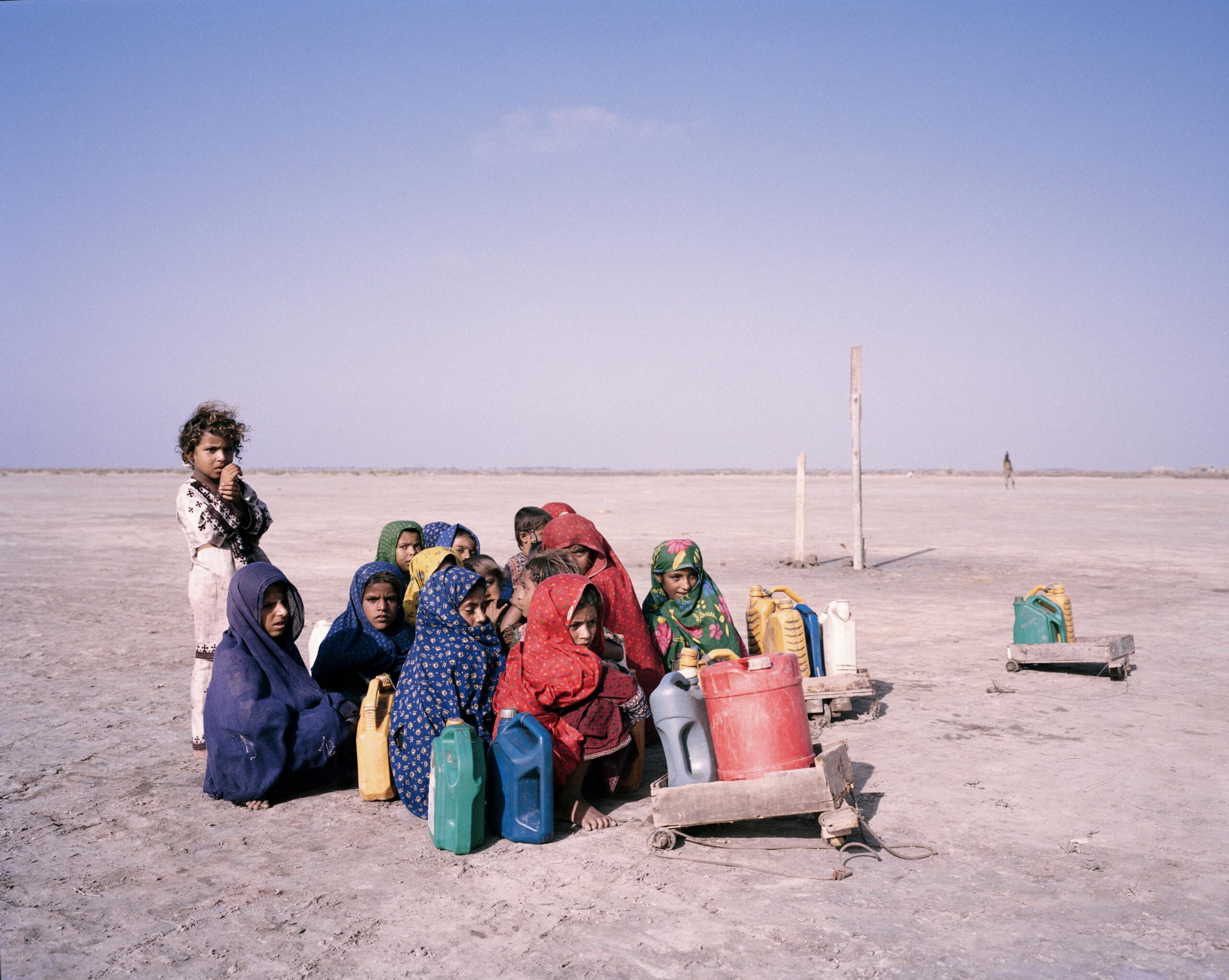
Despite living in drought-prone Australia, it’s hard to imagine experiencing life-threatening water scarcity. How it feels to travel a day for water. To be unable to quench the thirst of your children. Or be forced to give them a drink that could prove fatal. These scenarios feel far removed from our lives, but new research warns that they’ll start to hit home, with two-thirds of the world’s population predicted to face water shortages as a daily reality by 2025.
Currently, a quarter of the world lives under threat of a lack of water, and over 800 million people can’t access water that’s safe to drink. Since 2011, photographer Mustafah Abdulaziz – as part of the HSBC Water Programme in partnership with Earthwatch, Wateraid and WWF – has travelled the globe chasing water as part of a 15-year mission to capture the stories of the people, rather than the statistics, behind the crisis. As the Water Stories exhibition hits Australia for the first time, we asked Mustafah about his motivation, his process and the most challenging stories he’s had to tell.
What was the inspiration behind the series?
Water Stories is the logical culmination of two thought processes. I’d been working on a core project, Water, and I realized the work needed to focus on some really core issues of access to water, scarcity and related challenges. Second, I needed to make the work available to viewers at scale and as I created it. I needed to make it relevant now, even as I construct the larger work.
Can you tell us about the process of taking the images?
The process for selecting where to go comes from two elements: the first is how to structure the project itself and allow each layer to grow from the last organically, and secondly, describing the issues at hand in a concise and responsible way. So far the work has focused on the very visible aspects of water, the lack of access and scarcity and how it affects people’s lives. The future of the work lays in the more conceptual and macro scale, where I can begin to address more complex ideas of systems of control, societal interactions and suggestive futures.
What were the most confronting situations you photographed?
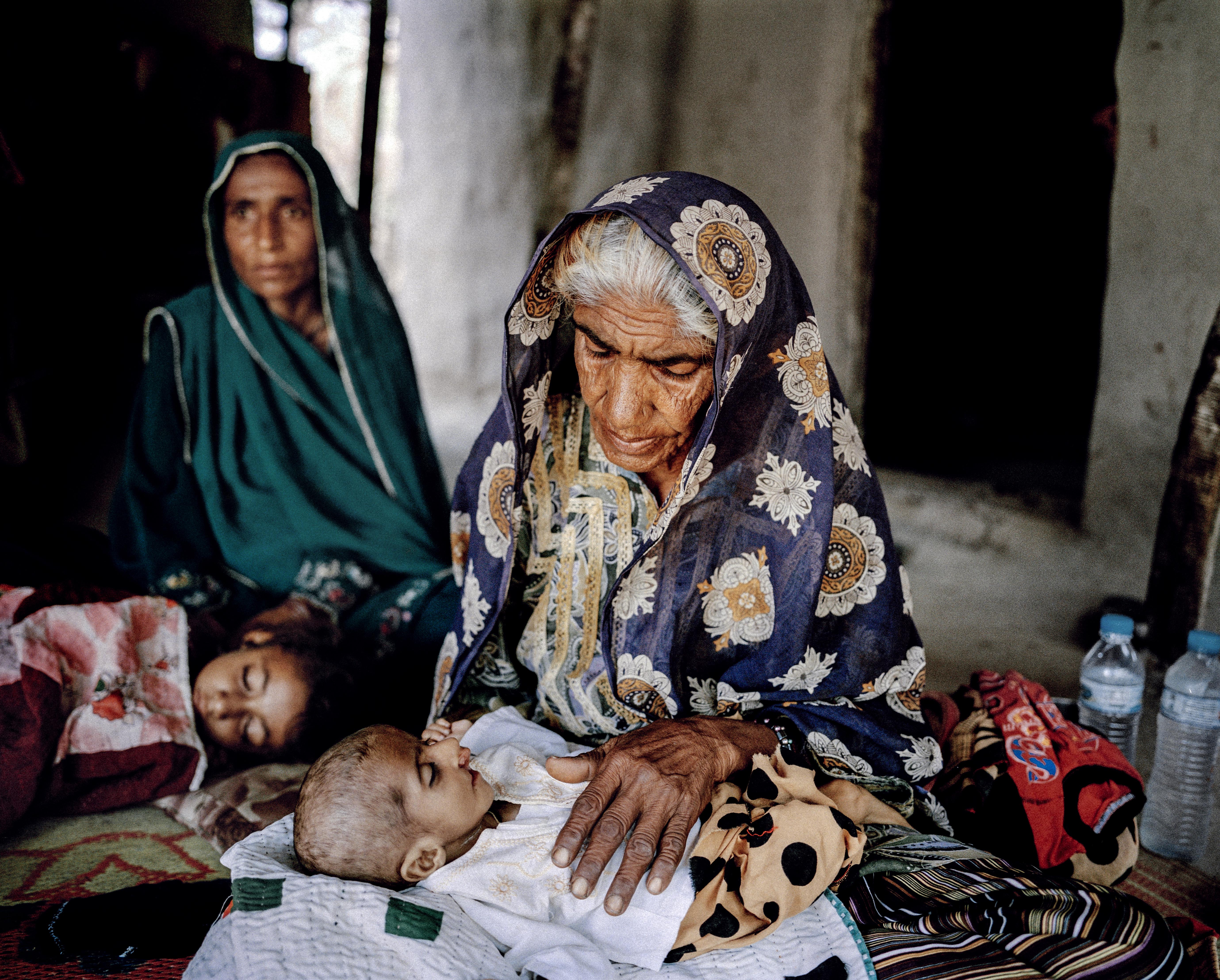
It could be, in the most immediate and disheartening, scenes in southern Pakistan where children were dying from severe diarrhoea. According to the Centers for Disease Control, diarrhoea is the second leading cause of death amongst children under five. This is a staggering statistic and I thought it critical to bring this reality to viewers when they think upon how water or lack of it can be traumatic. The photograph [above] is of a grandmother holding her grandchild, with the mother holding her daughter in the background. It is physically closer than other images, intimate and harkening back to my origins as a photojournalist. It is also the most memorable moment for me in this exhibition, as there was an unspoken energy during my time in this environment. Both the grandmother and mother wanted me there, and this means a lot to me as person: having mutual respect between me and others during moments of personal pain, and taking that seriously is of utmost importance.
What do you believe we should all be doing to help put an end to the water crisis?

The water crisis is not the only condition of how human beings interact with water. Water is a resource that underpins topics like climate change, agriculture, natural disaster, globalized economy, energy, transportation and even pushes into conceptual areas that address our histories as civilizations. This is the approach I’m attempting to take with this work. To place the water crisis, as it were, in the larger dialogue of how humanity and water are behaving in the 21st Century.
I believe the solution to the problems relating to human development and the health of our world all stem from behavior and choice, and it is these concepts that are important to focus on. What systems have we chosen, and are we using in turn to choose, to interact with our resources? Are they sustainable? Are they going to provide insight and perspective? Will they outline a path forward and provide the ability to adapt to new challenges as our climate becomes more and more thrown out of balance? I ask these questions because they are, in many ways, the questions that will need to be asked if we are to tackle the difficulties ahead.

How has your work been received across the world?
I’ve been very fortunate to have received such overwhelming support and positivity in response to the exhibition and the project. It’s good to know that people connect with it, and while my intentions are not entirely tied to the output or the response to my work, it is satisfying for me, as a person, to feel like someone cares about the same things I do.As a photographer, you don’t often get to look at the eyes, faces and body language of your viewer when they experience your work. Seeing people move through the exhibition here in Sydney is a beautiful experience and a tremendous honour.
What message do you hope that people will take away from the exhibition?
There is a specific reason why I photograph the way I do. When people see the simplicity of the work, the concepts and motifs I incorporate, it is intended to intrigue the mind and evoke the imagination. It is here, amongst the sensations of impulse, feeling and wonder that I want this work to exist. This is because the viewer should, in their own capacity as a human being, be met with photography that illuminates their world and reflects it’s realities back towards them. I do not wish to teach a viewer anything, or even to explain a problem to them, although this might be done by default. What I truly wish is for someone – anyone – to look upon their world in a photograph, and perhaps, for a brief moment or an evening, be made to feel the presence of my humanity and these experiences that connect us all, and in this moment transcend themselves in order to see their place in the grand scheme of the natural world. If this can be done, from the work completed from the first five years or the photographs to come in the next ten years, then I will have created a message that is not informational but is, at its core, a message of universality through a shared emotional connection to our planet.
The exhibition runs from 15 August to 5 September on the waterfront at Sydney’s Royal Botanic Garden and will be lit up for evening viewing. The exhibition then moves on to Brisbane’s South Bank from 14 September to 26 September.
All images: Mustafah Abdulaziz/WWF-UK





“My piece of advice for makers and designers? Run your own race… make sure your key decisions stay anchored in your brand’s core beliefs.”
- Bec Bligh
Quick show of hands: who’s opened a water bottle expecting a refreshing sip… and instead been greeted by the unmistakable whiff of uh-oh?
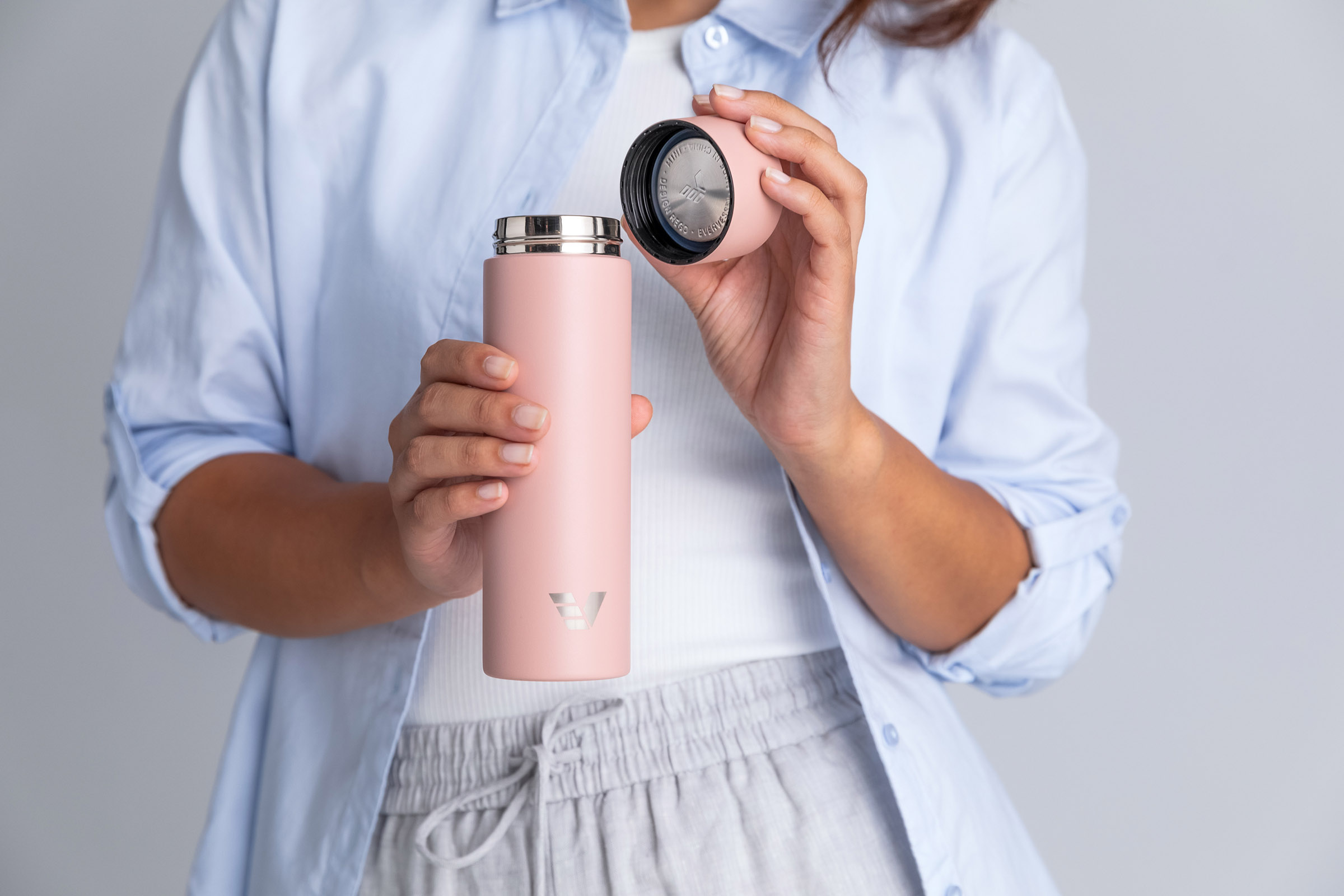
Because for something that follows us everywhere (desk, car, hikes, yoga…), the humble drink bottle is strangely prone to becoming a science experiment. Hard-to-clean corners and gaskets. Mystery smells. Bec Bligh and her husband Tim know it well. A six-month sailing trip along the Queensland coast left them with a lifetime of memories and one stubborn annoyance: mouldy water bottles they couldn’t properly clean.
So they did something about it.
Enter @EverVessel. Thoughtfully designed borosilicate glass and stainless steel bottles that keep things beautifully simple: durable materials, wide openings, easy-to-clean parts and none of the techy gimmicks that tend to age badly. Turns out simplicity, done well, is pretty powerful stuff. (Their many design awards agree!)
And lately they’ve added a little extra delight: the Artist Series, where creatives like Paola Castro, Ben Miners and Martin Thompson transform these everyday companions into tiny travelling artworks. There are more colabs in the works, too: hydration, but make it joyful! 🎨💧
We chatted with Bec about the sailing trip that started it all, the philosophy behind Ever Vessel, and why the most sustainable product is often just the one you keep using.
Tap the link in our bio to read the full conversation. 🚰
#EverVessel #ReusableWaterBottle


Pull up a chair… there’s room at this table!
For the first time, Feast for Freedom is bringing people together for a spectacular long-table dinner as part of the Melbourne Food & Wine Festival.
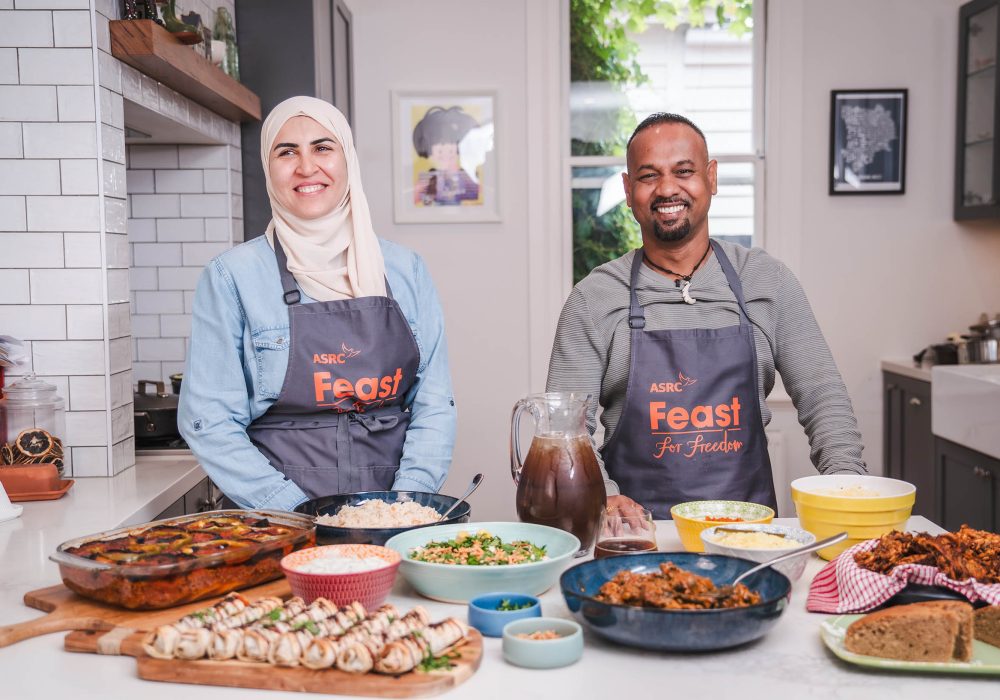
A Longer Table is exactly what it sounds like: one beautiful shared table inside the Asylum Seeker Resource Centre (@Asrc1), piled with generous dishes inspired by this year’s hero cooks, Noha and Nige.
From 6 to 9pm on Wednesday, 25 March, this is what you can expect:
🍽 A three-course shared feast
🍷 Matched drinks
🎶 Live entertainment
✨ A room full of good humans
Your ticket doesn’t just buy you a delicious dinner. It supports the ASRC’s vital work and helps create a fairer future for people seeking asylum.
Seats are limited, and long tables have a way of filling up quickly – head to @MelbFoodAndWine’s website to book now: feastforfreedom.org.au/mfwf
#FeastForFreedom #MelbourneFoodAndWineFestival #LongTableDinner #FoodForChange

Sew versatile! 🪡
Another great make from Lisa from @SunnySewsEveryday:
My #PeppermintWaratahWrapDress is finished and I’m so proud of it. It has been designed not to flap open and flash your pants in the wind, so I feel confident it will be a great wheelchair or standing dress in English weather.
#PeppermintPatterns #WrapDress #WrapDressPattern

Frame your face with the Peppermint Bucket Hat!
Stay safe and stylish in the sun with your very own self-sewn and self-drafted wide-brimmed bucket hat. This beginner-friendly sew is perfect for a sunny day. Get out your pencils – this pattern is created using equations and maths!
This DIY project was featured in Issue 53 and now you can access it for the lovely low price of only $5.
Sun-safe chic is always in style. ☀️
Find it via the link in our bio!
Photos: @KelleySheenan
#PeppermintPatterns #PeppermintBucketHat #BucketHat #BucketHatPattern #DIY

✨ INSTANT CLASSIC ✨
The Peppermint Myrtle Shift Dress is a beginner-friendly make with a few special details based on the ever-stylish shift shape – the perfect dress you need in your wardrobe right now!
Myrtle cuts above the knee with options to customise the length. Don’t think she’s reserved for hot weather either: try a heavier-weight fabric to turn your Myrtle into a pinafore-style garment for layering.
For our fabrics we chose two from our lovely sewing partner @Karmme_Apparel – the bold Rottnest Stripes in a lightweight, soft-drape cotton, and the quality linen in the handpainted Mexico Collection.
Get making the Myrtle – the only question is, can you stop at just one?
Link in bio 🪡
Fabric: @Karmme_Apparel
Sewist: @Laura_The_Maker
Photos: @KelleySheenan
Models: @SerahSews and @Pins_And_Tonic
Location: @ShareTheDignityAustralia
#PeppermintMyrtleShiftDress #PeppermintPatterns

It’s time to Feast!
Some recipes travel a long way before they land on your table to delight your taste buds. This year’s Feast for Freedom invites us to gather our friends, cook something delectable and raise funds for the incredible work of the Asylum Seeker Resource Centre (@Asrc1) while we’re at it.
The 2026 Feast features recipes shared by two remarkable cooks: Noha, who brought the flavours of Palestine with her when she arrived in Australia, and Nige, a Sri-Lankan Tamil cook whose journey with food began in the most unexpected of places.
You can host your own Feast up until 30 April – simply register online and get planning! Host a dinner, organise a workplace lunch, or gather your community… However you do it, the idea is simple: cook, connect and celebrate the cultures and stories that shape Australia.
Want to find out more? Head to the link in bio to meet Noha and Nige, learn more about their stories, and discover a delicious recipe to try.
#FeastForFreedom #PeppermintMagazine #FoodForGood #ASRC
