








Future Finance: Banking on a Better Future

When it comes to living a more ethical and sustainable life, sometimes you’ve gotta put your money where your mouth is — literally. But talk is cheap and finance fickle, so in this four-part online series on ethical money, created in collaboration with our friends at Bank Australia, we’ve balanced the books so you can live a more balanced life and use your money as a force for good. Next in the series, ethical banking.

……….

Whether it’s a rainy day fund you’ve been accruing over years or the small change that drip feeds your everyday coffee fix, your money has huge potential to be a force for good – and it all comes down to who you bank with.

The problem with our banks

If you thought your money sat under lock and key in between phone taps, think again. Every time you make a deposit into your account, your cash gets pooled with other bank customers’ money. That money then gets redistributed to different individuals and companies as loans. Interest charged on those loans is one of the ways your bank earns a profit. Essentially, your bank is selling your money.

Your money is always circulating through the economy – even if the balance on your mobile app says otherwise. And it’s entirely up to your bank to decide where that money goes and what it’s used for.

Traditional banks have a habit of lending their customers’ money to companies and industries that you might not agree with on a moral level or would never willingly support in your day-to-day life. Nuclear weapons, tobacco and online gambling are just a few examples.

Investments in fossil fuels are some of the most lucrative, so it’s no surprise that most banks target this industry aggressively. If you currently have money in an Australian bank, there’s a good chance your hard-earned dollars are being used to bankroll the coal, oil and gas industries.

The big four have collectively lent more than $35.5 billion to the fossil fuel industry since the start of 2016, helping to finance 33 new or expanded projects.

We may take actions in our everyday lives to mitigate our impact, but there’s no hiding from the truth: the majority of us are unwittingly paying for the projects that accelerate climate change.

Research recently published by Market Forces shows that the big four have collectively lent more than $35.5 billion to the fossil fuel industry since the start of 2016, helping to finance 33 new or expanded projects.

Clean energy such as wind and solar requires serious investment to succeed, yet many banks have chosen to lend triple the amount of cash to the fossil fuel industry compared to renewables since Australia signed the Paris Accord.

Greenhouse gas emissions from local and exported fossil fuels makes Australia one of the biggest contributors to the climate crisis. At our current pace, we could be responsible for 17% of global emissions by 2030 according to projections from the Australian Conservation Foundation.


READ MORE – FUTURE FINANCE: HARNESSING YOUR SUPER POWER


What makes a bank ethical?

As awareness builds, more and more Australians are starting to measure their banks by a different yardstick. The promise of higher interest rates and lower fees is no longer enough. The quest to be a more socially and environmentally responsible citizen has bled over into the financial world, and ethical banking is on the rise.

‘Ethical banking’ is a broad term used to describe a wide range of value-driven financial products. At its core, an ethical bank is one driven by a set of principles that govern its investments, interactions with clients and its internal operations.

Ethical banks come in different shapes and sizes. Common characteristics include a commitment to environmental and social sustainability, a robust investment screening policy (more on that in a moment), and a strong overall ethical framework.

Ethical banks offer the same services as other banks: savings accounts, term deposits, loans, overdrafts and insurance policies for individuals and businesses. Every bank is different, but according to the Responsible Investment Association Australasia, ethical banks don’t necessarily have higher fees or lower returns, meaning you don’t have to compromise on your financial security.

While regular banks might solely focus on high returns for individuals, ethical banks are more interested in refining their lending practices to empower communities. Importantly, ethical banks screen out potentially harmful investments, including loans to the fossil fuel industry.

Your money, your decision

“Many people don’t realise that when you put money in an account – it doesn’t matter how much – the bank uses it to lend money to companies and industries to help them grow. And it’s very hard to know where it goes,” says Bank Australia’s Head of Strategy and Communications Fiona Nixon.

Established in 1957 as a co-operative credit society, it’s one of the original institutions to go against the grain. The majority of loans are made to other customers, while any commercial lending is carefully screened against an in-house Responsible Banking Policy. This sets clear boundaries for what your money will and will not be used for.

We actively look for community housing, specialist disability accommodation and energy efficient projects where our customers’ money can make a positive difference.

Like most ethical banks, Bank Australia doesn’t make any loans to the fossil fuel industry (including coal, gas and oil extraction, and coal-fired power generation). Customers’ money will never fund the manufacturing or sale of weapons, nor the live animal export trade or intensive farming. “Instead, we actively look for community housing, specialist disability accommodation and energy efficient projects where our customers’ money can make a positive difference,” Fiona explains.

As part of the Global Alliance for Banking on Values, Bank Australia is part of a worldwide coalition of financial institutions that are divesting from harmful and polluting industries. “Whether it’s providing microfinance programs to small businesses owned by women in Nepal, funding innovative organic farming in Germany, or supporting people to survive the winter in Mongolia, these pioneering banks on every continent are all adapting the business of banking to serve their particular communities,” Fiona adds.

Should you make the switch?

No matter how small or large your balance is, every dollar invested in an ethical bank has the potential to do good. “Banks play a vital role in shaping economies and societies through where they invest, and we want more Australians to understand this and to ask themselves what they want their money to do in the world,” Fiona says.

If you’re considering a change, there are many things to take into account. Interest rates, fees, and customer service might be on your priority list. Everyone’s values are different, so it’s important to draw your own lines on what kinds of activities you are and aren’t happy with putting your money behind. Fossil fuels, gambling, tobacco, alcohol and weapons are some of the big ones to consider.

Tools such as the Market Forces Compare Bank Table make it easy to compare 120-plus institutions based on their position regarding fossil fuels. Transparency is crucial, so if a bank makes its list of investments publicly available, that’s a great start. If in doubt, email them and ask specific questions about the issues that matter most to you.

Be on the lookout for a bank with transparency and a proven track record on social and environmental policies. And if you do decide to move your money to an ethical bank and align your banking with your values, don’t just close your old account and be done with it. Notify your old bank in writing about why you’re switching, being sure to tell them exactly why you’re not satisfied with their lending practices. The more of us who speak up, the clearer the message.


Note: This article is for informational purposes only and does not constitute financial advice. Please do your own research and seek professional advice where required.

Our Future Finance Series has been created in partnership with our friends at Bank Australia. Want to align your money with your values? Head to their website to find out how you can use your money for good. 


words EMILY LUSH

You might also like

JOIN OUR MAILING LIST

Brighten up your inbox with our not-too-frequent emails featuring Peppermint-related news, events, competitions and more!

explore

More articles

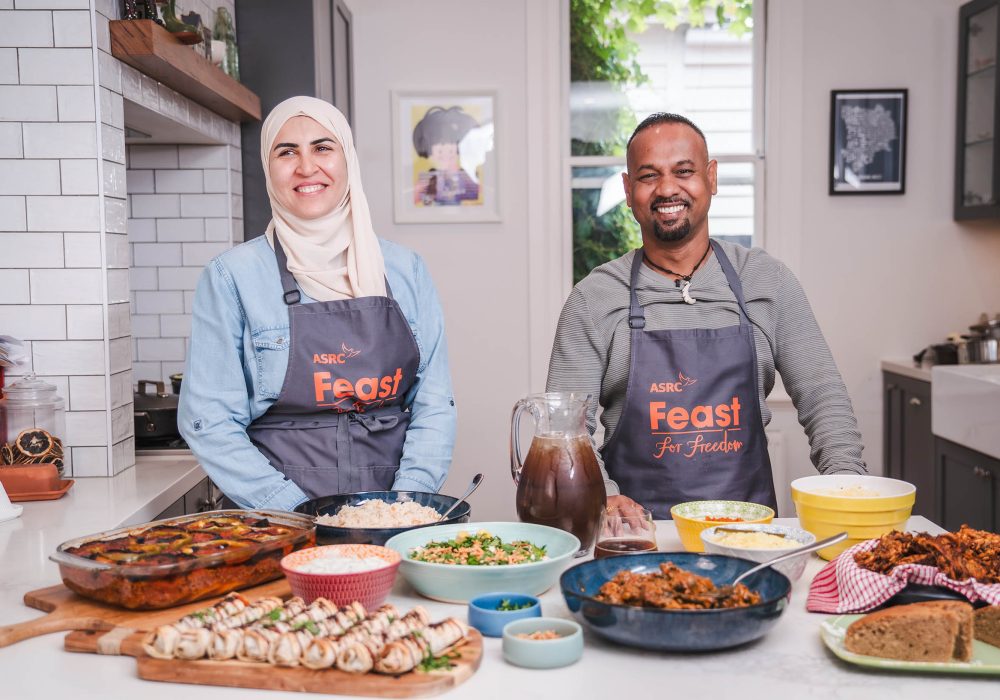
Imagine a table big enough for everyone, breaking bread and finding common ground with those we may see as ‘different’, but are at heart the same. Enter Feast for Freedom: a call for connection across cultures, and to say, ‘you are welcome here’.
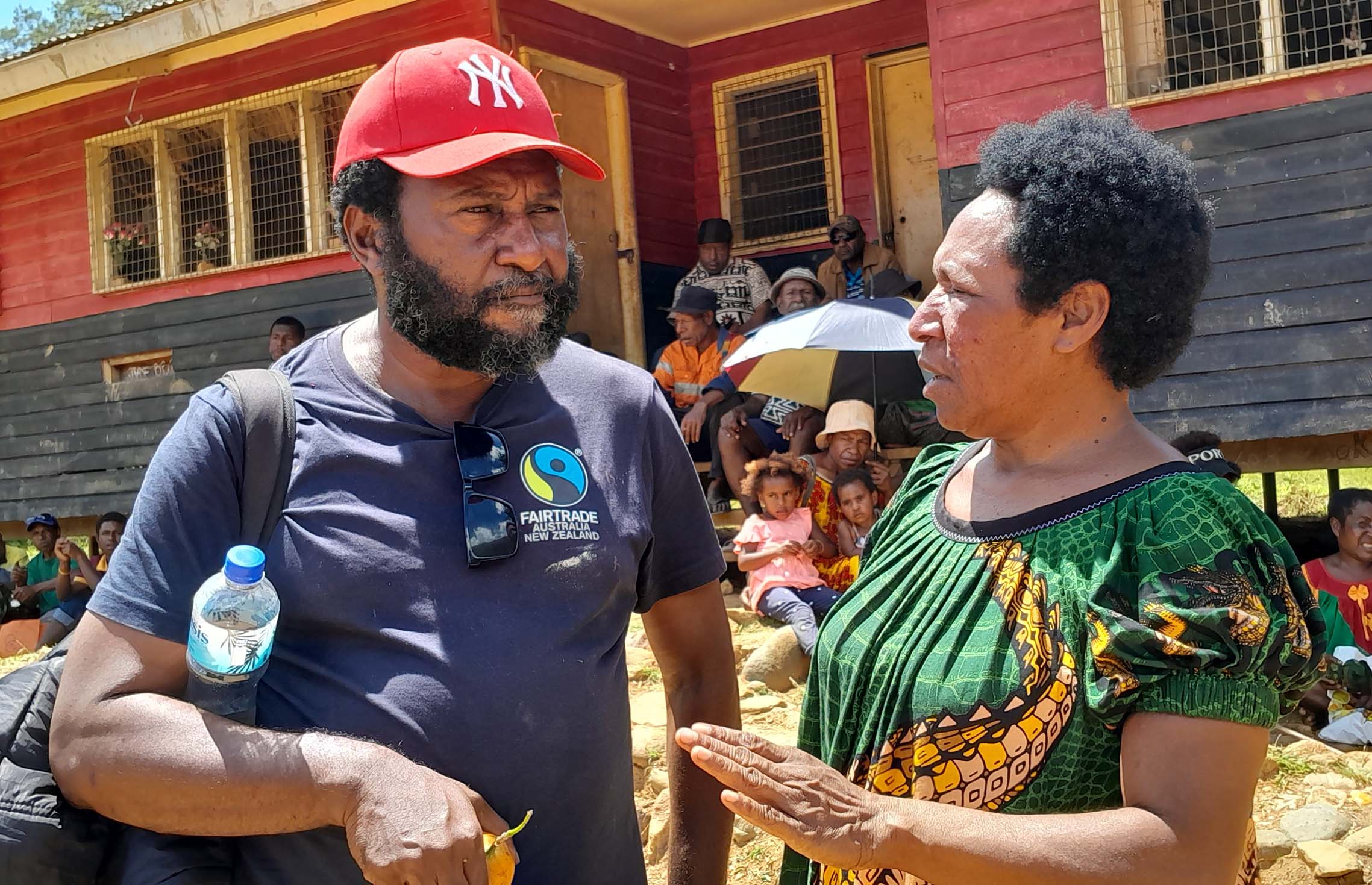
Coffee begins long before your morning cuppa! Papua New Guinean farmer Elizabeth Duna shares what it takes to grow great coffee, strengthen communities, and lead as a woman in farming, as 2026 marks the Year of the Woman Farmer.
Salt air, good vibes and bold ideas will soon collide at the Sunshine Coast’s annual Horizon Festival. Celebrating ten years of creativity this May, Horizon brings art, music, performance and radical imagination to Kabi Kabi and Jinibara Country.
Looking for a beach (or backyard) brolly that’s anything but boring? Come stand under Basil Bangs’ umbrella! 17 years into their journey, this Northern Beaches-based company is actively pursuing B-Corp certification.
🎵 I’m coming out! I want the world to know, I’ve got to let it show… 🎵 The Sydney Mardi Gras isn’t just a celebration of glamour, grit and queer pride, it’s an act of defiance built on a background of activism and ongoing discrimination.

Have you made the Viola Quilted Jacket yet? This pattern hits the sweet spot for both established sewists keen to learn a new skill (quilting!),…

Hang out with us on Instagram

Pull up a chair… there’s room at this table!⁠
⁠
For the first time, Feast for Freedom is bringing people together for a spectacular long-table dinner as part of the Melbourne Food & Wine Festival.⁠
⁠
A Longer Table is exactly what it sounds like: one beautiful shared table inside the Asylum Seeker Resource Centre (@Asrc1), piled with generous dishes inspired by this year’s hero cooks, Noha and Nige.⁠
⁠
From 6 to 9pm on Wednesday, 25 March, this is what you can expect:⁠
🍽 A three-course shared feast⁠
🍷 Matched drinks⁠
🎶 Live entertainment⁠
✨ A room full of good humans⁠
⁠
Your ticket doesn’t just buy you a delicious dinner. It supports the ASRC’s vital work and helps create a fairer future for people seeking asylum.⁠
⁠
Seats are limited, and long tables have a way of filling up quickly – head to @MelbFoodAndWine’s website to book now: feastforfreedom.org.au/mfwf⁠
⁠
#FeastForFreedom #MelbourneFoodAndWineFestival #LongTableDinner #FoodForChange ⁠
Sew versatile! 🪡

Another great make from Lisa from @SunnySewsEveryday:

My #PeppermintWaratahWrapDress is finished and I’m so proud of it. It has been designed not to flap open and flash your pants in the wind, so I feel confident it will be a great wheelchair or standing dress in English weather.

#PeppermintPatterns #WrapDress #WrapDressPattern
✨ INSTANT CLASSIC ✨

The Peppermint Myrtle Shift Dress is a beginner-friendly make with a few special details based on the ever-stylish shift shape – the perfect dress you need in your wardrobe right now! 

Myrtle cuts above the knee with options to customise the length. Don’t think she’s reserved for hot weather either: try a heavier-weight fabric to turn your Myrtle into a pinafore-style garment for layering.

For our fabrics we chose two from our lovely sewing partner @Karmme_Apparel – the bold Rottnest Stripes in a lightweight, soft-drape cotton, and the quality linen in the handpainted Mexico Collection. 

Get making the Myrtle – the only question is, can you stop at just one?

Link in bio 🪡

Fabric: @Karmme_Apparel
Sewist: @Laura_The_Maker
Photos: @KelleySheenan
Models: @SerahSews and @Pins_And_Tonic
Location: @ShareTheDignityAustralia

#PeppermintMyrtleShiftDress #PeppermintPatterns