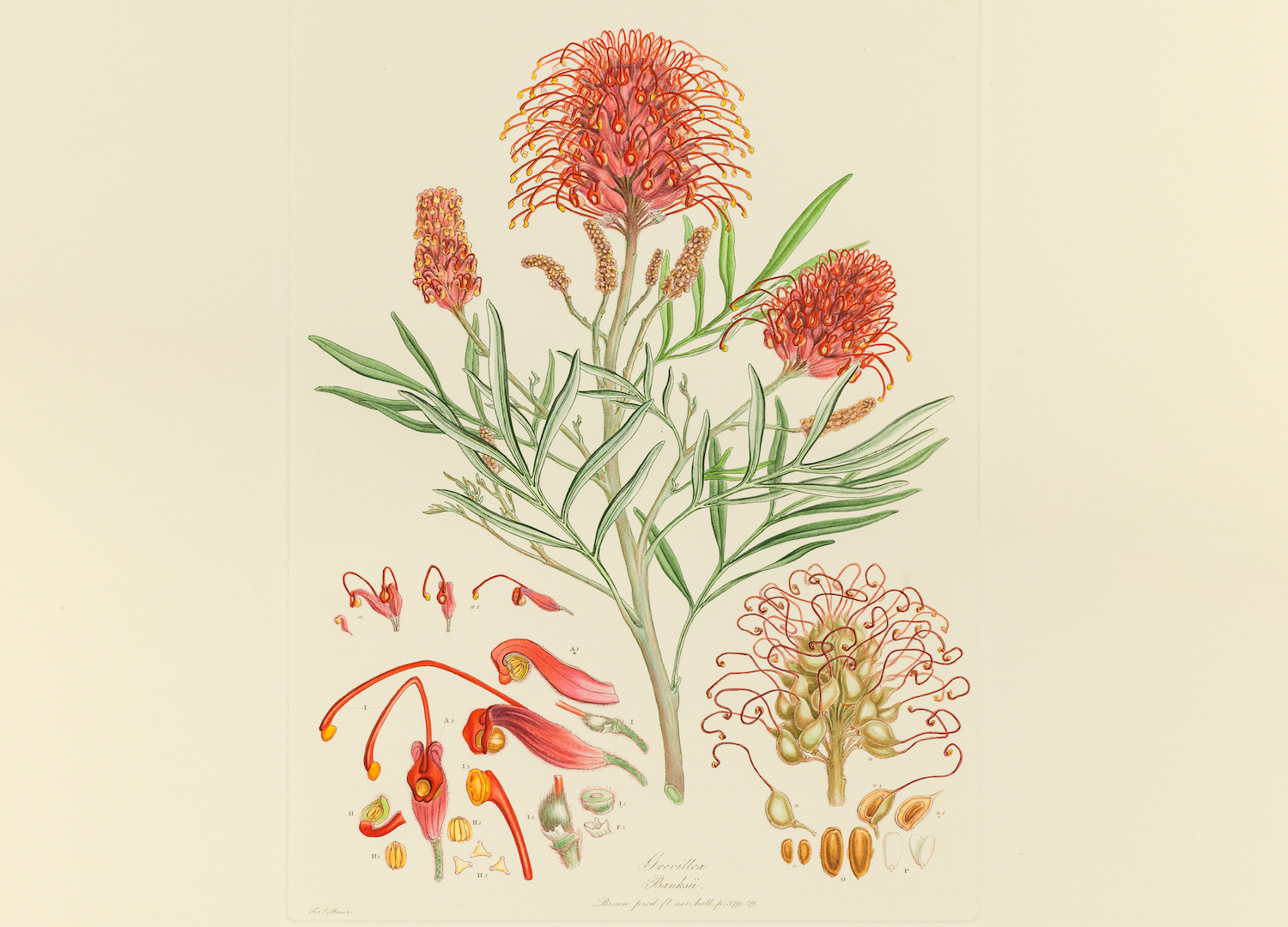
Plant life: more than just a hashtag, our connections to our leafy pals go way back. Especially as the world continues to change around us, it’s become even more important to pause, breathe and connect with the natural world. Exploring our intrinsic relationship with plants through photography, illustrations, immersive projections and historical objects is the State Library of Queensland’s latest exhibition, Entwined: plants and people. Running through to Sunday 14 November, we caught up with curator and specialist librarian Joan Bruce to learn a little bit more about the free exhibition and the undeniable power of plants.
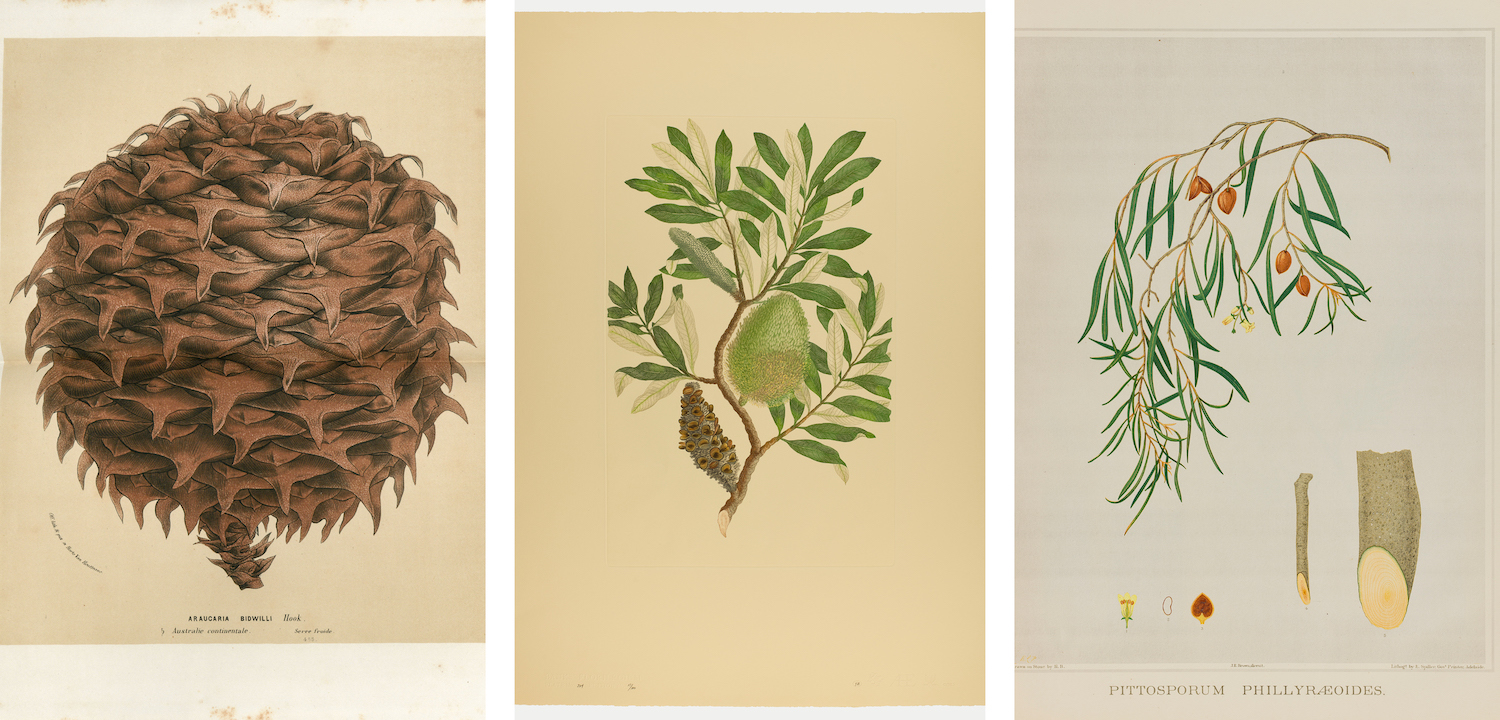
image (left to right) Illustration of a bunya cone in Flore des serres, 1875; Sydney Parkinson’s illustration of Banksia integrifolia from Banks’ Florilegium, 1983; Rosa Fiveash’s illustration of Pittosporum angustifolium from Forest Flora of South Australia, 1882. All courtesy of State Library of Queensland.
Tell us about the exhibition? What inspired it?
The original idea goes back almost a decade. We were planning an exhibition to showcase the extraordinary botanical illustration in State Library of Queensland’s collection – works like the Banks’ Florilegium. When the idea re-emerged in 2019, the scope was broadened to cover a much wider range of stories; contemporary as well as historical. We expanded upon the human connection to plants including connection to Country, stories of science, as well as art, and the practical uses of Queensland plants by First Nations peoples.
How can art help us understand plants and work towards a more sustainable future?
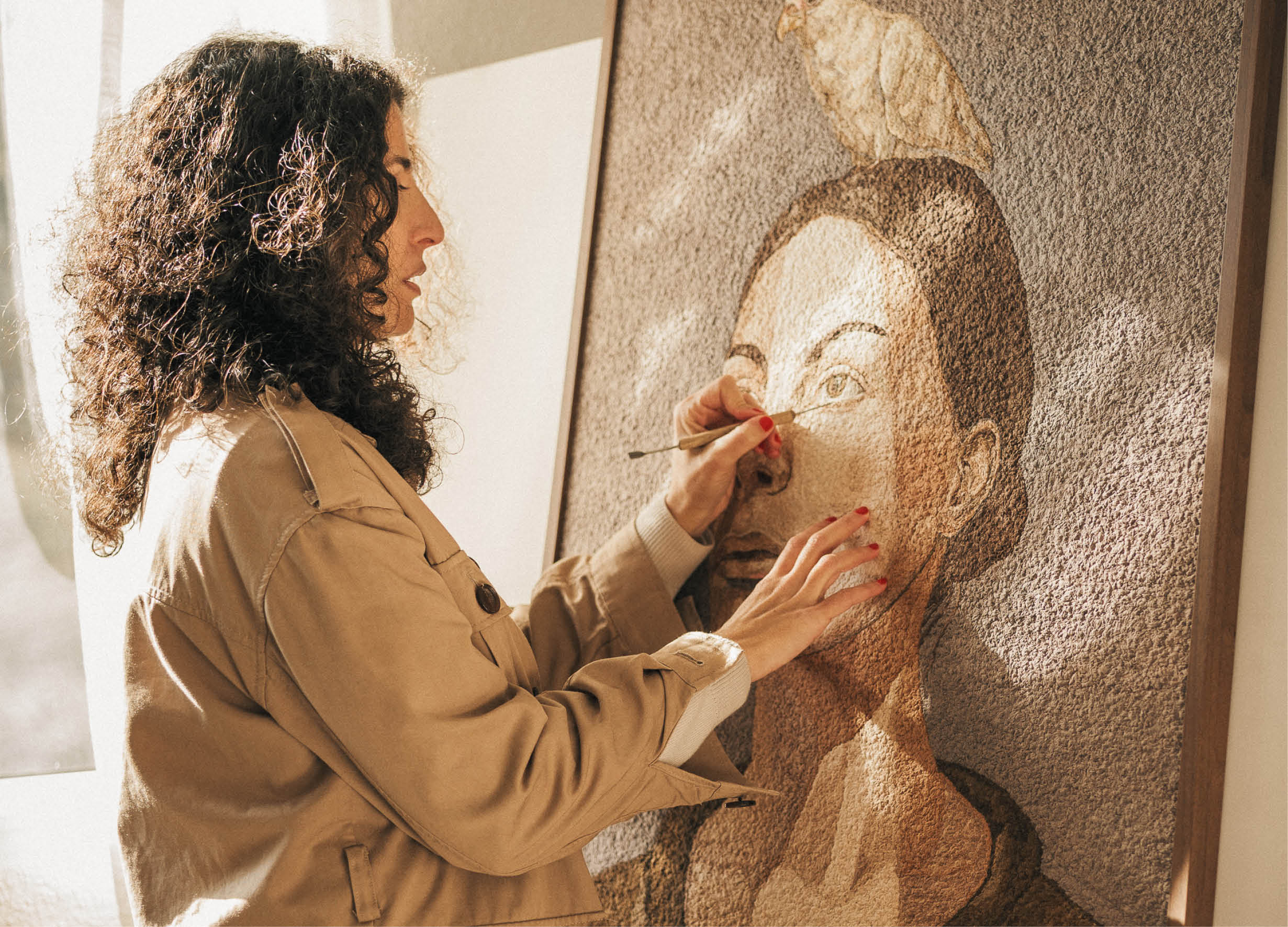
Many people in urbanised societies are disconnected from the natural world. Some people call this ‘green blindness’. Art can bridge that disconnect and help you to see the world of plants. One of the first works you see when you enter Entwined is a video installation by local artists Man&Wah. This immersive experience slows you down. You can feel the stress sliding off your shoulders. This is one way artists can help us understand plants – by feeling the pleasure of connection with the natural world. Donna Davis, another local multi-disciplinary artist, works in the area where art meets science. Her artwork is visually intriguing, but there’s a strong ecological message if you look more closely. The animated plant critters roaming all over State Library at the moment came out of her residency with a tropical mountain plant rescue project in North Queensland. These are some of the species at risk from climate change, plants which live in the cloud forests above 1000 metres.
What is the relationship between plant studies and the arts?
One area where art meets botany is in scientific botanical illustration. Entwined features the work of three of the greatest botanical illustrators of all time: twentieth century Australian artist Celia Rosser and eighteenth century artists James Sowerby and Ferdinand Bauer. In the twenty first century, herbariums and botanical gardens use art to communicate their message by offering residencies to artists like Donna Davis.
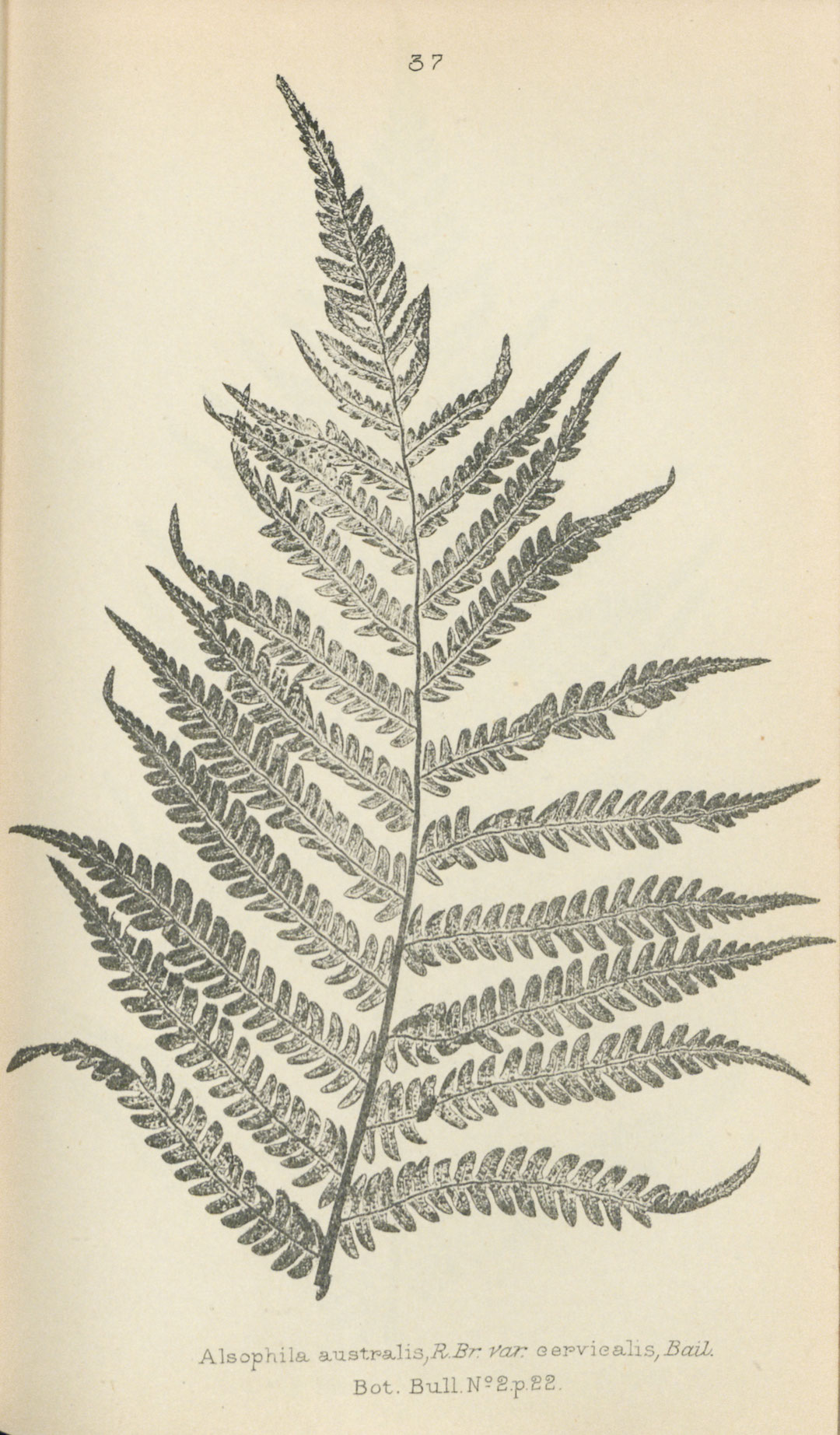
image Nature print from Lithograms of the ferns of Queensland, 1892. Courtesy of State Library of Queensland.
What is your favourite story that has come to light from curating the exhibition?
I am rather fond of the ‘nature printing’ story. Nature printing was cutting-edge technology in the second half of the nineteenth century. It’s basically a process where the plant itself is used to create an illustration, bypassing the need for botanical artists and engravers. At its simplest, you take something like a fern leaf, apply pigment, and press it onto a surface. But that’s only good for one or two, maybe six prints at the most. In the nineteenth century, ways were developed to make an actual printing plate from the plant. The specimens were often pressed between a lead plate and one of harder metal so the grass left an impression in the soft lead. It gets complicated after that, but an essential part of the process was electrotyping the plate.
Our quest for examples of the very latest form of botanical illustration, microscopy, came together at the end of 2020 with University of Queensland research into the infamous Gympie Stinger [a shrub in the nettle family]. Professor Irina Vetter and her team isolated the neurotoxin which causes its ferocious sting, a whole new family of toxins which are surprisingly similar to those of spiders and cone snails. As a result, we were able to tell almost the whole history of botanical illustration through one plant – from an eighteenth century Banks’ Florilegium copperplate engraving, through a watercolour painting by Ellis Rowan to Scanning Electron Microscope photographs of the needles which inject the toxin.
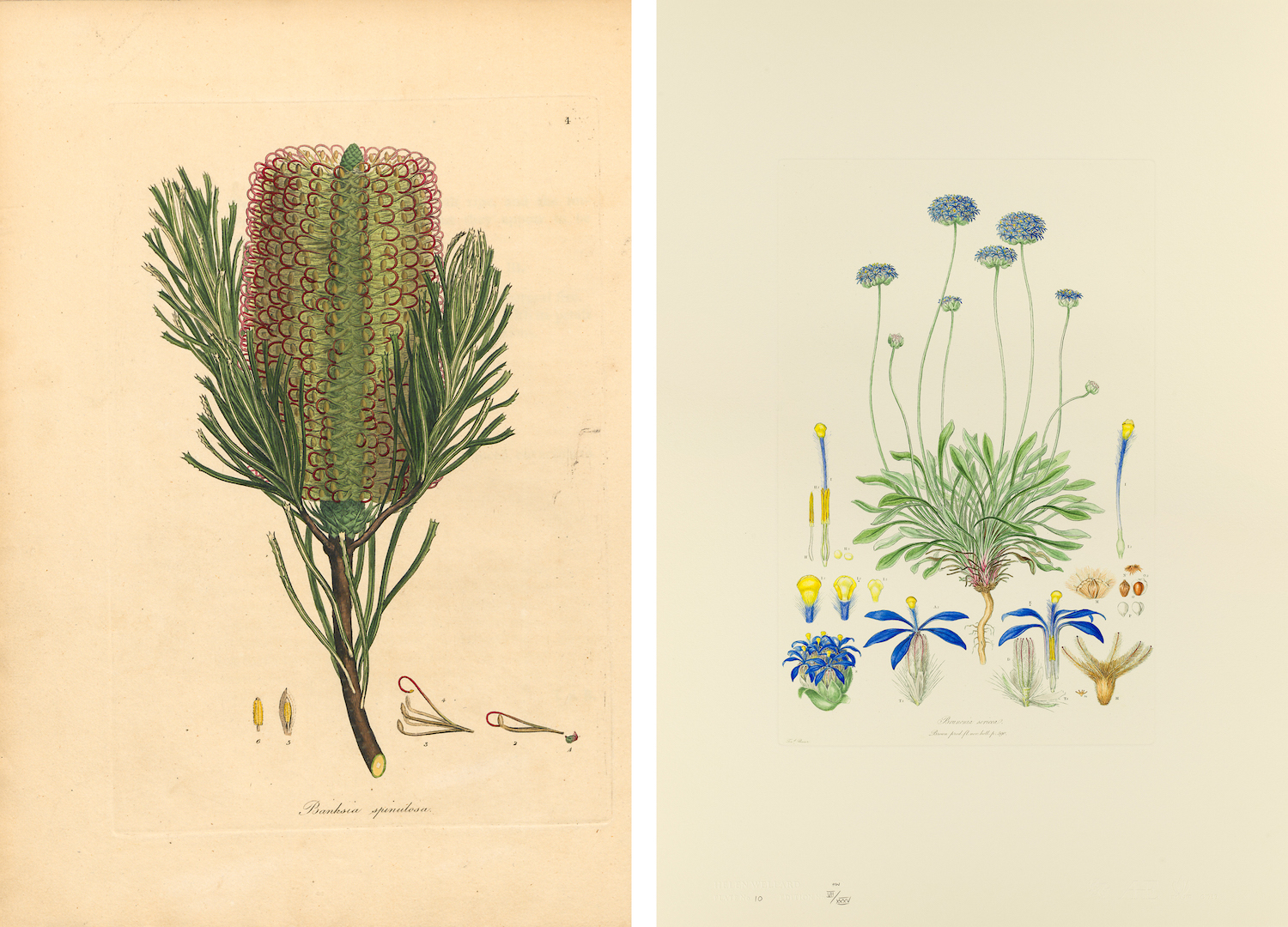
image (left to right) Banksia spinulosa by James Sowerby, 1793. Courtesy of State Library of Queensland; Ferdinand Bauer’s painting of a blue pincushion flower. Courtesy of Natural History Museum.
What do you hope people come away from the exhibition feeling?
Entwined has something for everyone, beautiful art works and many stories for the curious mind. It’s also an experience of the senses. More than anything, I hope people come away full of the pleasure of immersing themselves in the natural world. It’s a timely reminder of how essential plants are to our survival – without them there would be no food to eat or even air to breathe. It’s free, so you can come back whenever you need another healing experience.
top image Ferdinand Bauer’s painting of a grevillea. Courtesy of Natural History Museum.
Entwined: plants and people runs at State Library of Queensland through 14 November. Follow the link here for more details.
“My piece of advice for makers and designers? Run your own race… make sure your key decisions stay anchored in your brand’s core beliefs.”
- Bec Bligh
Quick show of hands: who’s opened a water bottle expecting a refreshing sip… and instead been greeted by the unmistakable whiff of uh-oh?
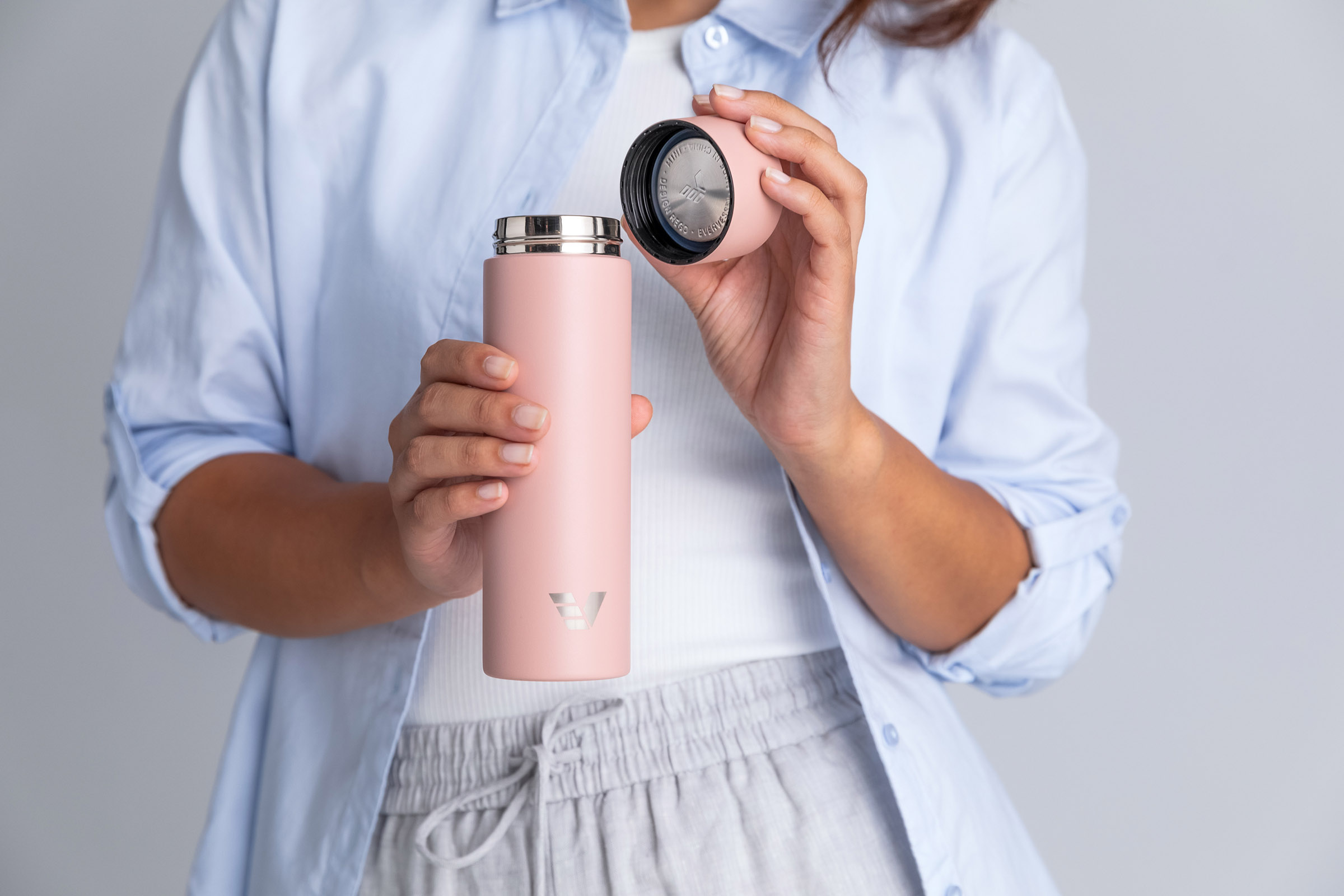
Because for something that follows us everywhere (desk, car, hikes, yoga…), the humble drink bottle is strangely prone to becoming a science experiment. Hard-to-clean corners and gaskets. Mystery smells. Bec Bligh and her husband Tim know it well. A six-month sailing trip along the Queensland coast left them with a lifetime of memories and one stubborn annoyance: mouldy water bottles they couldn’t properly clean.
So they did something about it.
Enter @EverVessel. Thoughtfully designed borosilicate glass and stainless steel bottles that keep things beautifully simple: durable materials, wide openings, easy-to-clean parts and none of the techy gimmicks that tend to age badly. Turns out simplicity, done well, is pretty powerful stuff. (Their many design awards agree!)
And lately they’ve added a little extra delight: the Artist Series, where creatives like Paola Castro, Ben Miners and Martin Thompson transform these everyday companions into tiny travelling artworks. There are more colabs in the works, too: hydration, but make it joyful! 🎨💧
We chatted with Bec about the sailing trip that started it all, the philosophy behind Ever Vessel, and why the most sustainable product is often just the one you keep using.
Tap the link in our bio to read the full conversation. 🚰
#EverVessel #ReusableWaterBottle


Pull up a chair… there’s room at this table!
For the first time, Feast for Freedom is bringing people together for a spectacular long-table dinner as part of the Melbourne Food & Wine Festival.
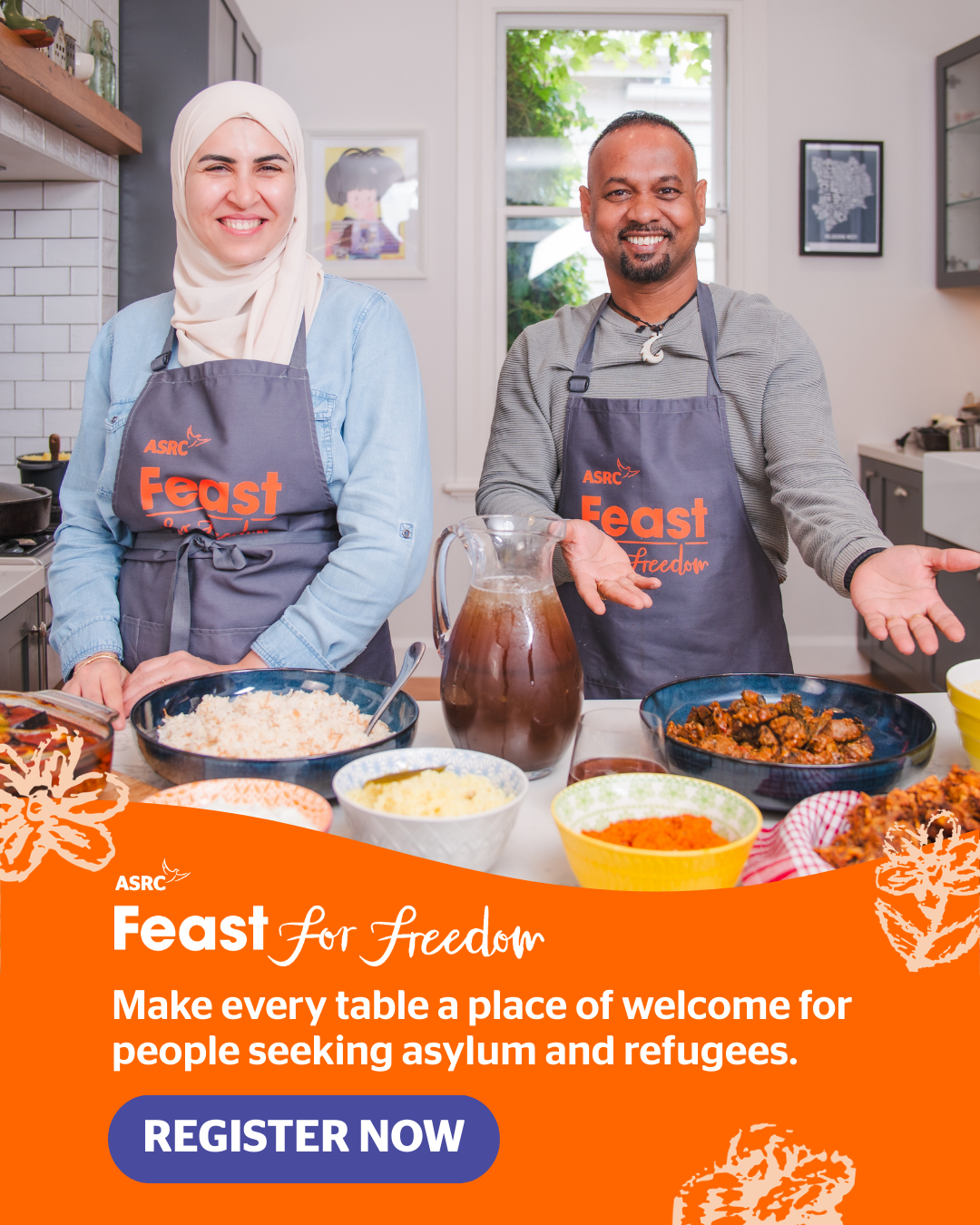
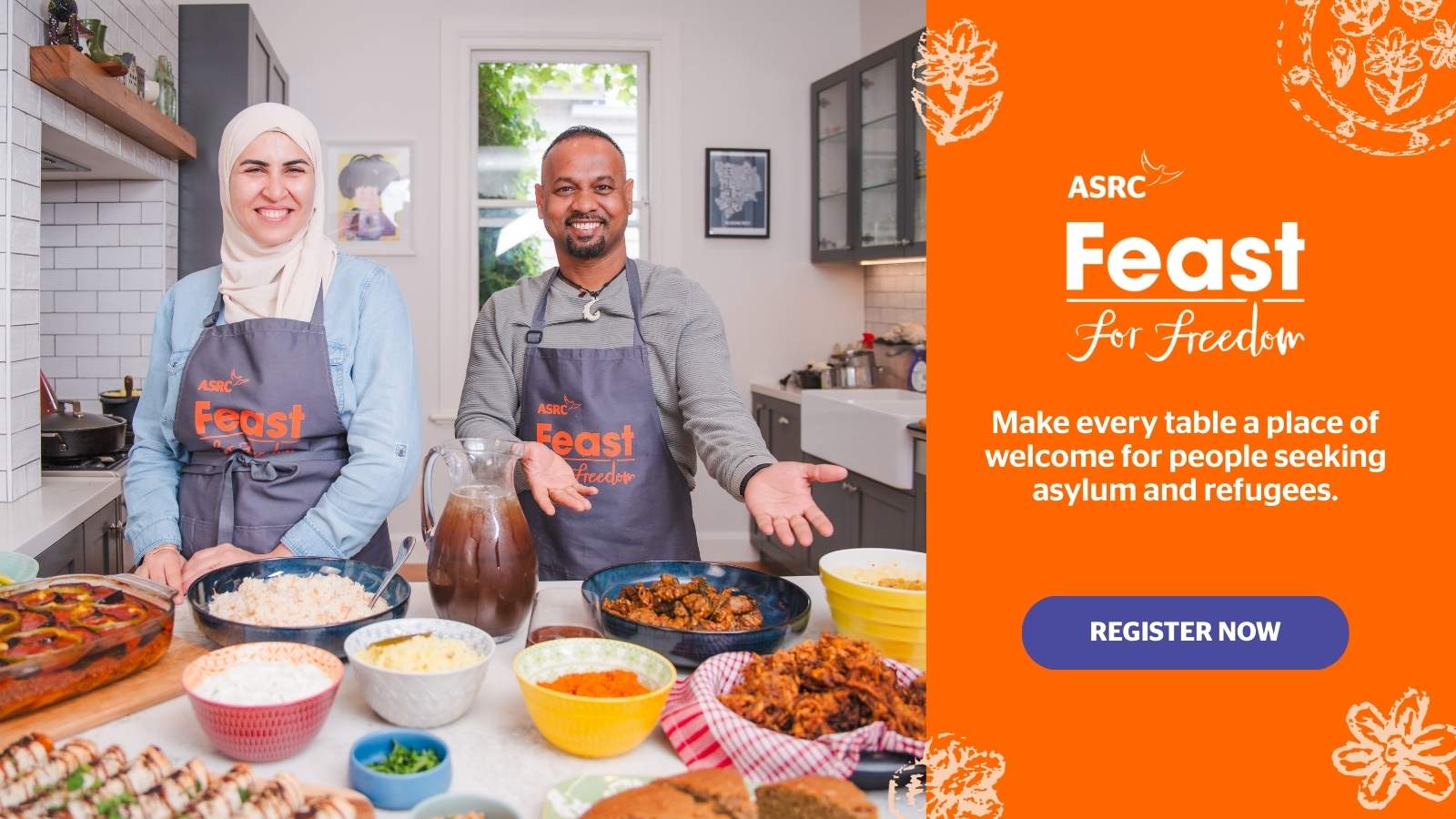
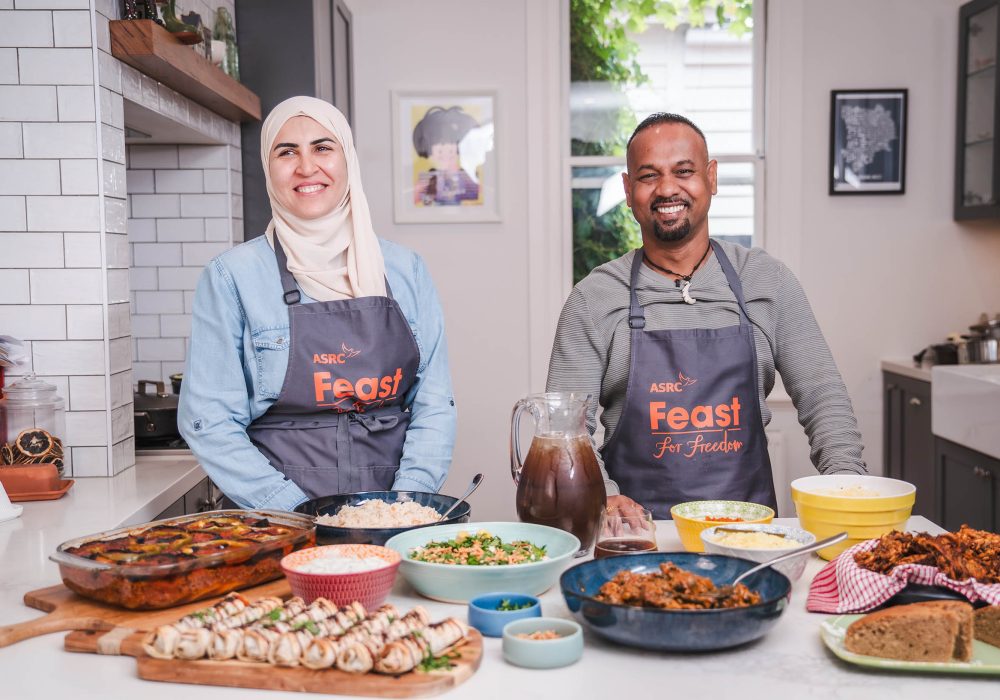
A Longer Table is exactly what it sounds like: one beautiful shared table inside the Asylum Seeker Resource Centre (@Asrc1), piled with generous dishes inspired by this year’s hero cooks, Noha and Nige.
From 6 to 9pm on Wednesday, 25 March, this is what you can expect:
🍽 A three-course shared feast
🍷 Matched drinks
🎶 Live entertainment
✨ A room full of good humans
Your ticket doesn’t just buy you a delicious dinner. It supports the ASRC’s vital work and helps create a fairer future for people seeking asylum.
Seats are limited, and long tables have a way of filling up quickly – head to @MelbFoodAndWine’s website to book now: feastforfreedom.org.au/mfwf
#FeastForFreedom #MelbourneFoodAndWineFestival #LongTableDinner #FoodForChange

Sew versatile! 🪡
Another great make from Lisa from @SunnySewsEveryday:
My #PeppermintWaratahWrapDress is finished and I’m so proud of it. It has been designed not to flap open and flash your pants in the wind, so I feel confident it will be a great wheelchair or standing dress in English weather.
#PeppermintPatterns #WrapDress #WrapDressPattern

Frame your face with the Peppermint Bucket Hat!
Stay safe and stylish in the sun with your very own self-sewn and self-drafted wide-brimmed bucket hat. This beginner-friendly sew is perfect for a sunny day. Get out your pencils – this pattern is created using equations and maths!
This DIY project was featured in Issue 53 and now you can access it for the lovely low price of only $5.
Sun-safe chic is always in style. ☀️
Find it via the link in our bio!
Photos: @KelleySheenan
#PeppermintPatterns #PeppermintBucketHat #BucketHat #BucketHatPattern #DIY

✨ INSTANT CLASSIC ✨
The Peppermint Myrtle Shift Dress is a beginner-friendly make with a few special details based on the ever-stylish shift shape – the perfect dress you need in your wardrobe right now!
Myrtle cuts above the knee with options to customise the length. Don’t think she’s reserved for hot weather either: try a heavier-weight fabric to turn your Myrtle into a pinafore-style garment for layering.
For our fabrics we chose two from our lovely sewing partner @Karmme_Apparel – the bold Rottnest Stripes in a lightweight, soft-drape cotton, and the quality linen in the handpainted Mexico Collection.
Get making the Myrtle – the only question is, can you stop at just one?
Link in bio 🪡
Fabric: @Karmme_Apparel
Sewist: @Laura_The_Maker
Photos: @KelleySheenan
Models: @SerahSews and @Pins_And_Tonic
Location: @ShareTheDignityAustralia
#PeppermintMyrtleShiftDress #PeppermintPatterns

It’s time to Feast!
Some recipes travel a long way before they land on your table to delight your taste buds. This year’s Feast for Freedom invites us to gather our friends, cook something delectable and raise funds for the incredible work of the Asylum Seeker Resource Centre (@Asrc1) while we’re at it.
The 2026 Feast features recipes shared by two remarkable cooks: Noha, who brought the flavours of Palestine with her when she arrived in Australia, and Nige, a Sri-Lankan Tamil cook whose journey with food began in the most unexpected of places.
You can host your own Feast up until 30 April – simply register online and get planning! Host a dinner, organise a workplace lunch, or gather your community… However you do it, the idea is simple: cook, connect and celebrate the cultures and stories that shape Australia.
Want to find out more? Head to the link in bio to meet Noha and Nige, learn more about their stories, and discover a delicious recipe to try.
#FeastForFreedom #PeppermintMagazine #FoodForGood #ASRC
