“You’ve always said that you hope one day there’ll be no need for Peppermint anymore – when fashion just ‘is’ ethical and sustainable by default, the climate fight has been won, and the planet and all people are thriving and living in harmony with each other. So, yeah, about that… we’ve still got a lot of work to do. The best advice I can give you is to keep putting one foot in front of the other. The world needs all of us to show up, stand up and speak up, in whatever way we can. It might seem scary, it might seem insurmountable and I know at times you want to run and hide. Have a rest (and a snack) and keep going. I can tell you with certainty that after 50 ambitious but extraordinary issues sharing thousands of thought-provoking stories, there is still so much hope to be found amongst these pages.”
Peppermint Editor-in-chief Kelley Sheenan in her Issue 50 letter
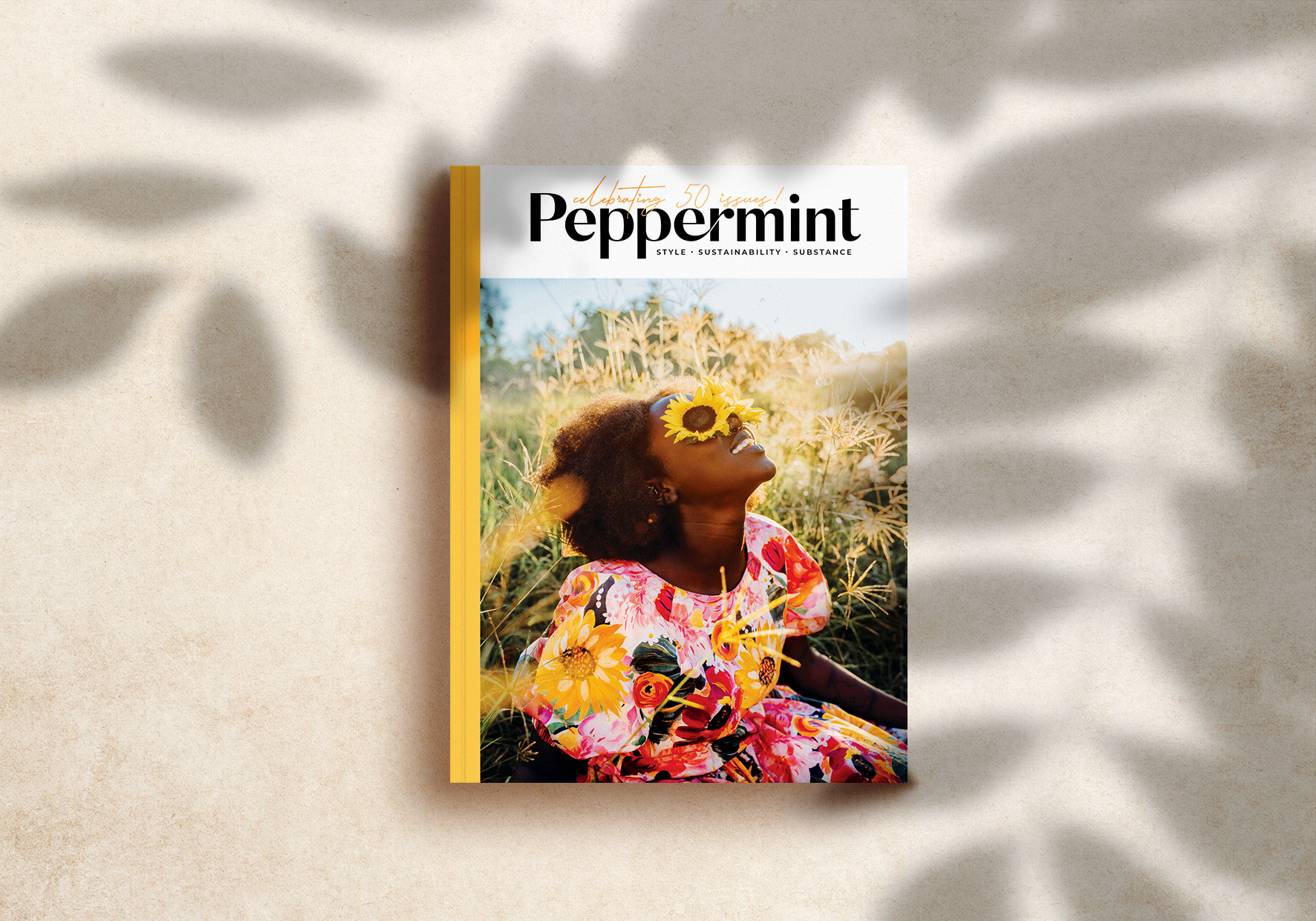
Celebrating 13 years and 50 issues of telling the stories of good people doing inspiring, important work, our bumper Winter Issue is here!
Packed with meaningful features, lots of fun sewing and craft projects, and world-changing folk, let a little bit of Peppermint sun(flower) brighten even the coldest of days. In this issue – our biggest yet – some of our favourite changemakers pen a letter to (or from) the future; we meet a sustainable stylist who can save us from our wardrobes; find out how to be a true body diversity ally thanks to fat-acceptance advocate Stephanie Yeboah; uncoil race-based hair discrimination; read how passionate permaculture champion Hannah Moloney is redefining the radical life; delve into the world of plus-size patternmaking with Muna and Broad; discover why debunking popular fake facts and figures is so important to the fashion sustainability movement; meet four brands casting off the business-as-usual approach to live and breathe purpose; read why closing the superannuation gap is so much more than an issue of feminism; Wiradjuri, Ngemba and Paakantji writer Gemma Pol talks with Amanda Hayman and Troy Casey from Aboriginal Art Co about protecting Indigenous intellectual copyright; and sink your teeth into the hefty debate over the sustainability of meat.
Plus you’ll find a plant-powered DIY from natural-dye expert Katrina Rodabaugh; a roundup of some of our fave winter-appropes products in neutral tones; artist Hillary Waters Fayle’s botanical art; comedian Lizzy Hoo shares her feelings on growing up Asian Australian; a sewing feature on the tradition and community of hand-sewing; an indoor plant troubleshooting guide for aspiring #PlantQueens everywhere; discover Caloundra’s all-weather charms; plus the power of cooking, culture and connection with Australia’s hearty-salad champ and national treasure Hetty McKinnon!
And as always, a new issue means a new free sewing pattern… and for this glorious celebratory issue, our new pattern – the Paddington puff-sleeve top – is on our cover! ?
Get your hands on our special 50th bumper issue now by visiting the links below or your closest stockist today!
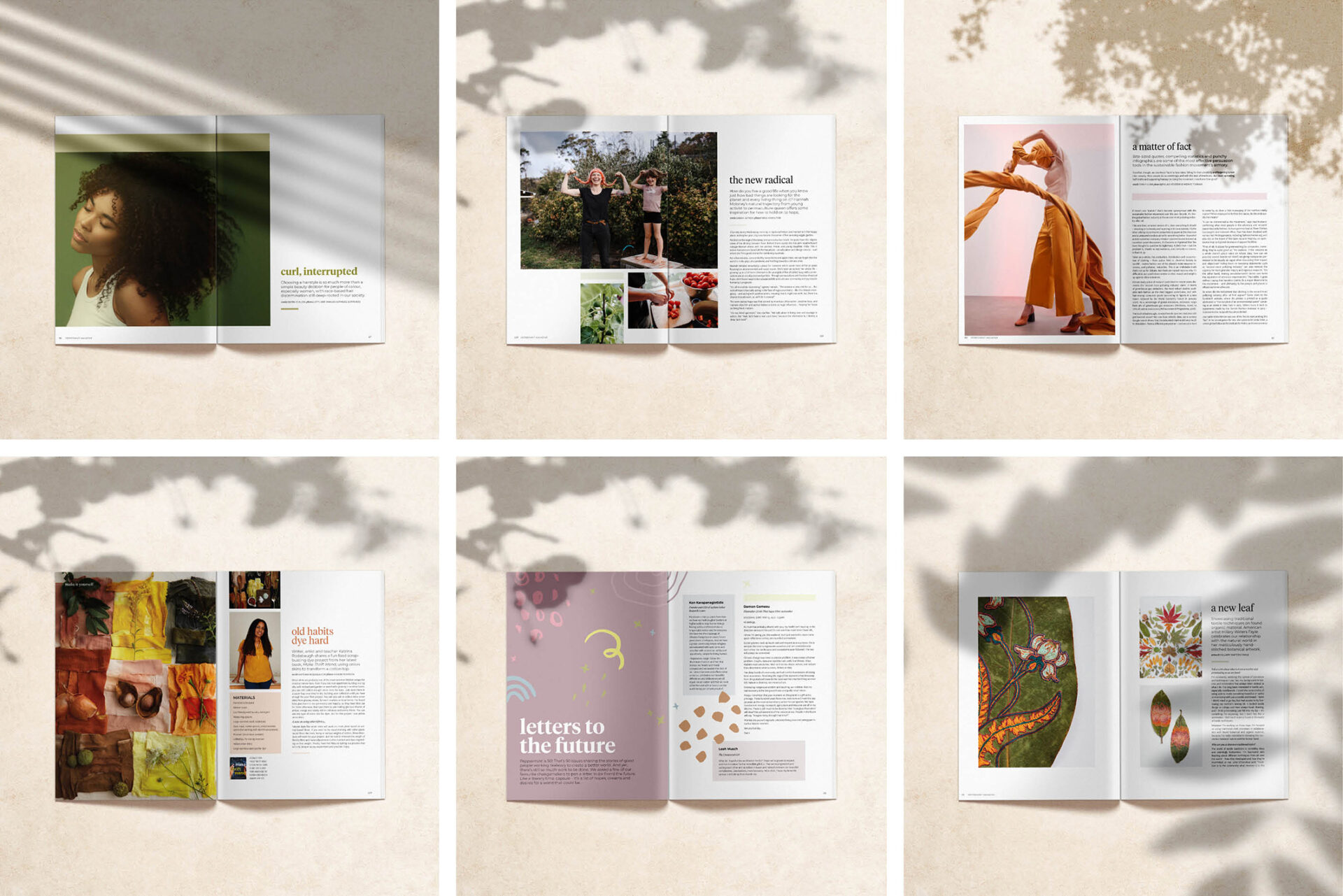
Take a peek inside this issue!
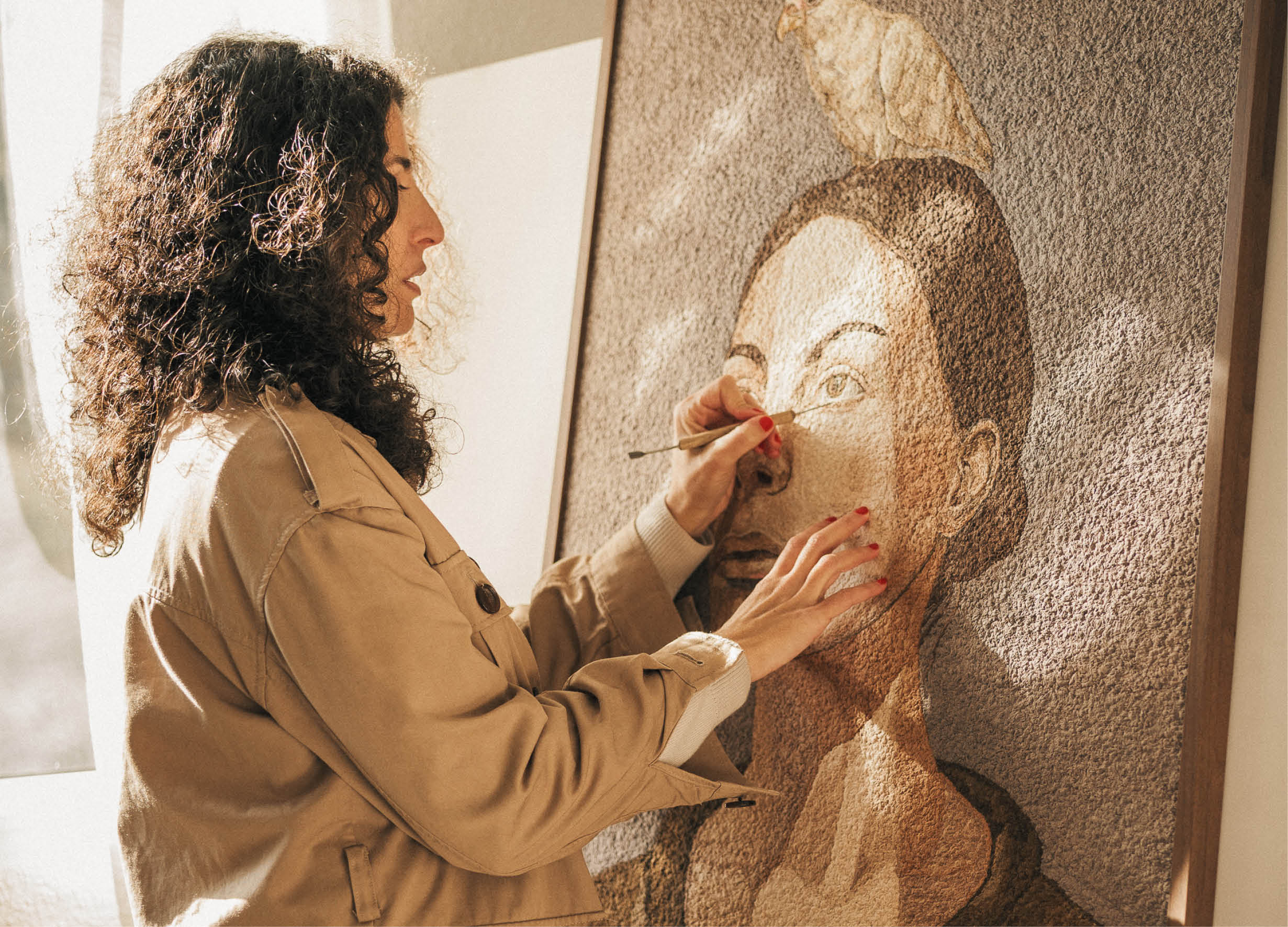
‘A NEW LEAF’ / HILLARY WATERS FAYLE Showcasing traditional textile techniques on found organic material, American artist Hillary Waters Fayle celebrates our relationship with the natural world in her meticulously hand-stitched botanical artwork.
“Looking to traditional textiles for inspiration is such rich territory – the colours, the patterns, the textures, materials and techniques are incredible. There’s such a vast wealth of inspiration in what’s already here that I’d be crazy not to! I also feel there’s a strong relationship between traditional textile production and working in harmony with the land, which feels important to me.
I try to bring together materials and processes that express the union of humanity and the physical world. Whether stitching, drawing, planting seeds or harvesting, my hands echo the gestures made by thousands of hands over thousands of years. I feel connected to the lineage of people working with textiles, plants and the land. Stitching, like agriculture, can be functional – a technical solution to join materials and a means of survival – or done purely in service of the soul, lifting the spirit through beauty and wonder.”
‘MAKING THE GRADE’ After meeting on Instagram while both trawling the hashtag #PlusSizeMinimalist, Jess Rodda and Leila Kelleher started Muna and Broad – an indie company dedicated to making modern sewing patterns for large bodies with no upper limit.
What does inclusivity mean to you?
Jess: Inclusivity is such a difficult term and often used far too freely. We don’t consider ourselves to be an inclusive brand because we know there are sizes we’re excluding. We’ve tried to be as inclusive of large bodies as we can be, offering free grading to folks who our sizes are too small for, and also being super responsive via email suggesting things like sizes and fit fixes. We’ve also tried to be inclusive by thinking about how bodies change throughout the size range. We’re not simply grading up and down from our sample size but actually making tweaks and changes every couple of sizes so we’re including and properly fitting those bodies at that size.
Leila, you’ve spoken recently about fatphobia and identifying as ‘fat’ – are you able to speak more to this?
Leila: The reclamation of the word fat, from pejorative to descriptive, is gaining momentum. I believe it’s an important part of dismantling the fatphobia we see in society. If you change your mindset from fat being something shameful or undesirable to a simple descriptor, equivalent to, say, “My hair is black,” then it begins to lose its power. We need to see diverse bodies as a natural variation, much as we see eye colour. There’s a lot of writing about this, especially the work of Roxane Gay and Aubrey Gordon.”
‘STATE OF THE ART’ Aboriginal Art Co is rewriting the script and empowering First Nations artists to reclaim space in business, as Wiradjuri, Ngemba and Paakantji writer Gemma Pol finds out.
“Art is a sacred medium for storytelling in First Nations cultures. But commercialising our art and stories, at least in a western sense, is a relatively new experience for First Nations peoples. Many First Nations artists live in remote areas of so-called Australia, where access to resources like internet and business support is limited. Often motivated by the desire to help, many non-Indigenous people have established businesses to provide platforms for First Nations creatives to sell their art. But even with the most genuine of intentions, problems arise.
This is largely because of the white saviour complex – subtle, usually going unnoticed by the white gaze, but toxic to those presumed to need saving. When relationships between First Nations creatives and non-Indigenous people are grounded in perceived charity, the artists are subject to the deeply embedded power imbalances that emerge from ongoing colonial thinking. This manifests in artists not being paid fairly or their art and stories being misrepresented, misused or appropriated. Many artists can speak to these struggles, but for First Nations artists, the risks are heightened because our art uses complex symbolism that transcends aesthetics.
Our symbols are visual forms of knowledge that express ancient stories and cultural intellect. No one knows our stories like we do. We don’t need white saviours. We need self-determination.
‘A MATTER OF FACT’ Could spreading half-truths and supporting hearsay be doing the fashion sustainability more harm than good? Words by Emily Lush.
“If there’s one ‘statistic’ that’s become synonymous with the sustainable fashion movement over the past decade, it’s this: the global fashion industry is the second most polluting industry after oil.
This one-liner, or some version of it, does everything it should – shocking in its brevity and haunting in its conciseness, it’s the ideal rallying cry to inspire consumers to pause at the checkout and to pressure brands to strive for something better. Repeated across numerous company mission statements and intoned at countless panel discussions, it’s become so ingrained that few have thought to question its legitimacy. It feels true – but the problem is, there’s no real evidence, and certainly no source, to back it up.“
Nature doesn’t care about marketing. A science and research-based approach is the only way we can ensure we are making measurable change. – Maxine Bédat, New Standard Institute
‘CURL, INTERRUPTED’ Choosing a hairstyle is so much more than a simple beauty decision for people of colour, especially women, with race-based hair discrimination still deep-rooted in our society. Words by Desta Cullen.
“Our kinky, curly, wavy hair has been pulled and pushed down, straightened and ‘tamed’ to do simple things like be allowed to go to certain schools, to get that office job, to feel, dare I even say it, ‘beautiful’,” says Lisa Fa’alafi, a Samoan-Australian director and choreographer known for pushing the boundaries of gender and culture.
“Most BIPOC women with Afro or curly hair will understand this battle of loving our natural hair, because we’ve had to unlearn this embedded idea, we’ve had to do the work to decolonise our own perceptions.”
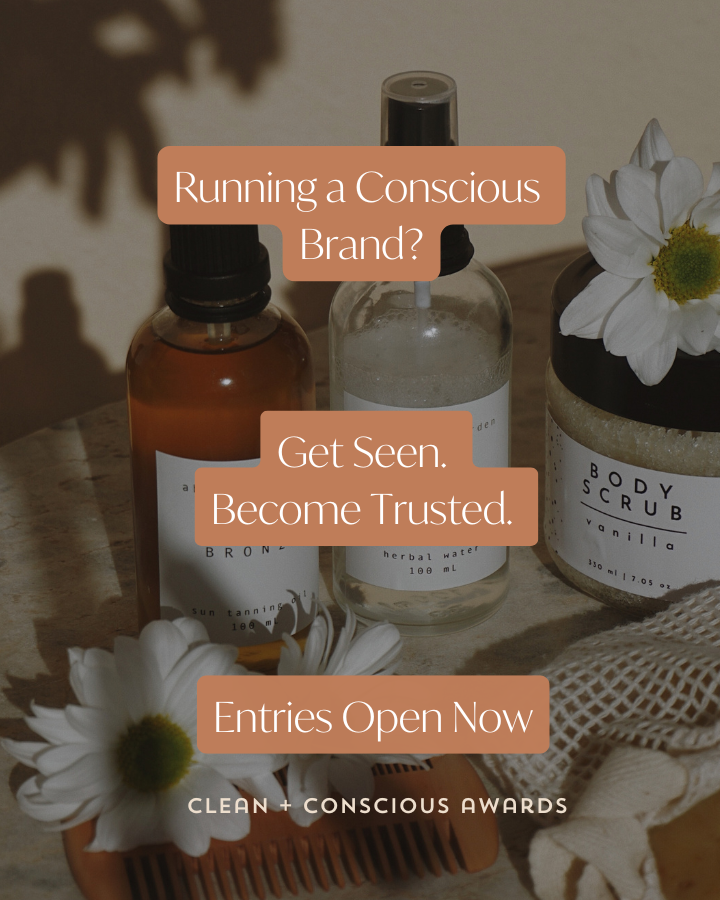

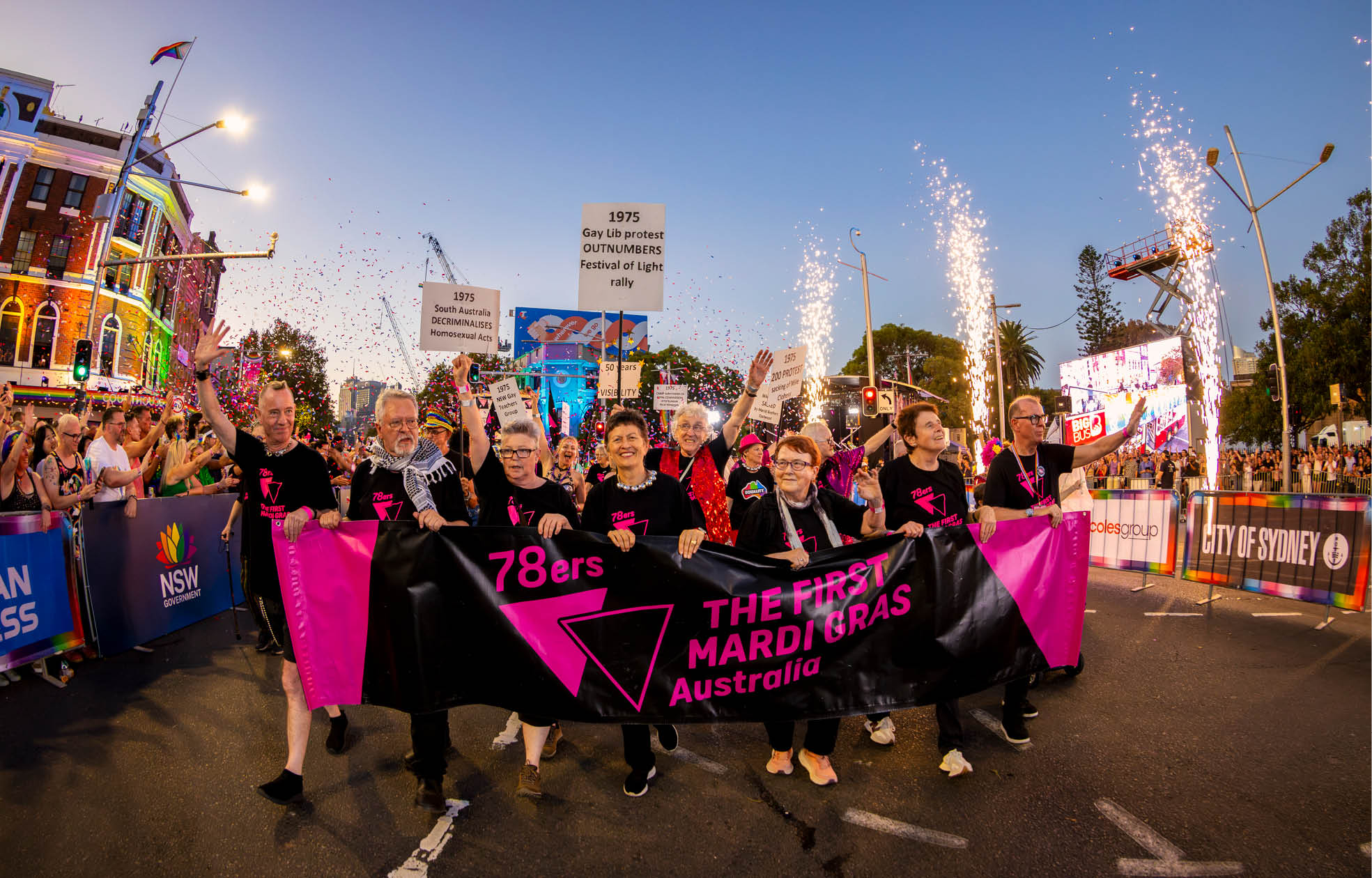
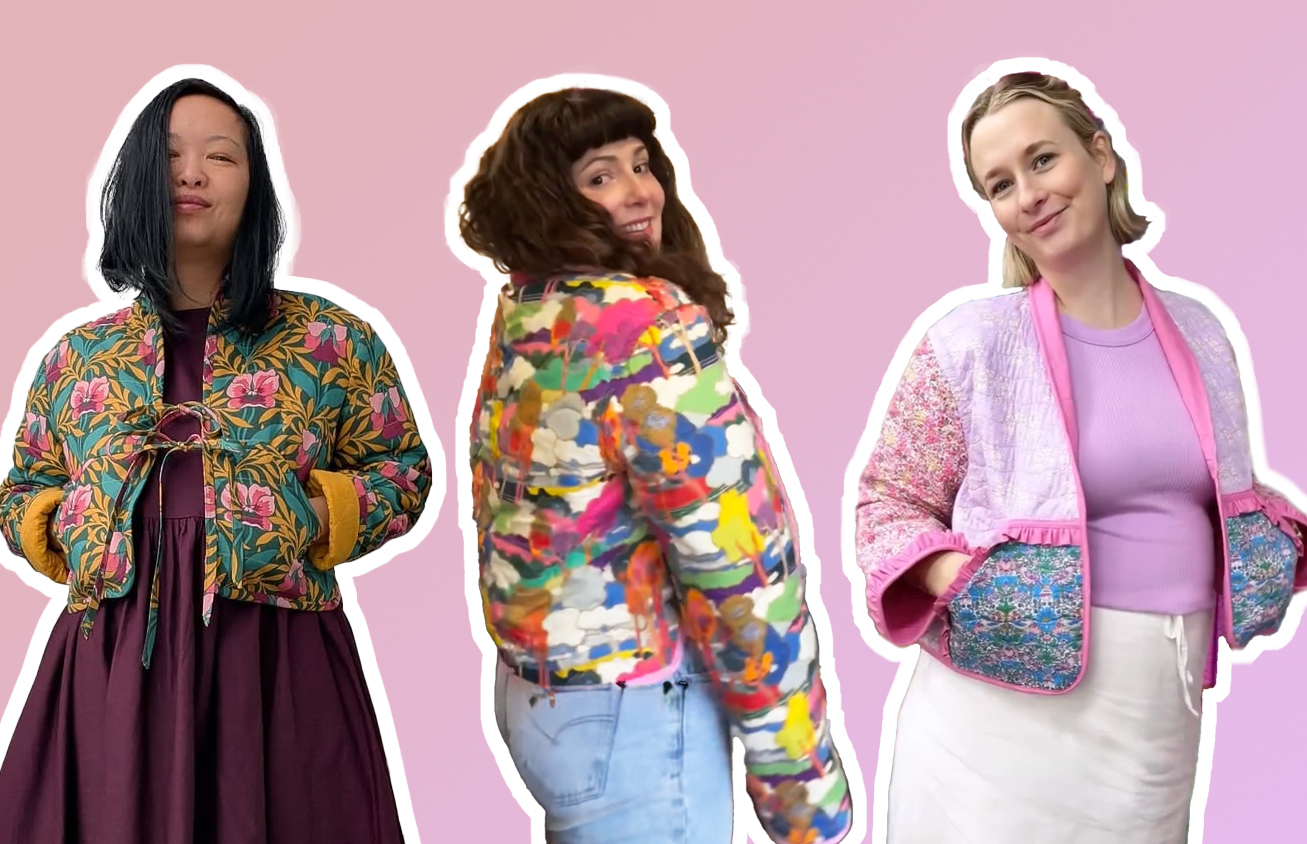
“My piece of advice for makers and designers? Run your own race… make sure your key decisions stay anchored in your brand’s core beliefs.”
- Bec Bligh
Quick show of hands: who’s opened a water bottle expecting a refreshing sip… and instead been greeted by the unmistakable whiff of uh-oh?
Because for something that follows us everywhere (desk, car, hikes, yoga…), the humble drink bottle is strangely prone to becoming a science experiment. Hard-to-clean corners and gaskets. Mystery smells. Bec Bligh and her husband Tim know it well. A six-month sailing trip along the Queensland coast left them with a lifetime of memories and one stubborn annoyance: mouldy water bottles they couldn’t properly clean.
So they did something about it.
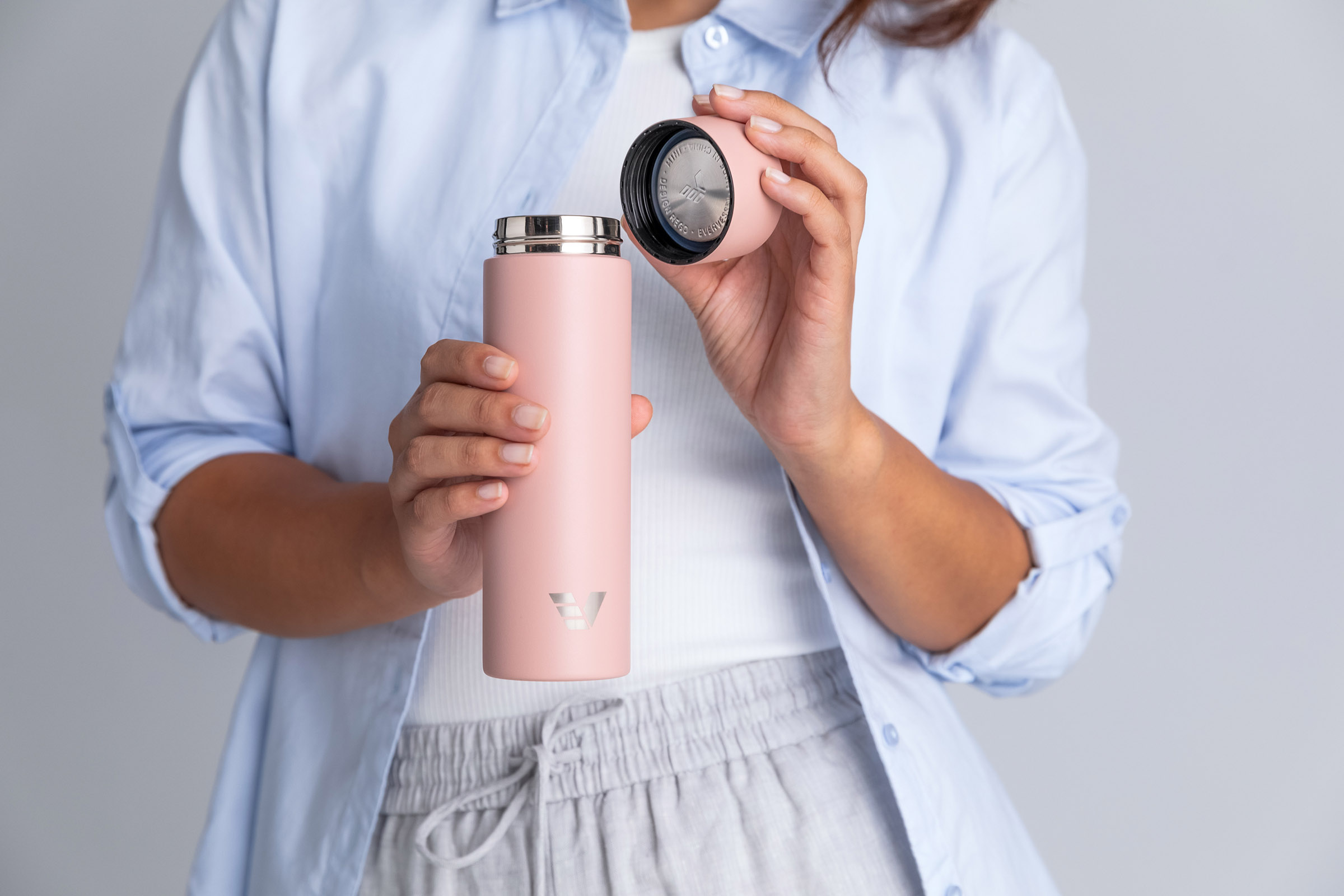
Enter @EverVessel. Thoughtfully designed borosilicate glass and stainless steel bottles that keep things beautifully simple: durable materials, wide openings, easy-to-clean parts and none of the techy gimmicks that tend to age badly. Turns out simplicity, done well, is pretty powerful stuff. (Their many design awards agree!)
And lately they’ve added a little extra delight: the Artist Series, where creatives like Paola Castro, Ben Miners and Martin Thompson transform these everyday companions into tiny travelling artworks. There are more colabs in the works, too: hydration, but make it joyful! 🎨💧
We chatted with Bec about the sailing trip that started it all, the philosophy behind Ever Vessel, and why the most sustainable product is often just the one you keep using.
Tap the link in our bio to read the full conversation. 🚰
#EverVessel #ReusableWaterBottle


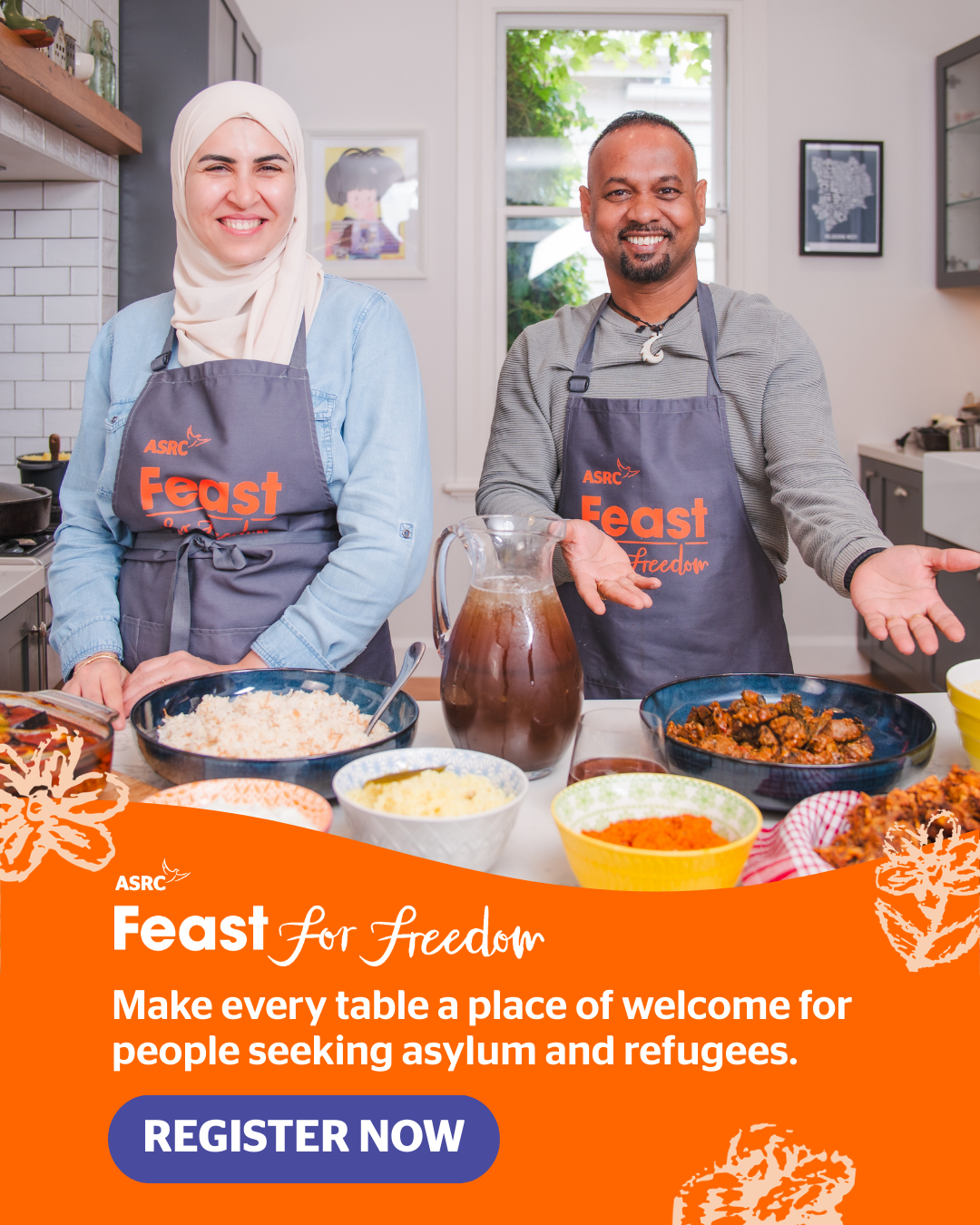
Pull up a chair… there’s room at this table!
For the first time, Feast for Freedom is bringing people together for a spectacular long-table dinner as part of the Melbourne Food & Wine Festival.
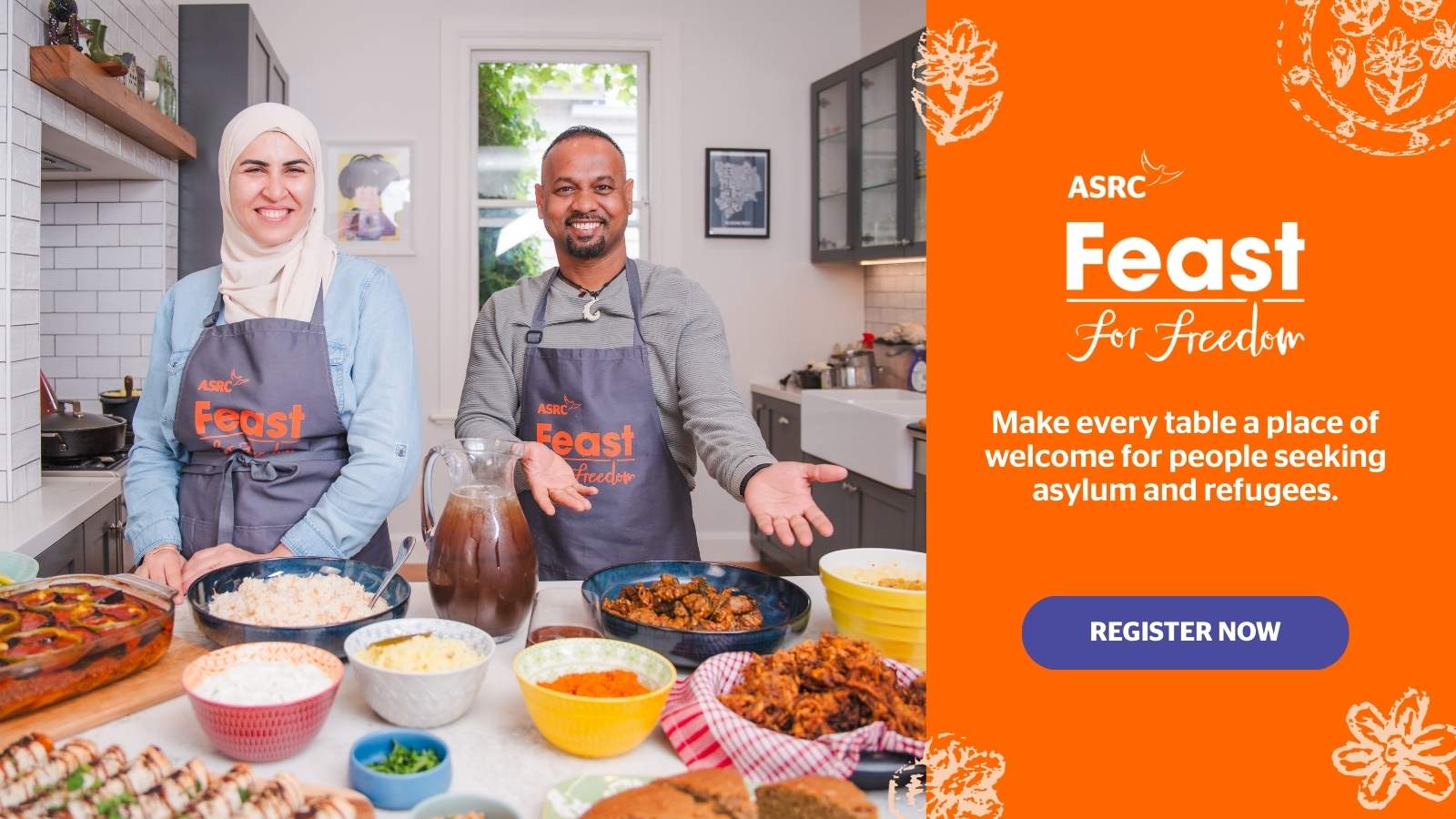
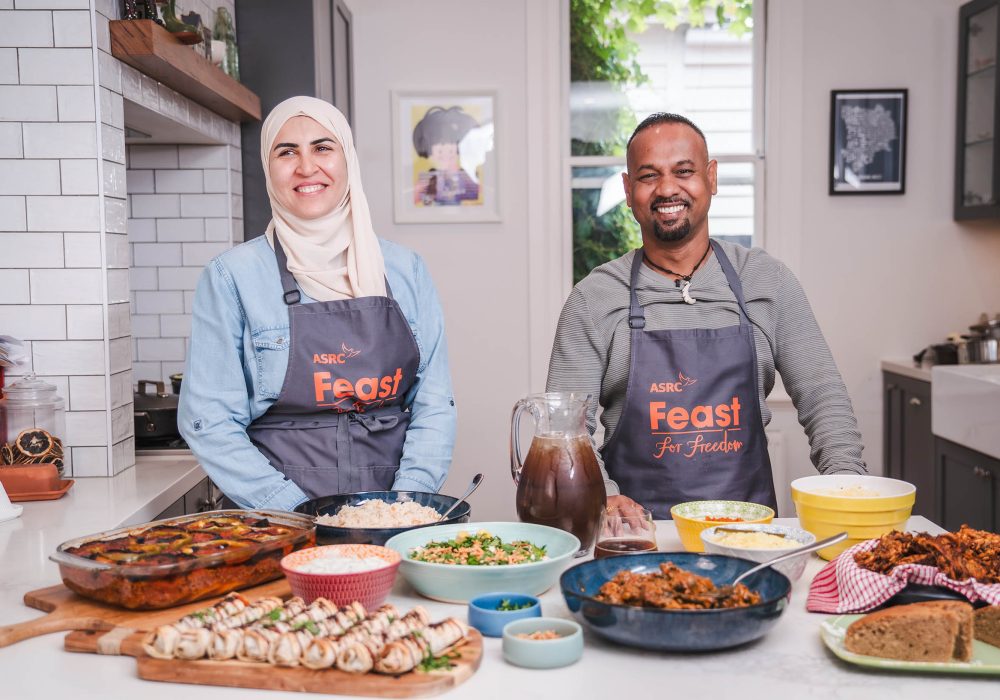
A Longer Table is exactly what it sounds like: one beautiful shared table inside the Asylum Seeker Resource Centre (@Asrc1), piled with generous dishes inspired by this year’s hero cooks, Noha and Nige.
From 6 to 9pm on Wednesday, 25 March, this is what you can expect:
🍽 A three-course shared feast
🍷 Matched drinks
🎶 Live entertainment
✨ A room full of good humans
Your ticket doesn’t just buy you a delicious dinner. It supports the ASRC’s vital work and helps create a fairer future for people seeking asylum.
Seats are limited, and long tables have a way of filling up quickly – head to @MelbFoodAndWine’s website to book now: feastforfreedom.org.au/mfwf
#FeastForFreedom #MelbourneFoodAndWineFestival #LongTableDinner #FoodForChange

Sew versatile! 🪡
Another great make from Lisa from @SunnySewsEveryday:
My #PeppermintWaratahWrapDress is finished and I’m so proud of it. It has been designed not to flap open and flash your pants in the wind, so I feel confident it will be a great wheelchair or standing dress in English weather.
#PeppermintPatterns #WrapDress #WrapDressPattern

Frame your face with the Peppermint Bucket Hat!
Stay safe and stylish in the sun with your very own self-sewn and self-drafted wide-brimmed bucket hat. This beginner-friendly sew is perfect for a sunny day. Get out your pencils – this pattern is created using equations and maths!
This DIY project was featured in Issue 53 and now you can access it for the lovely low price of only $5.
Sun-safe chic is always in style. ☀️
Find it via the link in our bio!
Photos: @KelleySheenan
#PeppermintPatterns #PeppermintBucketHat #BucketHat #BucketHatPattern #DIY

✨ INSTANT CLASSIC ✨
The Peppermint Myrtle Shift Dress is a beginner-friendly make with a few special details based on the ever-stylish shift shape – the perfect dress you need in your wardrobe right now!
Myrtle cuts above the knee with options to customise the length. Don’t think she’s reserved for hot weather either: try a heavier-weight fabric to turn your Myrtle into a pinafore-style garment for layering.
For our fabrics we chose two from our lovely sewing partner @Karmme_Apparel – the bold Rottnest Stripes in a lightweight, soft-drape cotton, and the quality linen in the handpainted Mexico Collection.
Get making the Myrtle – the only question is, can you stop at just one?
Link in bio 🪡
Fabric: @Karmme_Apparel
Sewist: @Laura_The_Maker
Photos: @KelleySheenan
Models: @SerahSews and @Pins_And_Tonic
Location: @ShareTheDignityAustralia
#PeppermintMyrtleShiftDress #PeppermintPatterns

It’s time to Feast!
Some recipes travel a long way before they land on your table to delight your taste buds. This year’s Feast for Freedom invites us to gather our friends, cook something delectable and raise funds for the incredible work of the Asylum Seeker Resource Centre (@Asrc1) while we’re at it.
The 2026 Feast features recipes shared by two remarkable cooks: Noha, who brought the flavours of Palestine with her when she arrived in Australia, and Nige, a Sri-Lankan Tamil cook whose journey with food began in the most unexpected of places.
You can host your own Feast up until 30 April – simply register online and get planning! Host a dinner, organise a workplace lunch, or gather your community… However you do it, the idea is simple: cook, connect and celebrate the cultures and stories that shape Australia.
Want to find out more? Head to the link in bio to meet Noha and Nige, learn more about their stories, and discover a delicious recipe to try.
#FeastForFreedom #PeppermintMagazine #FoodForGood #ASRC
