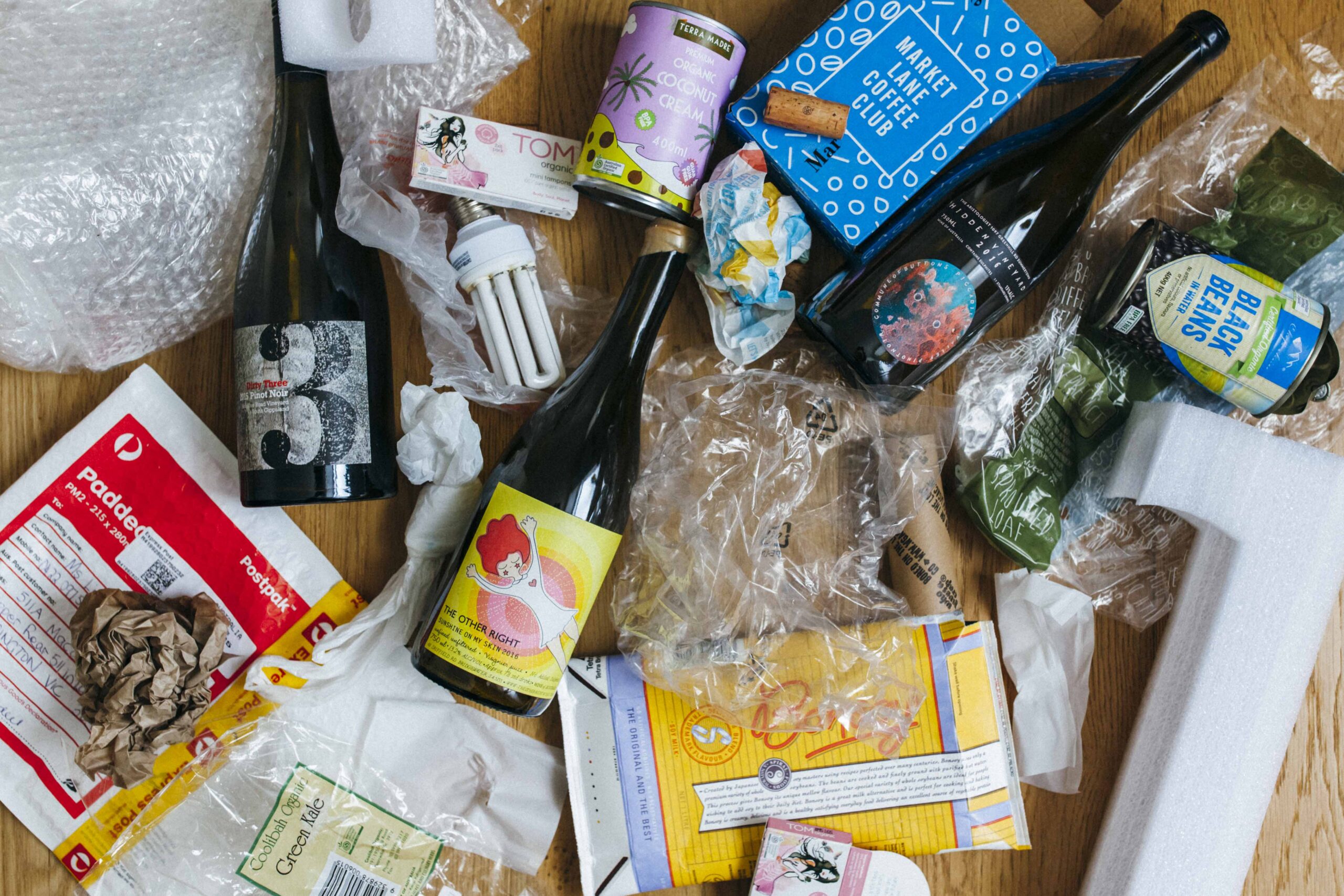
While I consider myself a bit of a champion of environmental causes and conscious living, I’ve never partaken in Plastic Free July, so I decided to sign up for the challenge this year. Given my better-than-average environmental habits, I knew simply opting for the ‘avoid single-use plastic packaging’ iteration wasn’t going to be enough of a shock to my day-to-day. I wanted to feel the weight and embarrassment of every single skerrick of plastic that’s been sneaking into my so-called environmentally minded lifestyle. While my partner was adamant this meant going cold turkey on absolutely everything involving plastic or packaging, I went into this challenge knowing it was okay to fail, as long as I was honest about it. For me, Plastic Free July is about learning where those blind spots are and patching them up with compostable putty. Here’s how things shaped up during the first two weeks…
Saturday 1 July
It’s day one and I’ve already failed. The day was going so well – coffees were consumed in cups at cafes, and no straws had arrived in my lunchtime cocktails (I’m on holidays for a friend’s 30th birthday). But later that afternoon I was ravenous and had a few hours until dinner. I’m staying at friend’s apartment in Brisbane and decided the best thing I could do at this odd eating hour of 4.45pm was to walk to the independently owned IGA and buy some cheese and gluten-free crackers. But en route to the store I remembered the challenge. Cheese comes in packaging. And crackers definitely come in multiple layers of plastic. If I was home in Melbourne, and prepared, I could have taken cheesecloth or a container to a deli where they could cut me a wedge of cheese to avoid packaging. But I’m away and unprepared, and hanger is setting in. I opt for a cheese (not organic, from South Australia) and chips (organic, made in Yarra Valley) instead of crackers, because both of these seemed to be packaged in aluminium. But upon closer inspection, the aluminium is definitely co-moulded with plastic.
Later at the bar for my friend’s 30th, there’s a small sign stating that the bar is a straw-free zone. Phew, safety.
Sunday 2 July
My period arrived at 5.45am this morning. I usually use organic tampons and liners to deal with this monthly situation, but it’s just occurred to me that there’s no getting around the fact these both come wrapped in plastic. Every time I unwrap one of these period plugs, I’m stricken with guilt. Time to switch to a menstrual cup?
I spent the day catching up with friends at various cafes. Firstly I returned to a sustainability focused cafe where three days earlier I’d ordered the on-tap kombucha (yay no packaging!) only for it to arrive with a non-recyclable plastic straw. Now when I order my breakfast, it seems I need to ask for the avocado on toast but on gluten-free, and no feta (because ideally I’m avoiding dairy), and then also pre-ensure no straw is going to arrive in my cold drink if I’m having one. Difficult customer much?
I made it through the remainder of the day without any hiccups, until I was boarding my flight and had to receive a printed boarding pass (coated paper) despite an online check-in. This system was not designed for environmentally conscious flyers. I arrived back in Melbourne at 8pm. My partner suggested we get a quick dinner from the local taco joint, but we hadn’t had takeaway from there before and so didn’t know what packaging our food might come in. So we abstained and made a simple dinner of rice and the end-of-the-week dregs of vegetables at home.
Monday 3 July
This morning I finished the last two pieces of the store-bought gluten-free bread that had been sitting in the fridge for the past week while I was away. It comes in a plastic bag. I pledge to start making my own (package-less and much more nutritious and delicious) sourdough again.
I needed to cover a few cuts on my hands with bandaids because my skin is seemingly as delicate as a 90-year-old’s. The outer bandaid wrapper is paper, but the inner tabs covering the adhesive are plastic. I’m averaging 2-4 bandaids a day. These all go in our soft plastics recycling pile destined for the Clifton Hill recycling depot.
We’ve been getting a new weekly organic veggie box, and we were surprised to find the cut pumpkin, cauliflower and cabbage portions wrapped in plastic. So my partner let the owner know about the July challenge and that we’d prefer no plastic in our box, and he was happy to oblige. But if the owner’s receiving plastic-sleeved herbs direct from a farmer and then discarding the plastic just for us, it’s a redundant process.
After work we dropped by an organic grocer in Northcote to stock up on grains. However we left rather empty handed. The store’s self-branded packaging includes a brown paper bag with a bio-plastic (PLA) window and a metal tie (that can be removed for the bag to be 100% compostable). But the bags are also labelled with stickers, which I doubt are compostable, so we wanted to avoid these. Then the bulk section (with provided paper bags) didn’t have much available, so we left with only rice and my (yes, plastic packaged) facial moisturiser.
Tuesday 4 July
Today I worked all day at a coffee shop. I wasn’t prepared for breakfast or lunch, but the kind staff in the organic aisle of the Queen Victoria Markets let me purchase bananas (no wax-dipped tails) before my 7am start time. I ate a salad for lunch from the deli across the road (I dined in) where I didn’t even use a serviette! Yet while it might have been a personal plastic-free day, a lot of plastic was discarded at work. The majority of customers take their coffee away in a ‘compostable’ single-use coffee cup, which also come encased in a soft plastic sleeve. So I still contributed to mass plastic consumption today.
Wednesday 5 July
I don’t really shop for ‘things’ and avoid a lot of packaging this way. But I have a bit of spare cash at the moment, and since my partner and I have been attempting to operate on a minimalist ‘we don’t need stuff’ mentality since we started cohabiting at the start of the year—a strategy that’s often proved frustrating—I decided to add to our shoestring kitchen essentials. The resulting saucepan, frying pan, mortar and pestle and loaf tin all came tagged or wrapped in some form of plastic. I could have abstained from buying these items until finishing the challenge, but then I would have just bought them next month anyway.
And while I’m admitting to today’s consumption habits … I also bought jeans from Denimsmith (said no to a bag, and their swing tags are made from paper and twine) and tights from Obus (these come with a cardboard wrapper, but again I avoided a bag).
I also went to Organic Wholefoods in Kensington in a second attempt to stock up on grains. I took empty oil jars to refill with olive and sesame oils, and filled paper bags with bulk grains and legumes. We’ve decided that we can definitely go without using a new paper bag from the shop each time we need grains, and have resolved to either make our own cloth bags or bring empty jars that we have pre-weighed.
Thursday 6 July
I walked the 45 minutes to the Docklands Library to do some writing today. I told myself if I walked there I could get a coffee and gluten-free treat from a cafe on the way. I packed my KeepCup, but didn’t even think to pack something to hold a treat! My treat came packaged in a cardboard tray inside a paper bag. I did manage to pack lunch and a glass water bottle. I then met friends for dinner, where my only consumed single-use item was one serviette.
Friday 7 July
No plastic at breakfast. No plastic at lunch. I decided to buy a bottle of wine (okay, two) to enjoy that evening. I opted for two natural wines from the Basket Range in South Australia that were corked and topped with wax. I’d already deciphered that screw caps feature a multi-tiered layer cake of plastics and aluminium that are compressed into a disc inside, and those with a cork that are then covered with an aluminium or plastic foil are also off limits this month (and eternally?). Crown seals too are often plastic lined. Yet the wax option I chose is probably made from melted paraffin. Resolution: no more wine? Please no.
Saturday 8 July
Today is my first Saturday off in a long time and it’s lucky enough to coincide with the Collingwood Farmers Market. We bought some Jerusalem artichokes (in a paper bag), but turned down groats (in plastic packaging) and chickpeas (cardboard box with plastic windows). The farmer said he’d have a bulk bin next week so customers can bring their own jars to fill, which is a great solution. We’ve resolved to start ordering bulk grains and legumes direct from farmers where we can, so we can organise a packaging free purchase.
I baked my first loaf of organic gluten-free sourdough this evening. No more store-bought, plastic-wrapped bread!
Sunday 9 July
We’ve run out of toilet and shower cleaner. I usually refill the existing containers for our dishwashing and laundry liquids, but I’m not sure if that’s possible for these other two cleaners. Shop Neutral at Prahran Market might have these in bulk, but then I’d have to drive across town (in my carbon-emitting car) to source them. Should we pare cleaning back to vinegar and baking soda?
We’ve been using compostable bin liners for a while now, but both brands that we’ve trialled have a habit of breaking before we can get them to the kerbside bin. Tonight, while attempting to re-line the freshly scrubbed bin, the delicate new liner tore half its length before even being fitted. So I think we’re done with bin liners. The Plastic Free July campaign suggests using newspaper as a lining, but we don’t currently buy any newspapers. I think we should keep a worm farm or composter (we live in an apartment and don’t have a yard or courtyard, but do have enough space in the ‘bin area’ downstairs) to dispose of food scraps. That way our waste will reduce to a very minimal amount of landfill wastage once recyclables and food scraps are separated out. Then we won’t need a liner at all!
Monday 10 July
I went shopping for my partner’s birthday today. I think everything managed to be plastic free, but there was a little bit of paper and cardboard labelling and tissue paper involved. I’ve ordered flowers (local, seasonal, natives) to be delivered to his work on his birthday sans packaging and by bicycle. He’s also getting a delivery of filter coffee (delivered in a Klean Kanteen thermos to keep it warm and accompanied by a Sharon Alpren mug) and a pastry (wrapped in a beeswax wrap instead of a paper bag). Winning.
Tuesday 11 July
I’m away on a travel story in country Victoria for the next six days. And based on prior experience, it’s very difficult to maintain my gluten-free, low-dairy and vegetarian diet while visiting small country towns. But I’ve packed a KeepCup, multiple glass water bottles, a lunchbox and beeswax wraps to help with food choices. I also BYO’d my homemade GF sourdough and a bag of coffee to make filter coffee in the morning. I picked up local free range eggs at a farmgate (in a cardboard carton), but sadly had to stop by Woolworths for some organic bananas and non-organic Australian-grown broccoli and Brussels sprouts for dinner. I had to go non-organic on the veg front because all of the organic vegetables are wrapped in plastic!
Wednesday 12 July
I started my day at a raw vegan cafe in Newborough that my accommodation host recommended to me. This did mean though that I took away a (delicious) treat for the road—which came in a cardboard tray and paper bag, but which featured a plastic (maybe bioplastic?) lining. The remainder of the day was thankfully plastic free. I had packed lunch in my lunchbox, but had forgotten a spoon! I contemplated asking a cafe for a singe-use eating device but decided I could use my hands if I must. At the last minute I discovered an Aeropress stirrer makes an adequate utensil!
Thursday 13 July
Today I bought a coffee from a pop-up van in a small country town and paired it with a gluten-free cookie for a snack. I didn’t have the guts to ask the lady not to put the cookie in the paper bag, so to avoid packaging entirely. She then threw in a bonus Lindt chocolate ball in its plastic and aluminium wrapper. So much conflict in such a small parcel!
I also bought a six pack of GF O’Brien’s beer. Glass, aluminium and cardboard.
Friday 14 July
I enjoy my morning coffee in my KeepCup while on the road, and lunch dining in at a cafe (where my knife and fork came pre-wrapped in a paper serviette). I did buy cheese from a local cheesemaker that was packaged in plastic. It’s hard not to take advantage of such a delicious (and low food mile) opportunity when travelling in prime dairy country. I pick up unpackaged vegetables from a farmgate for dinner.
Saturday 15 July
I purchase more local cheese (seriously, South Gippsland’s blue cheeses are so incredible), but otherwise this halfway point remains incident free today.
…
If I had to place my finger on some learnings from the first half of this month, it’s been that abstinence, taking time to find an alternative solution, and a little courage go a long way in making a difference to personal plastic consumption. Having allowed myself some leniences the past two weeks, it’s time to tighten the reins and put all these new ideas into practice!